Practical Sales Training™ > How to connect with your buyer > Year in the name
Year In The Name
“2026 Edition.” Two words, but they instantly answer a question buyers ask without realising it: is this thing still relevant, or is it old news dressed up as new?
That’s year in the name. A small detail that does a surprising amount of work, because it tells the buyer this was made for right now, not last year’s problems.
This page covers what year in the name is, why it works so well, and how to use it without it feeling gimmicky.
What Is Year In The Name?
Year in the name means including the current year directly in the title of an offer, event, or piece of content.
By doing this, you instantly signal that what’s being shown is current and built for now, not last year’s assumptions. So the year itself becomes part of the value, not just a date stamp.
Why Does Year In The Name Work?
Buyers are constantly checking for relevance. One of the fastest ways they do this is by judging whether something feels current or outdated.
Including the year removes that doubt instantly. It tells the brain this has already been thought through for what’s happening right now. So the buyer doesn’t have to wonder whether the advice or framework still applies.
It also adds a soft sense of urgency. A named year implies a window. If this is “the 2026 version,” it quietly suggests that waiting too long means missing this particular one. So the offer feels timely, rather than something that’ll always be sitting there.
That mix of relevance and gentle urgency raises attention, without ever needing to apply real pressure.
How Can You Use Year In The Name In Sales?
Make It Feel Built For Now
Use the year to reassure buyers that what they’re getting isn’t generic or recycled. They’re engaging with something shaped around the conditions they’re facing right now, not a version from years ago that just got dusted off.
Help People Justify The Decision
Buying something tied to the current year feels sensible and responsible, especially against the alternative of waiting and risking the information going stale. So the year quietly does some of the persuading for you.
Make Sure The Year Actually Means Something
The key here is intent. The year has to genuinely reflect something that’s changed. If nothing meaningfully shifts from one year to the next, the tactic feels hollow. But when the context truly evolves, the year becomes a real anchor for freshness and focus.
Used well, year in the name doesn’t shout urgency. It quietly removes the excuse to wait.
When Year In The Name Works Best
It works best for anything genuinely tied to changing conditions, like annual trends, yearly regulations, or fast-moving industries where last year’s advice can actually go stale.
It also works well for recurring events or workshops, since each year gives a natural, honest reason to promote the offer again without it feeling like a repeat.
When Year In The Name Becomes Dangerous
It backfires the moment the year is just slapped on with no real update behind it. If “the 2026 version” is identical to the 2025 one, buyers who notice will feel mildly tricked.
It can also age badly if you forget to update it. A “2024 Guide” still sitting on your site two years later signals the opposite of what you intended, making the whole page look neglected rather than current.
Common Year In The Name Mistakes
Adding The Year With No Real Update
Slapping a new year onto unchanged content feels hollow the moment a buyer compares it to last year’s version. Make sure something genuinely changed first.
Forgetting To Update It Later
An old year left in a title works against you once enough time has passed. Set a reminder to refresh it, or remove the year entirely once it stops helping.
Using It On Something Timeless
Not everything benefits from a year. Adding one to genuinely evergreen content can make it look like it’ll expire, even when it won’t.
Year In The Name – An Example
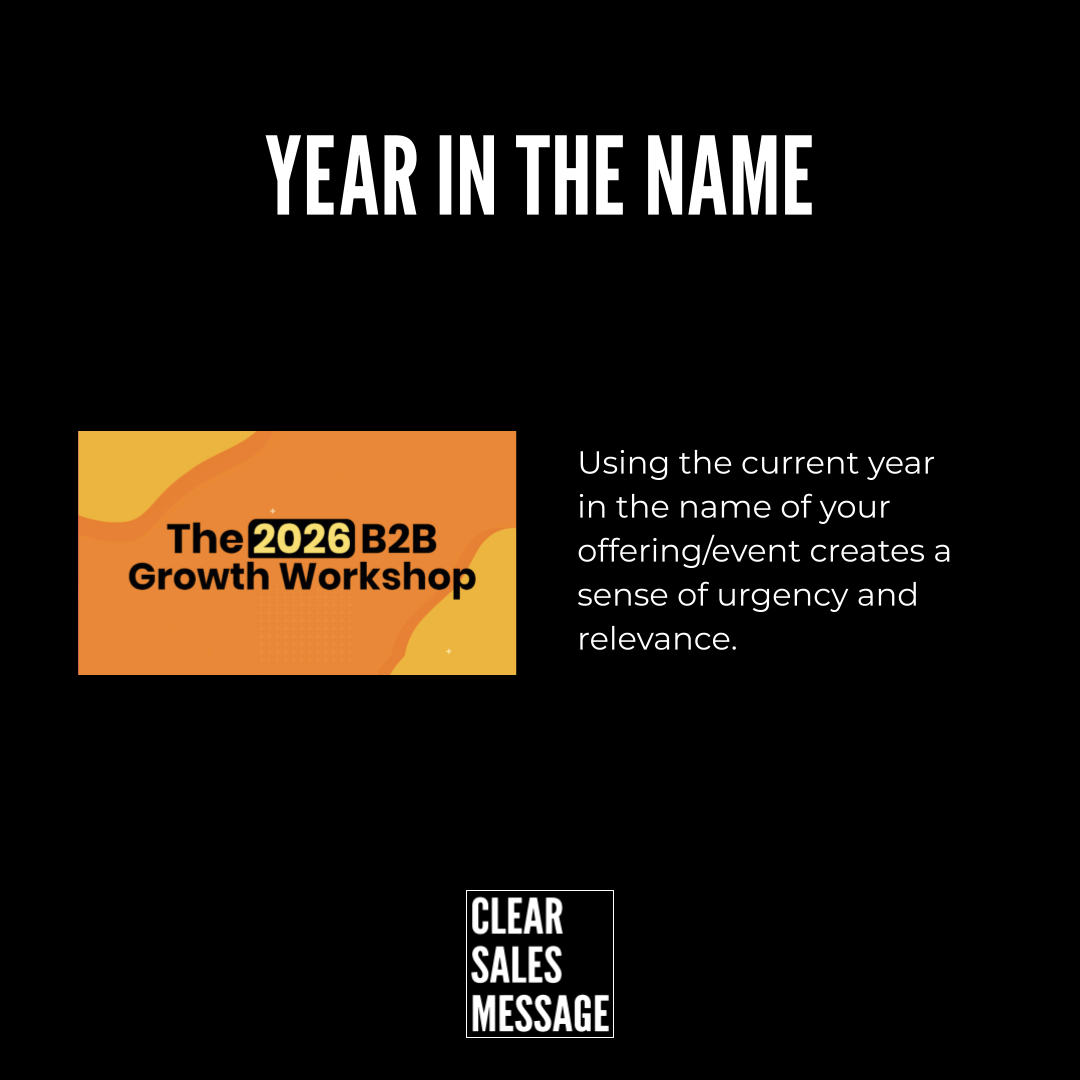
Jason Squires promotes an annual workshop that carries the current year directly in its name. So each time it runs, the title itself signals that this is the latest version, not a repeat of an old one.
That single detail does a lot of quiet work. A returning attendee can tell at a glance that this isn’t the same session they already did. A new attendee can tell it’s current and worth their time right now.
That’s year in the name working exactly as intended. The date alone answers the “is this still relevant?” question before anyone has to ask it.

See also