
Practical Sales Training™ > How to connect with your buyer > The Parts Effect

The Parts Effect
Not every buyer wants your full package. Some want a taste of it, at a price that fits.
So the Parts Effect means breaking your offering into pieces. That lets more buyers say yes.
What Is It
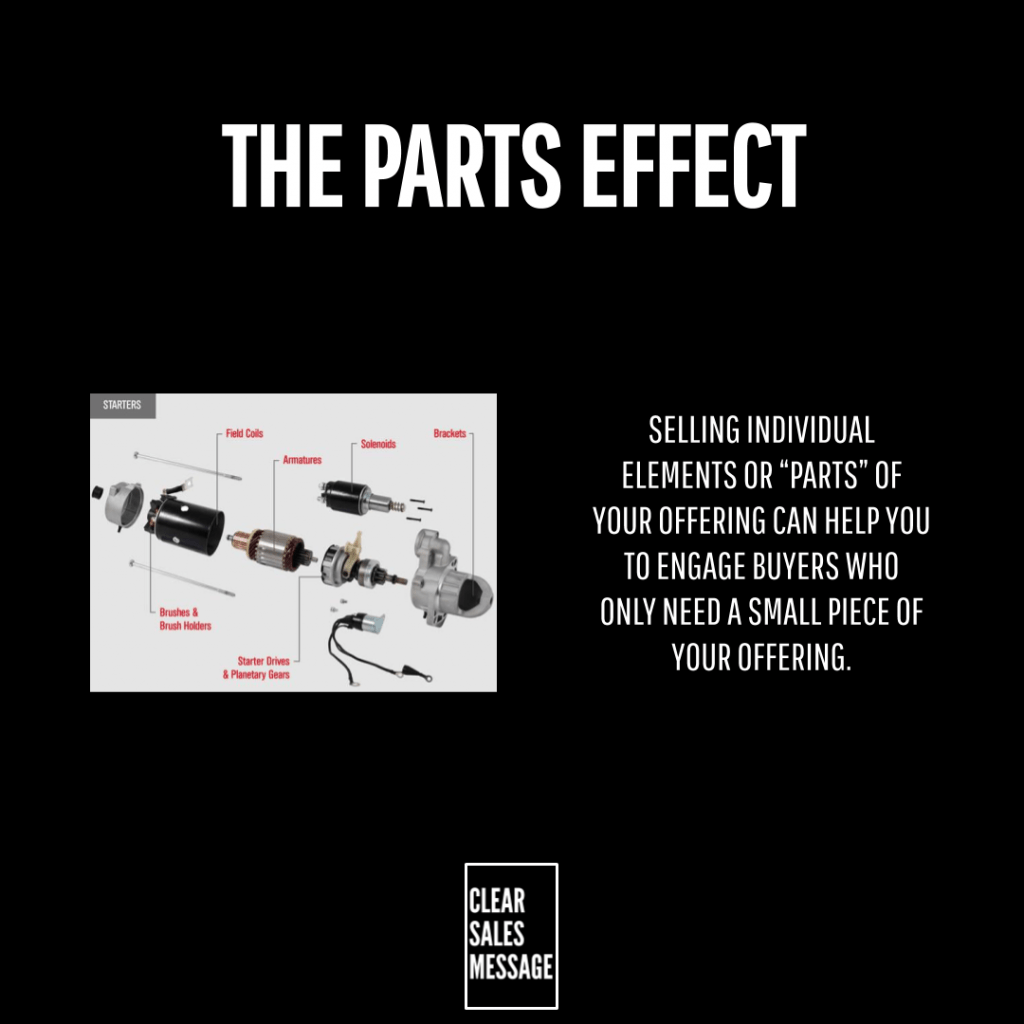
The Parts Effect means splitting your offering into its component parts. That lets you reach buyers at new, lower price points.
Why Does It Work
It works like a budget or starter version of what you sell. So it gives buyers a cheaper way in.
It also gives them something more relevant. A single part often fits their specific need better than the whole package.
How Can You Use It
Break Down What You Already Sell
Look at your offering and ask what it’s actually made of. Could you sell the parts separately, at their own price points?
Build A Business Around The Parts Themselves
Some businesses run entirely on replacement parts and smaller components. So consider whether one piece could stand alone as its own product.
When It Works Best
This works best when your full offering costs a lot. That price can put some buyers off. So breaking it apart opens the door to smaller budgets.
It also works well when your offering naturally splits into distinct stages or pieces. The clearer the split, the easier this is to sell.
When It Becomes Dangerous
This becomes risky if the parts feel disconnected from the whole. So buyers should understand how each piece fits into the bigger picture.
It also backfires if pricing the parts separately costs more than the full package. That confuses buyers instead of helping them.
Common Mistakes
Splitting Without A Clear Upgrade Path
Selling parts with no route back to the full package costs you money. So always signal what comes next.
Pricing Parts Too Close To The Whole
If a single part costs almost as much as everything together, the split fails. So make sure each price reflects genuine value on its own.
The Parts Effect – An Example
A business consultant normally sells a full £5,000 business growth package. It covers strategy, operations, sales training, and marketing support.
To reach more clients, they split it into parts. The Sales Strategy Workshop comes in at £750, and the Operations Audit at £600. A Marketing Plan Review runs £500. And 1:1 Monthly Coaching costs £300 a month.
So buyers can start smaller, based on what they actually need. That lowers the barrier to entry, and opens up new price points.
It also creates upsell opportunities later. Once a client sees value in one piece, the rest sells itself.
The same model works well elsewhere too. Online courses and subscription services often split this way. So do physical products with replaceable components.
See also