

Practical Sales Training™ > How To Connect > The Budget Version
The Budget Version
Not every buyer has the budget for your main offer. So instead of losing them completely, you can give them a smaller way in.
That’s the Budget Version. Same core value, fewer extras, lower price. It’s not a discount on your main offer. It’s a different offer entirely.
And it means you stop turning away buyers who would have said yes to less, but said no to everything.
What Is The Budget Version?
The Budget Version is about making your offering accessible and relevant for buyers with a much lower budget. It strips back the extras while keeping the core value intact.
Rather than discounting your full offer, you create a leaner version built specifically for buyers who were never going to pay full price in the first place.
Why Does The Budget Version Work?
It works because no amount of discounts and deals changes the fact that some buyers simply can’t stretch to your full price. They need the cheapest, most basic version of what you do, and nothing else will get them through the door.
A Budget Version meets that need directly, instead of leaving those buyers with nothing or pushing them toward a rival who already has one.
How Can You Use The Budget Version In Sales?
Decide what’s core and what’s extra
Work out which features and elements you could remove to reach a much lower price point, while still delivering real value and meeting the buyer’s core need.
Protect your main offer’s value
The Budget Version should feel genuinely cheaper because it does less, not because your main offer has secretly been devalued. Keep a clear gap between the two.
Name it clearly
Buyers should know exactly what they’re choosing. A clear name like “Budget Access Pass” sets expectations honestly, so nobody feels misled later.
When The Budget Version Works Best
It works best when your main offer has a genuine price ceiling that shuts a real segment of buyers out completely. If those buyers would otherwise walk away with nothing, a Budget Version captures revenue you’d have lost anyway.
It also works well when your core product can be broken down cleanly, so you can remove real features rather than just degrading quality across the board.
When The Budget Version Becomes Dangerous
It becomes dangerous if it cannibalises your main offer. If buyers who would have happily paid full price start choosing the budget option instead, you’ve cut your own revenue rather than grown it.
It can also damage your brand if the budget version feels too poor in quality, since a bad first experience can put someone off ever upgrading to the full offer later.
Common Budget Version Mistakes
Cutting the wrong things
Strip away the extras, not the core value. If the budget version stops delivering the main benefit altogether, buyers won’t see the point of it.
Pricing it too close to the main offer
If the gap between budget and full price is too small, buyers won’t feel like they’re getting a real choice. Make the saving worth the trade-off.
Hiding it as a discount instead of a different offer
A Budget Version isn’t your main offer with money knocked off. So be clear it’s a distinct product, or buyers may assume your full price was inflated to begin with.
The Budget Version – An Example
A gym’s Budget Access Pass
A fitness studio offers premium memberships at £70 a month but introduces a “Budget Access Pass” for £25 a month. This pass includes access to the gym during off-peak hours only, no access to group classes or personal training, and limited use of amenities like saunas or premium equipment.
By stripping down the features but keeping the core value of gym access, the studio captures a segment of the market that would otherwise never buy at all.
See also

10 alternative ways to discount your offering:
- First purchase– Discount the first purchase a buyer makes with you.
- Follow up offer – Follow up those who didn’t buy with an incentive.
- Cashback – Don’t discount, but provide cash back to those who pay full price.
- Themed Sale – Create an event or reason to hold a sale.
- Price Match – Offer to match the genuine price of a competitor.
- Buy more – Incentivise buyers to spend more with ascending discounts.
- Free gift- Offer a free gift with purchase.
- Early bird – Offer a discount for those who buy/pay in advance.
- Flash Sale – Hold a flash sale
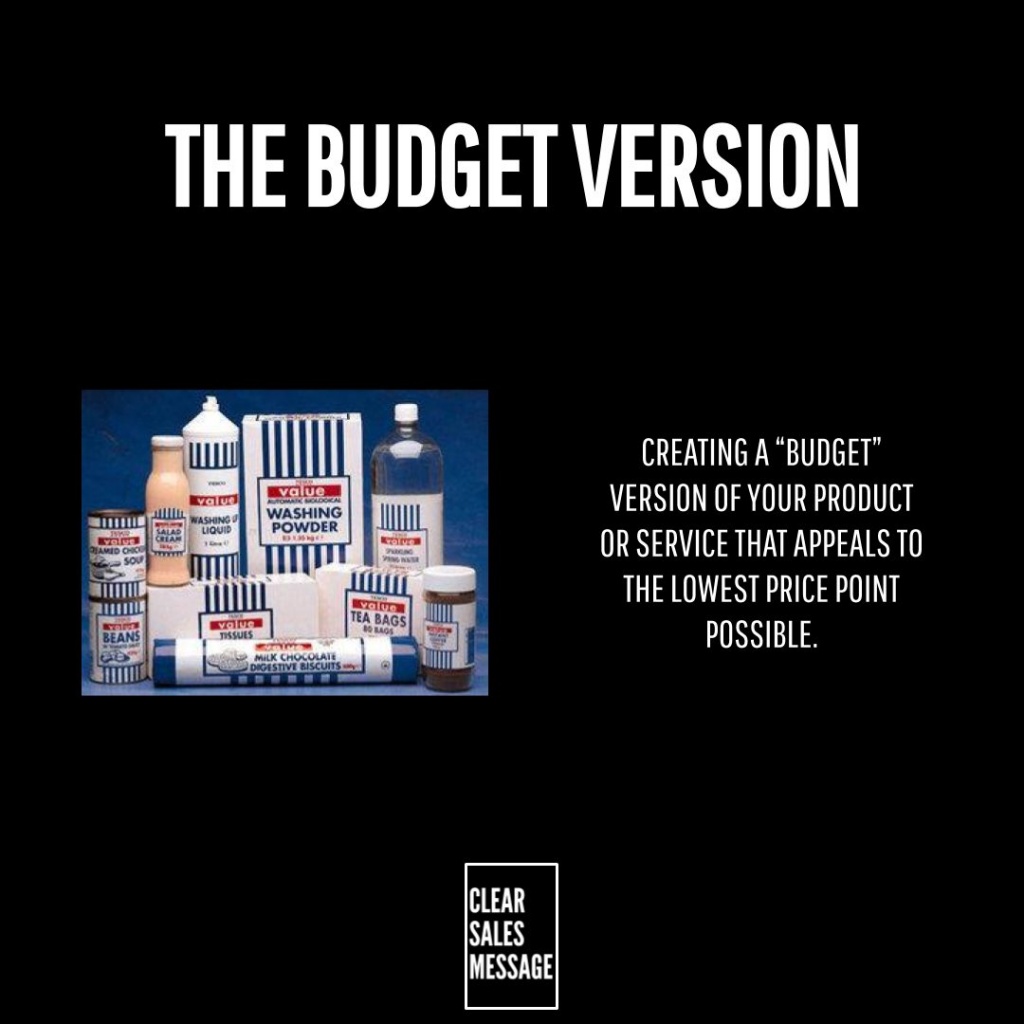
- Budget version -create a naturally cheaper version of your offering to appeal to lower spending buyers.
