
Practical Sales Training™ > How To Convert > The Teacher Effect

The Teacher Effect
What Is It
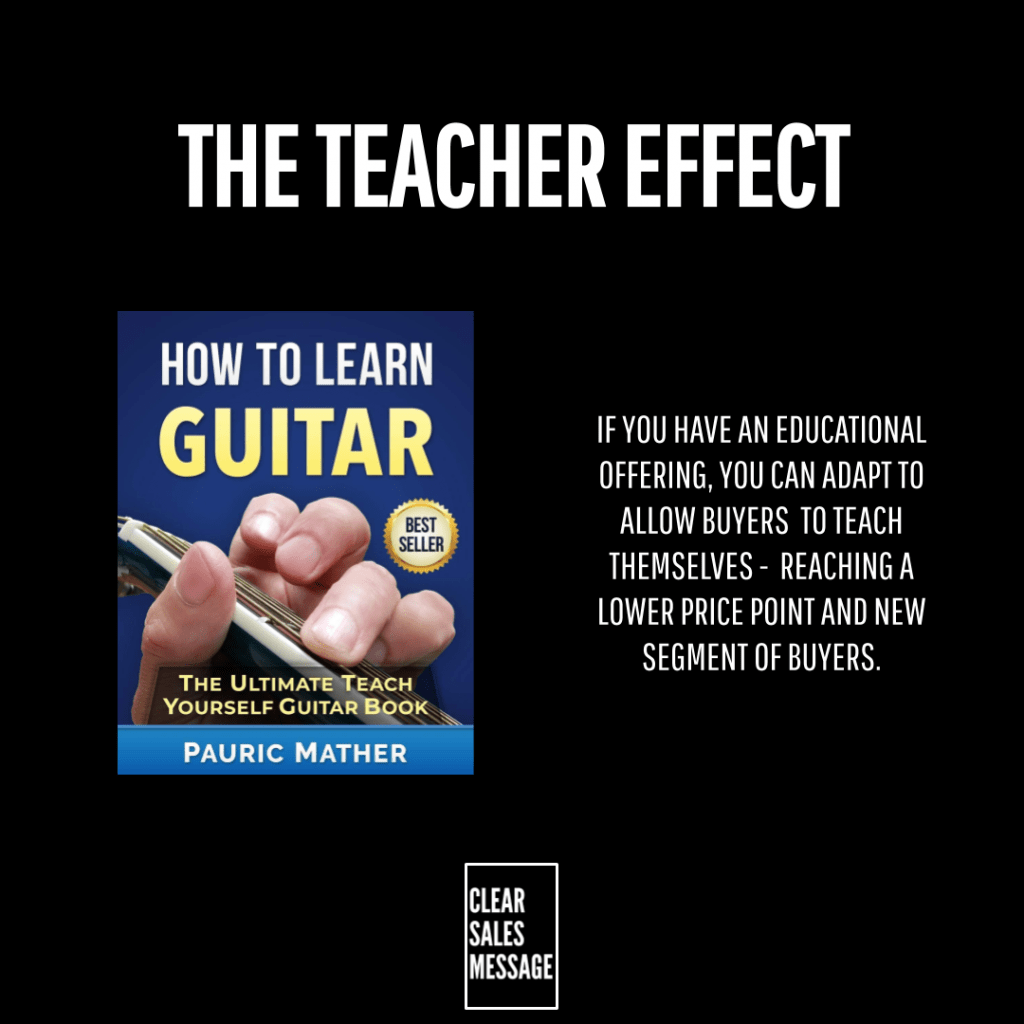
The Teacher Effect is all about having a “do it yourself” option, to appeal to a new audience and a new price point. Not a lesser service, a different one entirely.
Instead of doing the work for a client, you teach them to do it themselves. That shift changes who can afford you, and why.
You’re still selling the same expertise. You’re just packaging it differently.
Why Does It Work
It works because some people prefer to do things themselves, and some genuinely don’t need or can’t afford your full service offering. By giving a client a way to teach themselves, and access your resources in an online course format or similar, you create another route to market.
Some buyers were never going to hire you at full price. They weren’t lost customers, they were a different customer entirely, one you’d never reached before.
A DIY version also builds trust before a bigger purchase. Someone who learns from you first often becomes a client later, once they hit the limits of doing it alone.
How Can You Use It
Turn your service into teachable knowledge
If your offering is all about performing a service for a client, could you instead give them the knowledge to do it themselves? How could you package and productise your service based offering into a standalone online course, one that needs little to no involvement from you directly?
Position it clearly as the DIY route
Could you position it as a starter or budget version of your main offering, and price it knowing it has a much lower cost of sale for you?
Leave a clear path back to the full service
A DIY version works best when it leads somewhere. Build in a natural upgrade route for anyone who realises they’d rather have you do it after all.
When It Works Best
This works best when your expertise has a genuinely teachable structure, clear steps, principles, or a process someone else could follow with guidance.
It also works best when there’s a real audience priced out of your full service, people who’d never hire you, but would happily pay to learn from you.
When It Becomes Dangerous
It backfires if the course genuinely can’t replace the outcome your full service delivers, and buyers feel misled about what they were paying for.
It also becomes risky if it cannibalises your higher priced service, with existing or likely clients choosing the cheap DIY route instead of hiring you directly.
Underpricing it just to seem accessible causes its own damage, since a course sold too cheaply can undervalue everything else you sell too.
Common Mistakes
Making the course too shallow to help
A rushed course that skips the real substance leaves buyers frustrated. Teach the actual method, not a watered down summary of it.
Marketing it to the wrong audience
Promoting a DIY course to clients who’d happily pay full price for your service just trains them to expect the cheaper option instead.
Leaving out any path to upgrade
A course with no route back to your full service wastes the relationship it just built. Always leave a clear next step for anyone who wants more.
The Teacher Effect – An Example
A Bookkeeping Business
A bookkeeper who normally manages accounts for small businesses builds a “DIY Bookkeeping Basics” course, teaching sole traders how to track their own expenses and prepare simple monthly reports.
Buyers who could never afford a full bookkeeping service now pay for the course instead. Many later hire the bookkeeper directly once their business grows past what they can manage alone.
See also