

Practical Sales Training™ > How To Convert > The Productisation Effect
The Productisation Effect
What Is It
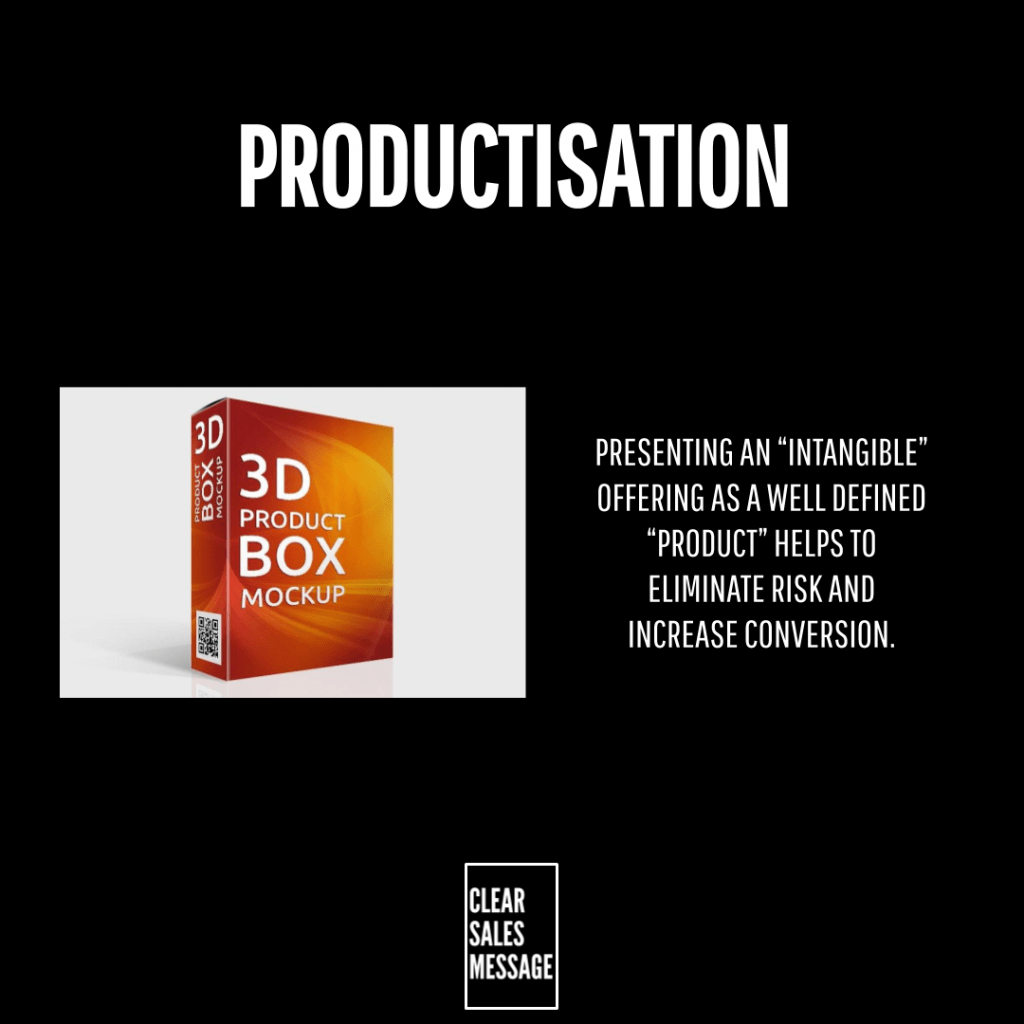
The Productisation Effect is taking an intangible or service based offering and reframing it as a product. That makes it more tangible for your buyer.
Instead of “hours of my time,” the buyer sees a named thing with a clear shape. A start, an end, and a result.
This isn’t just a pricing trick. It changes what the buyer is actually agreeing to when they say yes.
Why Does It Work
It works because the more tangible something is, the less perceived risk there is. A product feels safer to buy than a promise of effort.
By creating a product, you demonstrate empathy and understanding of your buyer’s needs. You also make yourself an easier proposition, since there’s less for the buyer to work out for themselves.
Naming your product adds value too, thanks to The Named Process Effect. Things that have names carry implied value. An hourly rate doesn’t.
How Can You Use It
Charge for the result, not the hours
If you have a service based offering where you charge by the hour, or by another variable, consider charging for an end result or a fixed amount of time instead. Focus on selling the end result your client wants, not the amount of service it takes you to get there.
Build around the moment that triggers action
Focus on trigger points, the specific things that cause your client to act, then build your offering around that. For example, a legal company could offer packages tuned to life events like birth, marriage, or death, rather than listing individual services like wills, or simply charging by the hour.
Give it a name that describes the outcome
A product name should describe what the buyer gets, not what you do internally. “The 30-Day Career Clarity Plan” tells a story. “Coaching sessions” doesn’t tell the buyer anything at all.
When It Works Best
This works best when your service already has a repeatable shape, the same broad steps for every client, even if the details change each time.
It also works best when hourly pricing is actively creating hesitation. If buyers keep asking how long something will take, that’s a strong sign productisation would help.
When It Becomes Dangerous
It backfires if the package doesn’t actually deliver what the name promises. A confident name raises expectations, and a mismatch between name and outcome damages trust fast.
It also becomes risky if you productise too rigidly. Some clients genuinely need something outside the package, and a system with zero flexibility can turn away good business.
Pricing yourself out of your own market is a real risk too. A fixed fee only works if it still reflects fair value for both sides, not just a neater number for you.
Common Mistakes
Naming the process instead of the outcome
“The Strategy Session Package” describes what you do. It doesn’t describe what the buyer walks away with. Name the result, not the method.
Productising without changing the substance
Slapping a name and a fixed price on the exact same hourly work isn’t productisation. The offering itself needs a clear structure behind the label.
Listing features instead of the result
“3 calls, a PDF, and email support” is a feature list. Lead with what the buyer achieves, then let the features back that claim up underneath.
The Productisation Effect – An Example
A Career Coach’s Fixed-Fee Product
Let’s say you’re a career coach who traditionally charges by the hour. Instead of offering “£120/hour coaching sessions,” you create a named, fixed-fee product like:
“The 30-Day Career Clarity Plan” – £595
A structured, 4-week programme that includes:
- 3 x 1-hour calls
- A personalised career roadmap
- Email support between sessions
- A final action plan PDF
Now you’re not selling hours, you’re selling an outcome with a clear name and process.
Why it works: It removes ambiguity for the buyer, since “what do I actually get for £120/hour?” no longer needs answering. It’s also easier to compare and understand at a glance. The buyer can emotionally invest in the result rather than the mechanism behind it, and pricing objections based on time disappear, because the conversation has already moved to value.
This same principle applies whether you’re in consulting, therapy, marketing, design, or law. Structure your services into named, tangible packages that focus on solving a problem or delivering a result.
See also
- The Fixed Price Effect
- Value Based Pricing
- 180+ ways to improve conversion
- 140+ ways to be easier to buy from