
Practical Sales Training™ > How To Get Attention > Proximity Marketing

Proximity Marketing
Location matters in sales. A buyer walking past your premises, or near a place your customers gather, is already part of the way there. They are close. They may well need what you offer. All they need is a nudge at the right moment.
That is what Proximity Marketing does. It puts your message where your buyers already are. Not online, not in their inbox, but right there in the physical world, close enough that acting on it is easy.
Because the buyer is nearby and the message is timely, the conversion from attention to action is much shorter than with most other forms of marketing. You are not asking them to remember you later. You are catching them now.
What Is Proximity Marketing?
Proximity Marketing is when you put your message in front of people who are physically near you or near a place your buyers are likely to be. It is about using location to your advantage. The closer someone is to you, the more relevant your message becomes. And the more relevant it is, the more likely they are to act on it.
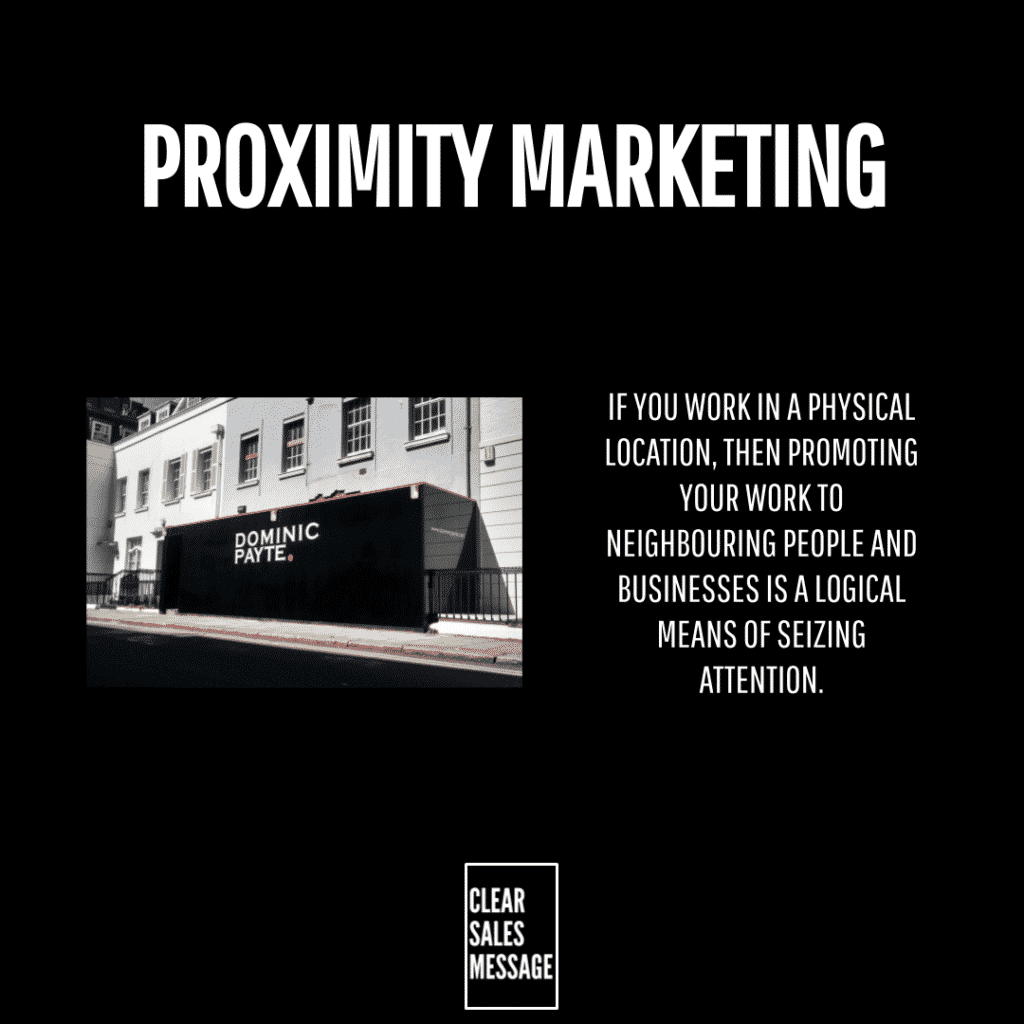
It can be as simple as a sign outside your door. Or it can mean placing boards, banners, or branded materials near a key location where your buyers pass through. The goal is always the same: be seen by the right person, in the right place, at the right time.
Because Proximity Marketing works in the real world, it also works well alongside your online presence. A buyer who sees your sign on the way to work may search for you that evening. The physical nudge starts a journey that the digital side of your business can complete.
Why Does Proximity Marketing Work?
It works for two main reasons. The first is propinquity. When buyers see your name or brand repeatedly in a place they pass often, familiarity builds. They start to feel they know you before they have ever spoken to you. That familiarity makes the step towards buying much smaller.
The second reason is the trigger point. A trigger point is the moment when a buyer becomes ready to act. Someone walking past a coffee shop at 8am is thinking about coffee. Someone walking past a gym in January is thinking about getting fit. When your message appears at the moment of that thought, it lands far more powerfully than it would at any other time.
Together, these two forces make Proximity Marketing very effective. Propinquity builds the familiarity over time. The trigger point makes the message land at the right moment. So buyers who have seen your sign many times before are primed to respond when they reach the point of needing what you offer.
There is also a simplicity benefit. A physical message near the buyer removes the steps that online marketing often requires. There is no click, no search, no delay. The buyer sees the message and can act on it straight away. Because the path from awareness to action is short, more people complete it.
How Can You Use Proximity Marketing In Sales?
Start by thinking about where your buyers are before they reach you. What route do they take? What places do they pass? Where are they when the need for what you offer is most likely to be on their mind? Those are the places your Proximity Marketing should appear.
Use Signs and Boards Near High-Traffic Spots
A well-placed board or banner near a train station, a car park, or a busy junction can reach a large number of the right people every single day. Because the same people often pass the same spots on the same route, the message builds familiarity quickly. Keep the message short, direct, and easy to act on. If they need to think too hard, they will walk past.
Visually Tag Your Vehicles and Tools
If you work on location, your van, your uniform, and your tools are all moving billboards. Every street you park on, every job you attend, every site you work at is a chance to be seen by people who may need exactly what you do. A well-branded vehicle in the right area can generate more local awareness than a paid ad campaign costing far more.
Match the Message to the Moment
The message on your Proximity Marketing needs to speak to what the buyer is thinking right now. Not what you want to say about your business in general. What does the person passing this spot at this time of day need to hear? Tailor the message to the moment and the location, and it will land far better than a generic brand message ever could.
Make the Next Step Obvious
Proximity Marketing works best when the action it asks for is simple and immediate. A direction, a distance, a QR code, or a phone number all give the buyer something easy to do right now. Because the buyer is already nearby, the barrier to acting is low. Do not waste that advantage with a vague message that leaves them unsure what to do next.
Think About Digital Proximity Too
Proximity Marketing is not only physical. Local search ads, geo-targeted social media posts, and location-based notifications all work on the same principle. When a buyer is in a certain area and searches for something nearby, showing up at the top of those results is a digital form of Proximity Marketing. Because the buyer is already close and already looking, the intent to act is high.
When Proximity Marketing Works Best
Proximity Marketing works best for businesses with a physical location or a service area. Cafes, gyms, shops, tradespeople, and local service providers all have a natural fit with the approach. Because their buyers move through a defined area, placing messages along the routes those buyers take is a direct and cost-effective way to build awareness.
It also works well when the buying decision is quick. When someone needs a coffee, a sandwich, or an emergency plumber, they are not going to spend a week researching. They will act fast and go with whoever is most visible and most convenient. Proximity Marketing puts you in that position.
Similarly, it works well alongside a strong brand. A buyer who has seen your sign every morning for six months and then needs your service will feel they already know you. That familiarity from Proximity Marketing shortens the sales conversation and builds trust before it even begins.
When Proximity Marketing Becomes Dangerous
The risk is putting a message in the wrong place. A sign near a busy road where drivers cannot stop is wasted. A board in a location where the passing footfall has no connection to what you offer will generate impressions but no results. So think carefully about who actually passes each location and whether they are the right buyers for you.
There is also a message risk. A vague or unclear sign that does not tell the buyer what to do next will be ignored. People move quickly in the physical world. Your message has a second or two to land. If it does not communicate the point and the next step instantly, the moment passes and the buyer moves on.
Common Proximity Marketing Mistakes
Choosing the Wrong Location
Not every busy spot is the right spot. High footfall only helps if the people passing are your buyers. A board near a primary school is perfect for a children’s activity business and useless for a corporate law firm. So think about who your buyers are and where they actually go. Then put your message there, not just anywhere busy.
Using a Generic Brand Message
A sign that says your company name and what you do is easy to ignore. A sign that speaks directly to what the buyer is thinking right now is much harder to walk past. Tailor every piece of Proximity Marketing to the specific moment and location. Because context makes messages land harder, a tailored message will always beat a general one.
No Clear Next Step
If a buyer sees your message and does not know what to do next, the opportunity is lost. Every piece of Proximity Marketing needs a clear and easy call to action. A direction, a phone number, a QR code, or a distance. Something that turns attention into a step towards buying. Without it, you have awareness but no conversion.
Setting It Up Once and Ignoring It
A sign that is faded, damaged, or out of date works against you. It signals that you do not pay attention to detail, which is not a quality buyers want in a supplier. So check your Proximity Marketing regularly. Keep it clean, current, and in good condition. Because it represents your brand every day to everyone who passes it, it needs to stay looking the part.
Proximity Marketing – An Example
A local coffee shop places branded boards and banners near the train station a few minutes’ walk away. The message is simple:
“Need a coffee before work? 2 minutes this way →”
Commuters passing the station every morning are already thinking about their morning drink. That is the trigger point. The sign meets them at exactly that moment. And because many of them pass the same spot every day, the familiarity from propinquity builds quickly.
Over time, when a commuter decides they want a coffee, this shop is the obvious choice. Not because it ran the best campaign. Because it showed up every morning, in the right place, with the right message. That is Proximity Marketing working exactly as it should.
See Also