

Practical Sales Training™ > How To Convert > Social Proof
Social Proof
Before a buyer signs up, they want to know one thing. Has anyone else done this and been happy? Social Proof is how you answer that question.
It is one of the most powerful tools in sales because it shifts the burden of persuasion. Instead of you telling buyers you are good, other buyers do it for you. That is a very different thing.
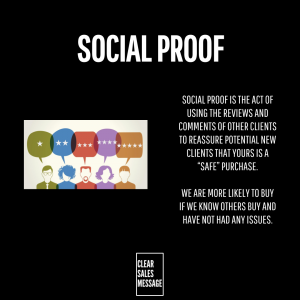
Social Proof is the use of reviews, ratings, and comments from past clients. It helps new buyers feel safe saying yes.
What Is Social Proof?
When a buyer looks at your offer, they face a small moment of fear. Will this work? Is it worth it? Am I making a mistake? Social Proof reduces that fear. It shows buyers that others have been in the same spot and come out well.
Risk plays a big part in why this works. We look at what other people do when we are not sure what to do ourselves. If many people have bought something and rated it highly, that is a signal. It tells us the risk is lower than it might feel. So we are more likely to follow.
The more buyers feel they are taking a chance, the more proof they need. Big decisions, high prices, and new suppliers all raise the stakes. So Social Proof matters most in exactly those moments.
Why Does Social Proof Work?
Buyers carry doubt into every decision. A glowing review from a real person who had the same problem cuts through that doubt faster than any marketing copy. Because the reviewer has no reason to lie, buyers trust them more than they trust you.
There is also a herd instinct at play. When buyers see that many others have chosen you and been happy, the decision feels safer. The volume of proof matters as much as the quality. Both together create a powerful signal that reduces hesitation and makes saying yes feel obvious.
It also handles the fear of being first. Nobody wants to be the buyer who takes a chance on something unproven. Social Proof removes that feeling. When others have already gone before them and won, the risk of following drops sharply.
How Can You Use Social Proof In Sales?
Think about where your buyers look before they decide. Google reviews. TripAdvisor. Trustpilot. LinkedIn recommendations. These sites carry more weight than anything you say yourself. Buyers know you have no control over them. That independence is the whole point.
Use Third-Party Review Sites
Ask clients to leave reviews on Google, Trustpilot, or wherever your buyers naturally look. Because you cannot edit these reviews, buyers treat them as honest. Even a mix of four and five-star reviews can build trust, since a perfect score with very few reviews can look suspicious. A realistic spread of strong reviews is more convincing than a handful of perfect ones.
Use Case Studies and Testimonials
A review tells a buyer that someone was happy. Case studies go further – they show how it worked and what changed. Both are useful, but a case study gives a buyer something to see themselves in. When they read a story that mirrors their own situation, the decision feels far less risky. Use both where you can.
Ask at the Right Moment
Ask for proof at the right moment. The best time to request a review is when a client has just had a win. They are happy, the outcome is fresh, and the detail will be specific. Vague praise is not as useful as a tight, outcome-led comment. Make it easy by sending a direct link and asking one focused question.
When Social Proof Works Best
Social Proof works best when it is specific. A five-star rating helps. But a five-star rating with specific detail is far stronger. Something like: “this firm saved us three weeks and cut our costs by a fifth.” The detail makes it real. Buyers can picture themselves in that outcome.
It also works best when it is recent. Old reviews suggest things may have changed. Keep your proof up to date by asking regularly, not just once.
Volume matters too. Ten reviews with an average of four point eight stars is more convincing than two reviews with five stars. Because buyers know a larger sample is harder to fake, more reviews carry more weight.
When Social Proof Becomes Dangerous
The main risk is fake or bought reviews. Buyers are good at spotting them. One suspect review can undermine twenty real ones. Keep your Social Proof honest. It only works because buyers trust it.
There is also a risk of using proof that is too broad. A testimonial that says “great service, would recommend” does not say much. If all your proof sounds generic, buyers cannot connect it to their specific fear. Ask clients to be specific about what changed and why they chose you.
Common Social Proof Mistakes
Using Only One Type of Proof
Reviews, case studies, testimonials, ratings, and logos of well-known clients all play different roles. Relying on just one type leaves gaps in the buyer’s confidence. Mix them based on where the buyer is in their decision. A buyer who has never heard of you needs different proof from one who is nearly ready to sign.
Letting Your Proof Go Stale
Letting your proof go stale is also common. Old reviews signal that things may have changed. Keep your proof fresh. Set a reminder to refresh it every few months. Because buyers notice dates, recent proof always carries more weight than old proof.
Proof That Is Too Vague to Be Useful
Generic proof does generic work. If a testimonial could have been written about any business in your space, it is not helping you. Coach clients to be specific. Ask what the result was, how long it took, and what they would say to someone in the same position. Specific answers make Social Proof worth reading.
Social Proof – An Example
Uber builds Social Proof collection into the end of every single trip. The moment you arrive, you see a screen asking you to rate your driver. It takes seconds. Because it sits in the natural flow of the trip, more riders complete it. Far more than would respond to a later email.
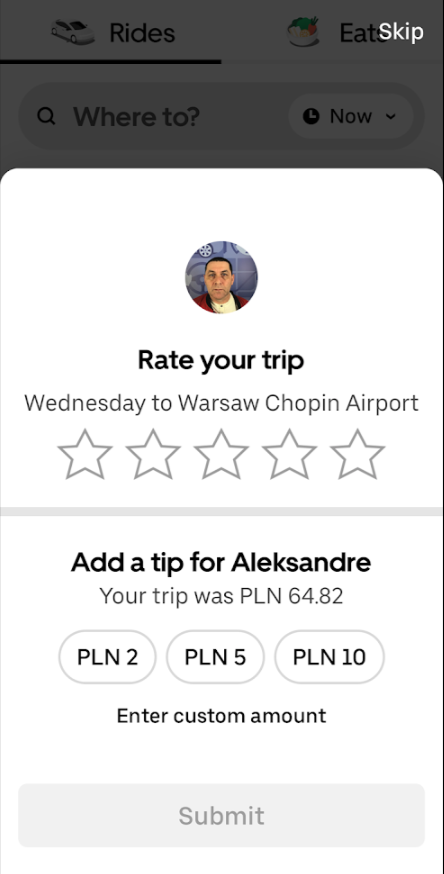
The result is a huge volume of recent, real reviews. Drivers with strong ratings get more rides. Riders with strong ratings get picked up faster. So the whole system runs better because Social Proof is built in, not bolted on.
That is the lesson. The easier and more natural you make it to leave a review, the more you will collect. Build the ask into the moment when the client is happiest, not as an afterthought.
See Also
- The Before/After Effect
- Transformation Statement
- Specific Proof
- 180+ ways to improve conversion
- 100+ ways to be more memorable