
Practical Sales Training™ > How To Convert > Residual Value

Residual Value
What Is It?
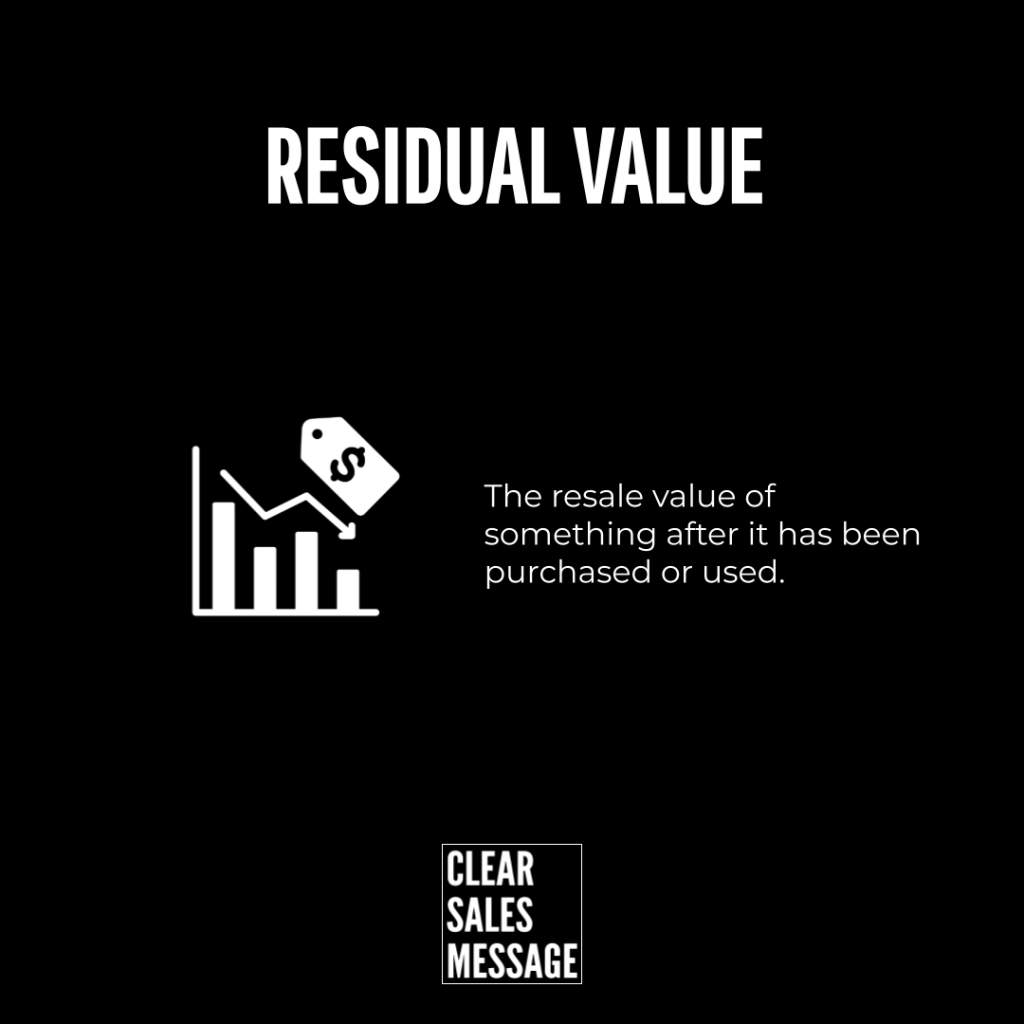
Everything still loses value over time. That’s depreciation, and it never really stops.
So residual value is what’s left once that drop happens. The higher it sits, the more attractive your offer becomes. So your buyer loses less money overall.
Why Does It Work?
It works because buyers want the safest route to the best deal. So nobody wants to feel like they threw money away the moment they signed.
A car that holds its value well feels like a smarter buy. So does a piece of equipment that does the same. Buyers know they can resell it later, so today’s purchase feels far less risky.
How Can You Use It?
Visualise The Value Over Time
Visualise the value over time. So a simple timeline or infographic shows exactly what your product will be worth later, not just today.
Compare Against The Alternative
Compare against the alternative. Show how your option holds value better than the cheaper choice beside it. So a visual comparison makes the gap obvious instantly.
Lead With The Actual Number
So lead with the actual number. Don’t just claim your product holds value well. State the real resale figure instead. A specific number beats a vague promise.
When It Works Best
This works best for big ticket, depreciating purchases. Cars, machinery and tech all fit this pattern too. Buyers already expect these things to lose value fast.
It also works well wherever resale is genuinely likely. If resale is realistic, residual value becomes a real argument.
When It Becomes Dangerous
Residual value becomes dangerous the moment the claim outpaces reality. Promise strong resale, then watch the market prove you wrong. Trust collapses fast after that.
It’s also risky without solid data behind the number. So a guessed figure invites doubt the second someone checks real listings.
Common Mistakes
Claiming Value Without Proof
Claiming residual value without proof is the most common mistake. So a confident number with nothing behind it reads as a hopeful guess.
Ignoring The Category Norm
Ignoring the category norm is another trap. Buyers judge your resale claim against similar products. So ignoring that comparison makes your number meaningless.
Forgetting To Show It Visually
Forgetting to show it visually is the last one to avoid. So a number in a sentence rarely lands hard. One on a chart lands much harder.
Residual Value – An Example
How The Car Industry Uses It
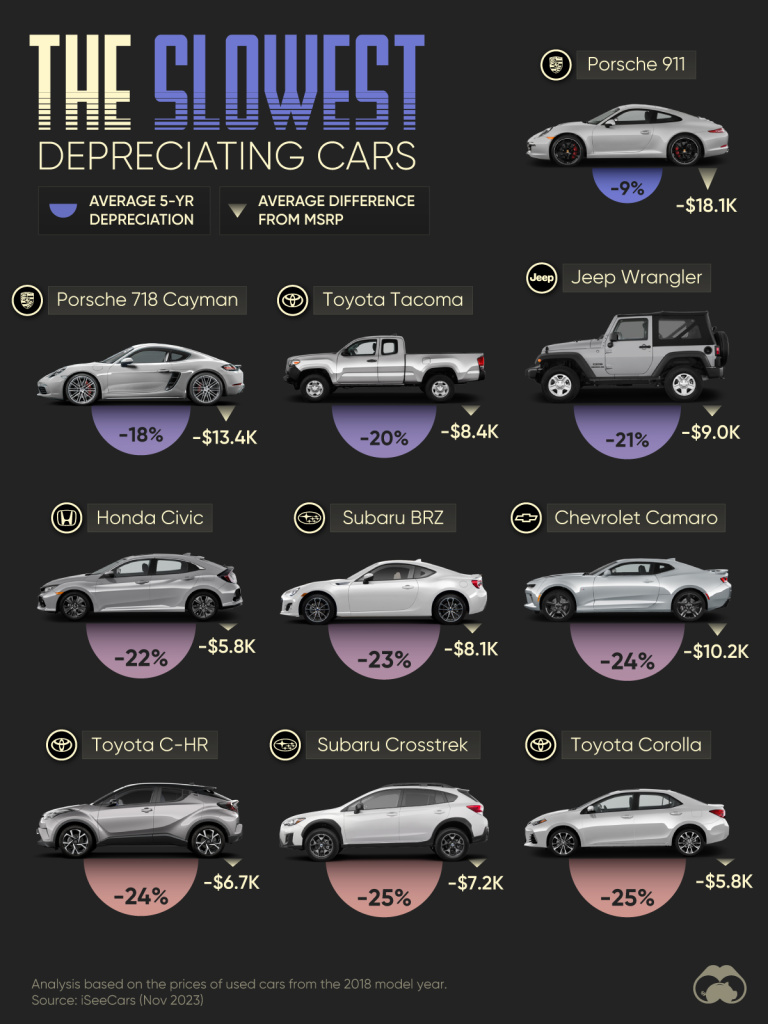
The car industry leans on residual value constantly. So buyers compare models partly on future worth, not just today’s price.
So that single number often decides between two similar cars. The one holding value better usually wins, even at a higher price.
See Also