

Practical Sales Training™ > How to Connect With Your Buyer > The Timeline Effect

The Timeline Effect
What Is It?
A timeline helps your buyer see a decision clearly. So it shows the real impact of consequences they might already be facing.
It also helps reframe the whole decision around the longer term. A single picture of time does more than a paragraph of warnings ever could.
Why Does It Work?
It works because we naturally think short term. We focus on today’s problem, and today’s fix, without much thought for what comes after.
A timeline forces a longer view. So it changes how your buyer sees both the problem and the solution in front of them.
That shift matters more than it sounds. So once someone sees the future laid out, today’s decision suddenly carries real weight.
How Can You Use It?
Show What Happens If They Do Nothing
Show what happens if they do nothing. Map out the consequence of inaction, step by step, so your buyer sees exactly where delay leads.
Show The Timeline Of Working With You
Show the timeline of working with you. Walk through what the project actually looks like, week by week. So buyers commit faster when the path ahead feels concrete.
Show How The Industry Is Changing
Show how the industry is changing. If your market has shifted, a timeline makes that shift undeniable. It also makes standing still feel like the real risk.
When It Works Best
This works best for problems that worsen slowly. Health, maintenance and compliance issues all fit. So the damage builds quietly until a timeline makes it visible.
It also works well for decisions your buyer keeps postponing. A visual of drift over time beats another verbal reminder.
When It Becomes Dangerous
The Timeline Effect becomes dangerous when it stops being accurate. Stretch the numbers, and the moment your buyer checks, the whole pitch falls apart.
It’s also risky when a timeline turns into a scare tactic. Buyers can feel manipulation instantly, even inside a simple picture.
Common Mistakes
Making It Too Vague
Making the timeline too vague is the most common mistake. So a fuzzy “things get worse eventually” claim rarely moves anyone to act.
Skipping The Visual
Skipping the visual entirely is another trap. So a description works far less than an actual timeline on the page.
Using It To Scare, Not Inform
Using it to scare instead of inform is the last one to avoid. The goal is clarity, not pressure, so keep every claim honest and specific.
The Timeline Effect – An Example
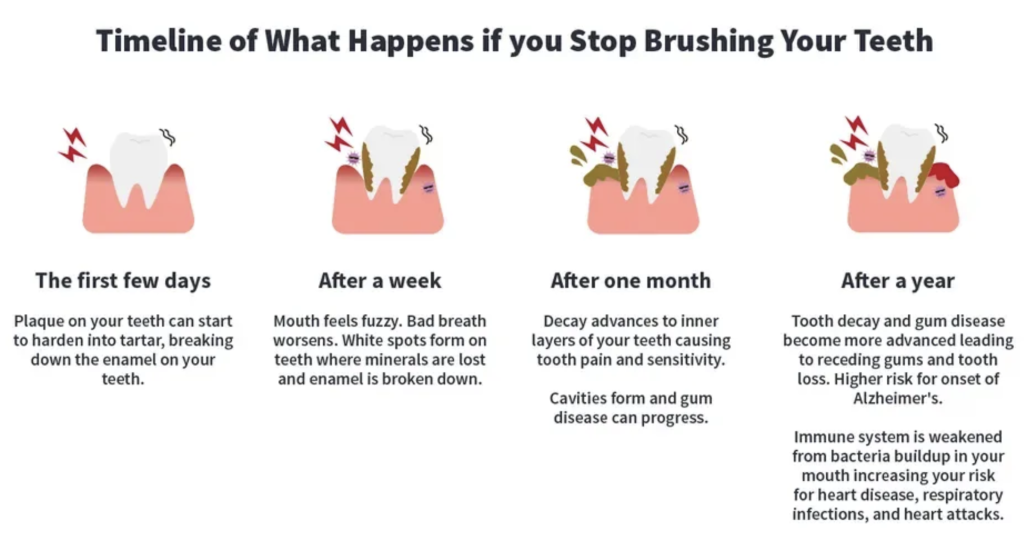
How Dentists Show The Cost Of Skipping Brushing
Dentists use this constantly. So a simple timeline shows exactly how skipped brushing compounds, year after year.
The image alone does the convincing. So nobody needs a lecture once they can see where things are heading.
See Also
- Data Visualisation
- The Progress Effect
- The Next Steps Effect
- 150+ ways to connect with your buyer
- 100+ ways to get your buyer to take action