

Practical Sales Training™ > How To Connect With Your Buyer > Conversational Names
Conversational Names: Pick A Name People Actually Say
Picture a buyer trying to describe your product to a colleague. If your name doesn’t fit that sentence, they’ll swap it for something easier. So now your product has a nickname you never chose.
So the name has to survive being said out loud, in a real sentence, by someone who isn’t you.
What Is It
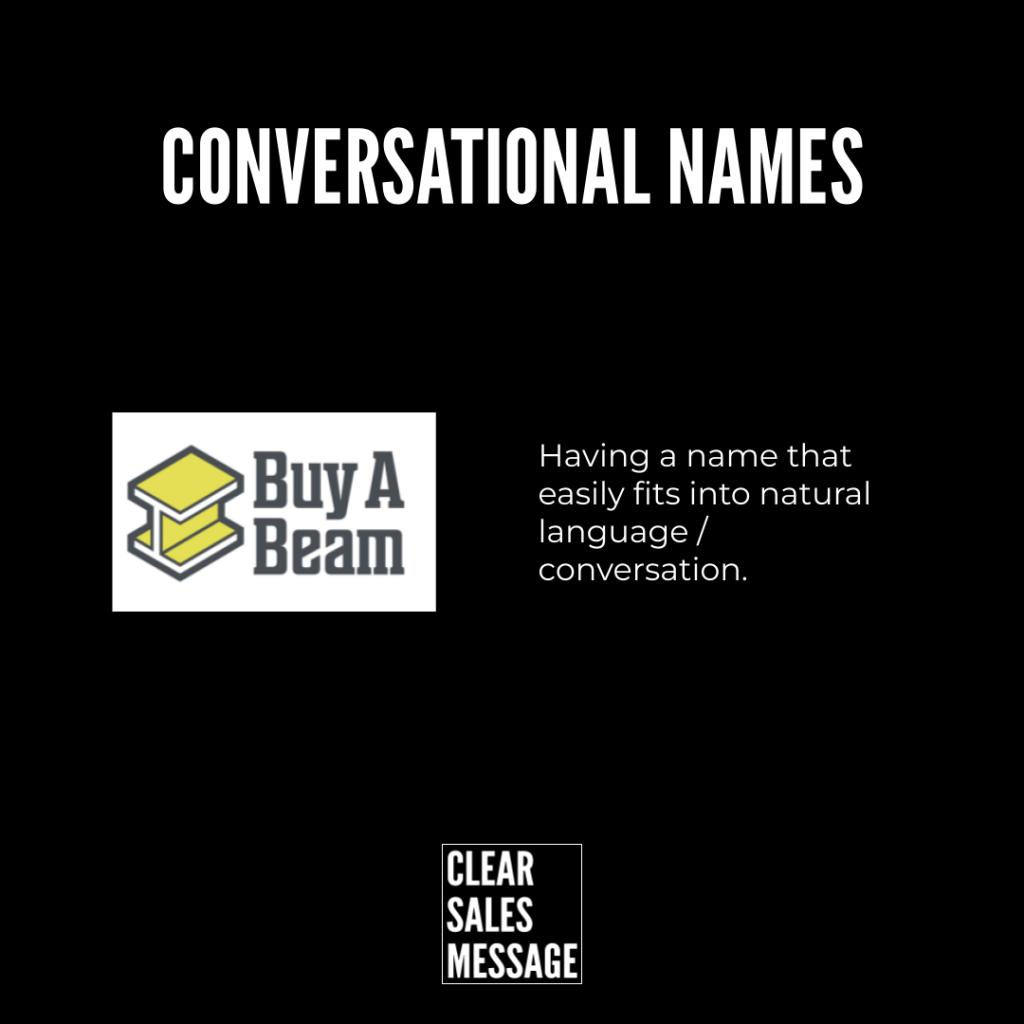
A conversational name sits naturally inside the way your buyer already talks. There’s no clever wordplay, no invented terms. Just something that slots into a normal sentence without anyone stumbling over it.
The test is simple. So say the name inside a sentence your buyer would actually use. If it sounds odd, the name still has work to do.
Why Does It Work
Staying memorable is one of the hardest jobs in selling. A name that’s easy to read, write, speak and spell already has a head start. But conversational names go further, since they fit the language your buyer already uses with their own colleagues.
That matters because your buyer isn’t the only one who needs to say your name. They also have to repeat it to someone else, often from memory, often days later. Get the name wrong for conversation and you invite the Chinese Whisper Effect. Your message mutates a little more with every retelling.
How Can You Use It
Start With Their Words, Not Yours
Write down the exact sentence your buyer uses to describe the problem. Not your version. Theirs. Something like “people don’t understand what we do.” Then write the sentence they’d say once the problem disappeared: “now people understand it straight away.” That gap between the two sentences is where your name lives.
Name The Outcome, Not The Process
So turn that outcome into a plain label. Ask what the buyer would say they now have, if they’d succeeded. Good names describe a thing someone can point to: “I’ve got a clear sales message.” “I finally have a simple onboarding process.” Avoid naming your internal method or framework, since buyers never ask for a methodology. Instead, they ask for the result.
Test It In A Real Sentence
Drop the name into ordinary spoken language. Try “you need a ___” or “have you got a ___ yet?” If the sentence sounds forced, the name isn’t conversational yet. So keep testing until it slots in without friction.
Strip Out The Complexity
Shorten it. Cut the jargon. Remove any clever spelling or insider term that only makes sense once you’ve explained it. If you’d need to explain the name before you explain the offer, simplify the name instead.
Make It Specific Enough To Repeat
Vague names feel safe, but they’re forgettable. A specific name feels useful, and useful things get repeated. Aim for a name that tells a buyer exactly what they’ll walk away with.
Say It Out Loud Before You Commit
Picture someone recommending it to a colleague. If they can say your name smoothly and confidently, without hesitating, you’ve got a conversational name. Otherwise, go back and simplify it again.
When It Works Best
This works best when word of mouth is doing your selling for you. So a buyer can only recommend what they can say. The easier your name is to repeat, the more free advertising it does inside conversations you’ll never hear.
It also matters most in crowded markets, where three competitors all sound the same on paper. A name that lands naturally in speech is one more reason a buyer remembers you specifically.
When It Becomes Dangerous
It becomes dangerous when you fall in love with a clever name instead of a clear one. Wordplay feels satisfying to write. But if your buyer has to pause and decode it, you’ve swapped memorability for a private joke.
It also backfires if the name is so vague it could belong to anyone. A safe, generic name never gets misquoted, but it never gets repeated either.
Common Mistakes
Naming The Method Instead Of The Result
“Revenue enablement positioning framework” describes how you work. But it says nothing about what a buyer gets. Buyers don’t repeat processes to each other. Instead, they repeat outcomes.
Testing It Only In Writing
A name can look sharp on a slide. But it can still fall apart the moment someone tries to say it out loud. Test it in speech, not just on paper, since that’s how most names actually spread.
Choosing Clever Over Clear
A pun might make you smile in the boardroom. But if it needs a footnote to land, it isn’t conversational. Clear beats clever every single time a stranger has to repeat your name from memory.
Conversational Names – An Example
Selling Confidence™ And Clear Sales Message™
I build conversational names into everything I create, since they do double duty. They describe the offer, and they make the conversation easier for the buyer to have.
If someone gets nervous when selling, the sentence becomes “you need Selling Confidence™.” If someone struggles to explain their offer, it becomes “you need a Clear Sales Message™.” Both slot into a buyer’s own language. So both get repeated without translation in between.

See Also
- The Vernacular
- Domain Name Business Name
- One Social Handle
- 150+ ways to connect with your buyer
- 100+ ways to be more memorable