Practical Sales Training™ > Selling Communication Basics > The Timely Effect

The Timely Effect
What Is It
Capitalising on a timely event or good news story by changing your messaging can help bring attention to your offering. Not your own story, one the whole country is already following.
Most marketing has to build its own moment. This effect borrows one that already exists, at full volume.
Timed right, it turns your offering into part of a conversation people were already having.
Why Does It Work
It works because when something captures the public’s imagination, such as the wedding of Prince Harry to Meghan Markle, anything related to that stands out and feels more relatable, since it’s familiar and timely.
This also takes advantage of Propinquity. People are already familiar with the news story or event, and you’re capitalising on that familiarity.
Riding an existing wave of attention takes far less effort than trying to build your own from nothing.
How Can You Use It
Move fast, since the window is short
To make this work requires speed and agility. It’s about relating your offering to a good news story or timely event. This is only truly successful when the event is on a much larger scale, such as the Olympics or a Royal wedding.
Watch for the moment, then react quickly
Keep your eyes peeled for a good news story that captures the public’s imagination, then consider how you can relate your offering to that story.
Make the connection visible, not implied
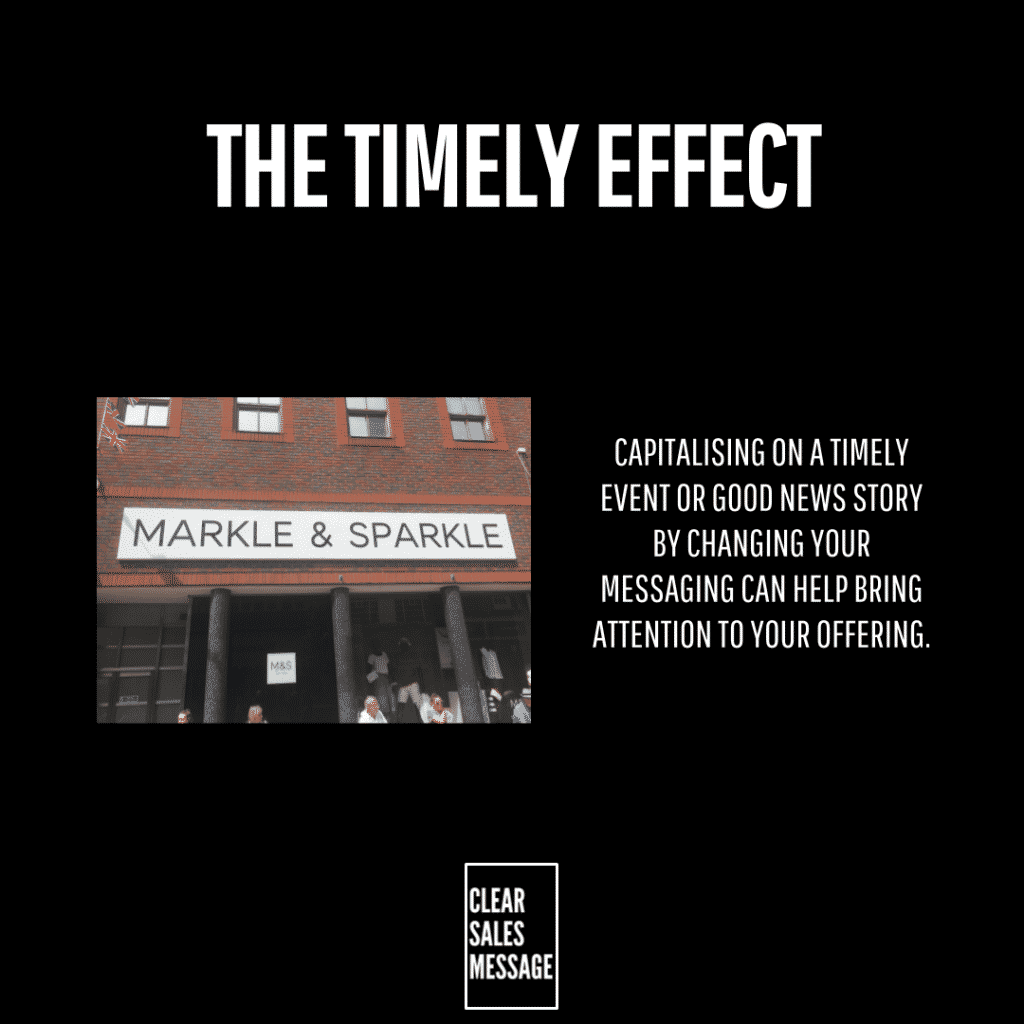
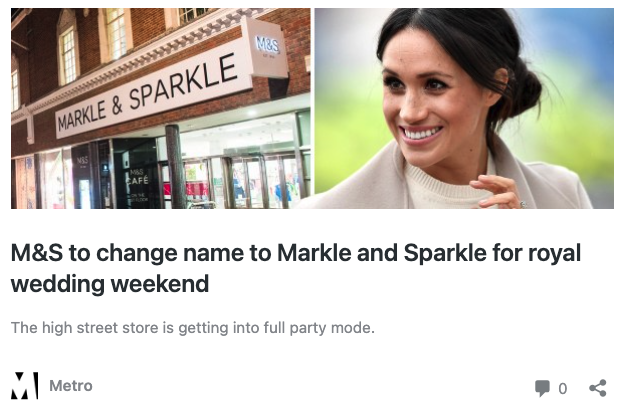
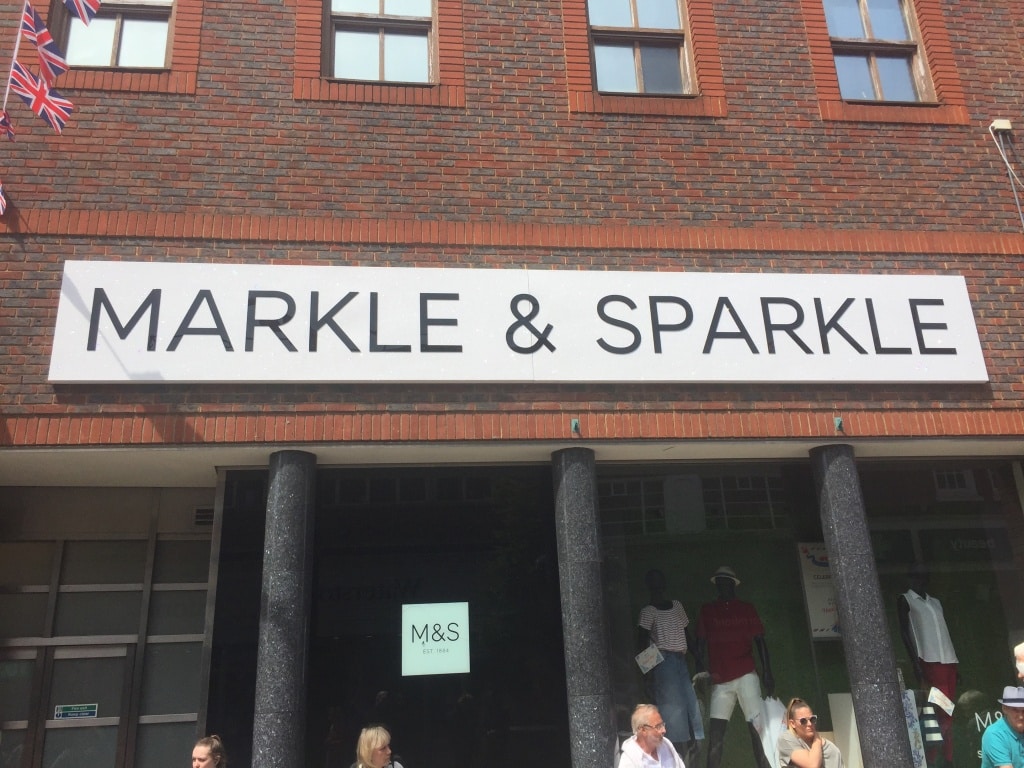
Marks and Spencer, or “Marks and Sparks” in the UK, changed the signage on their Windsor shop for the Royal wedding, and it made the news.
When It Works Best
This works best with genuinely large scale events, ones with national or global attention, rather than smaller, niche stories only some buyers will recognise.
It also works best when your team can move within hours or days, since these moments fade from public attention fast.
When It Becomes Dangerous
It backfires if the connection feels forced or opportunistic rather than genuinely clever. Buyers can tell the difference between a witty tie-in and a brand desperately grabbing headlines.
It also becomes risky with sensitive news events. Attaching your brand to tragedy, controversy, or genuine hardship reads as exploitative rather than timely.
Moving too slowly causes its own problem too, since a reference that lands weeks after the moment has passed just looks out of touch.
Common Mistakes
Reacting to news too small to matter
A niche or local story most buyers haven’t heard of doesn’t carry enough familiarity to work. Save this technique for genuinely major moments.
Attaching your brand to a sensitive story
Not every big news story is safe to build marketing around. Tragedy or controversy needs a wide berth, however tempting the attention seems.
Missing the window entirely
A tie-in published after public attention has already moved on just reads as stale. Speed is the whole mechanism here.
The Timely Effect – An Example
Marks and Spencer’s Royal Wedding Rebrand
Marks and Spencer changed the signage on their Windsor shop to read “Markle and Sparkle” for the Royal wedding weekend, and it made national news.
The wedding was already the story everyone was talking about. M&S simply attached themselves to a conversation that was already happening at full volume.
More Ways To Spot A Timely Moment
- A timely event in the news, such as a royal wedding.
- A day of the year, such as hotdog day.
- Rename a month, like Stoptober or Veganuary.
- Have a themed day of the week, like “Throwback Thursday.”
- An event like Halloween, Christmas, or Valentine’s Day.
See also
- The Life Milestone Effect
- Birthday Gift
- 25+ Selling communication basics
- 100+ ways to be more memorable