Practical Sales Training™ > How To Convert > The Disposal Effect

The Disposal Effect
Buying something new often creates a problem the seller never thinks about. What does the buyer do with the old one? The sofa that needs to go. The fridge that needs collecting. The shed that needs taking down.
For many buyers, that problem is a real reason to delay or not buy at all. Not because they don’t want the new thing. But because getting rid of the old thing feels like too much hassle.
The Disposal Effect solves that. You take the old thing away when you bring the new thing in. Suddenly the decision becomes simple.
What Is the Disposal Effect?
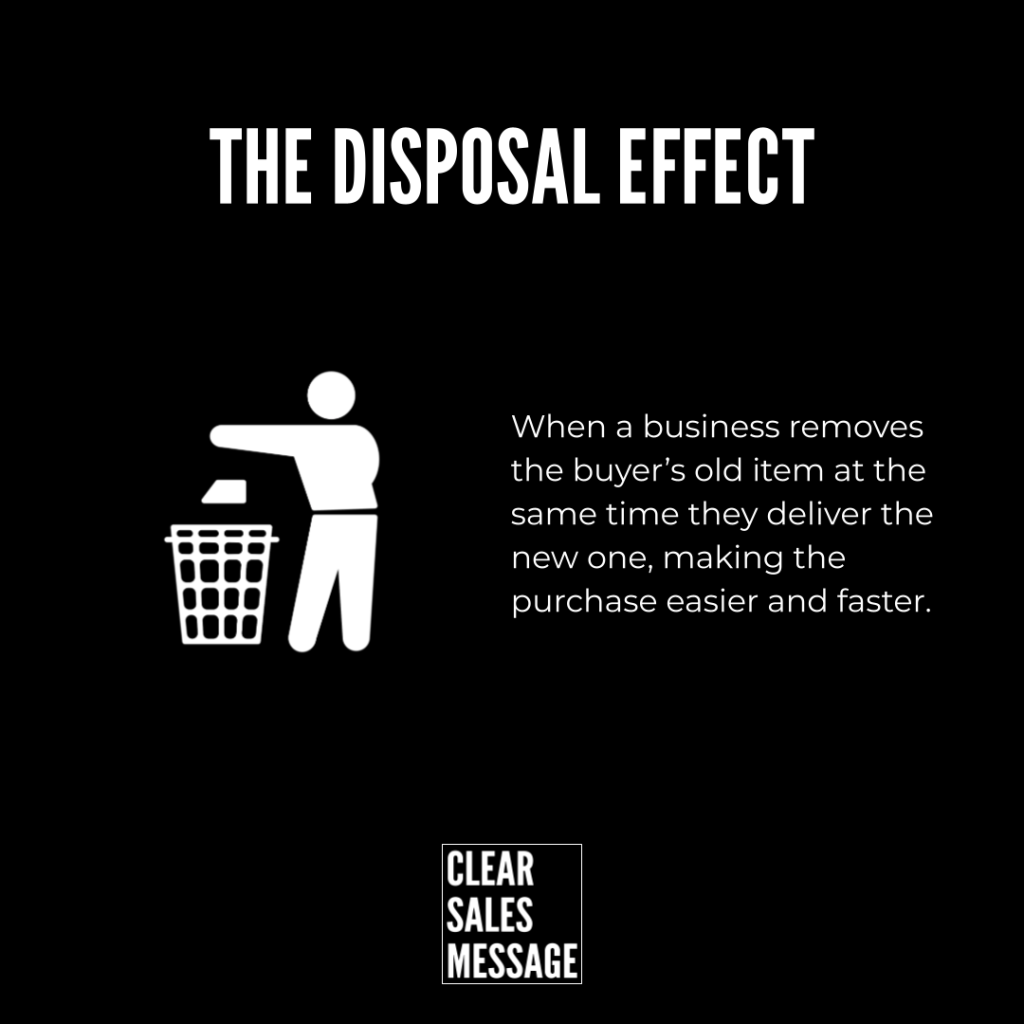
The Disposal Effect is the promise that when a buyer purchases something new, you will take away the old one. Sometimes this comes free. In other cases it carries a clear fee. And sometimes it comes as a trade-in credit if the old item has resale value.
Common examples include a new sofa delivered and the old one collected, a new shed built and the old one removed, a new fridge installed and the old one taken for recycling, and a new mattress delivered with the old one disposed of at the same time. In each case, the buyer makes one decision rather than two.
The mechanic is simple. You bundle the removal of the problem with the delivery of the solution. As a result, the buyer’s path to purchase gets shorter, and the chance of hesitation drops significantly.
Why Does the Disposal Effect Work?
Buying something new often creates a hidden secondary problem: what do I do with the old one? That question involves vans, skips, trips to the tip, charity collections, or simply finding somewhere to store something you no longer need. Each of those feels like effort. And effort is a barrier to buying.
When you offer to remove that problem, you also remove the barrier. The buyer no longer has to think about the logistics of getting rid of the old item. Because both problems get solved at once, the buying decision feels cleaner and more manageable.
There’s also a trust effect. A business that thinks ahead about disposal signals that it cares about the full customer experience, not just the sale. Buyers feel more confident choosing you as a result, particularly over a rival who hasn’t thought that far ahead.
How Can You Use the Disposal Effect In Sales?
The key is to make disposal a standard and simple option that buyers see at every relevant point in the journey. Here’s how to apply it well.
Make It Visible
Show the disposal option on the product page, in the checkout, and in the order confirmation. Buyers who are on the fence about the hassle of getting rid of the old item need to see the solution before they talk themselves out of the purchase. Don’t bury it in the FAQs. Put it where the decision is being made, because that’s when it does the most work.
Keep the Wording Plain
Clarity converts. Use simple, specific language rather than vague promises. For example: “Add disposal of your old sofa, collected on delivery, for £39.” Or: “We’ll take away one old mattress when we deliver your new one.” Or: “Old fridge removed and recycled at the same time as delivery.” The buyer needs to understand exactly what they’re getting and when, so plain wording does more work than a clever headline.
Decide Your Pricing Model
You can offer disposal free on higher-ticket items, as a low-cost add-on, or bundled with delivery and installation. Free disposal removes all friction. A paid add-on creates an upsell opportunity. Bundling it simplifies the decision. Choose the model that fits your margin and your buyer’s mindset, and make it consistent across your range.
Define the Scope Clearly
Buyers need to know exactly what you’ll take, how the item should be prepared, and when collection happens. Without that clarity, the offer creates questions rather than removing them. A clear scope protects both sides and makes the whole process run smoothly, so set it out in plain terms before the buyer commits.
Partner With a Licensed Disposal Company
If disposal isn’t already part of your operation, partnering with a licensed disposal company is more efficient than building the capability from scratch. The buyer cares about the outcome, not the infrastructure behind it. A reliable third-party partner delivers the same result at a fraction of the cost and complexity of doing it yourself.
When the Disposal Effect Works Best
It works best for large or bulky items where getting rid of the old version is genuinely difficult. Furniture, appliances, garden buildings, and mattresses all fit this profile. The harder the disposal problem, the more valuable the solution. So the bigger the item, the stronger this effect becomes as a conversion tool.
Infrequently replaced items also benefit significantly. When someone buys a sofa or a shed, they haven’t done it recently and may not remember how they handled disposal last time. That uncertainty makes the disposal offer especially reassuring, because the buyer doesn’t want to figure out the logistics again. Having it handled for them removes a real and specific anxiety.
Similarly, it works well as a differentiator in competitive markets. If several suppliers sell similar products at similar prices, the one that clearly offers disposal stands out as the easier and more thoughtful choice. When the product comparison is close, the disposal offer can tip the decision.
When the Disposal Effect Becomes Dangerous
It becomes a problem when the scope is unclear and expectations aren’t met. A buyer who expects their old item to be taken away and finds out on delivery day that conditions apply experiences a trust failure at the worst possible moment. So the offer has to be honest, specific, and reliably delivered every time.
Pricing can also backfire when it feels exploitative. If the disposal fee is disproportionate to the actual cost of the service, buyers feel they’re being charged for a problem the business manufactured. Price it fairly, because a disposal option that feels like a penalty damages the brand trust you’re trying to build.
And operational problems create their own risks. A driver who arrives without the right equipment, a partner who doesn’t turn up, or a disposal that isn’t compliant with local regulations all reflect back on your brand. Set up the process properly before you promote the offer widely.
Common Disposal Effect Mistakes
Hiding the Option
If buyers have to search for the disposal option, many won’t find it until they’ve already decided the hassle is too much. Place it prominently at the point of decision. The buyer who is on the fence about getting rid of the old item needs to see the solution before they talk themselves out of buying, not after.
Being Vague About What’s Included
An offer that says “we can help with disposal” creates questions. An offer that says “we’ll collect your old sofa on the same day as delivery for £39” removes them. Specificity is what converts. The more precise you are, the more buyers will take the option and feel confident about it.
Not Training the Team
If the disposal option is on the website but the delivery team doesn’t know about it, the experience fails at the moment that matters most. Everyone involved in delivery and installation needs to know the scope, the process, and what to do when edge cases arise. The disposal offer is only as good as the experience that delivers it.
Pricing It as an Afterthought
A high-cost disposal option added as a surprise at checkout makes buyers feel ambushed rather than helped. Price it clearly from the start and position it as a genuine service. The Disposal Effect builds trust when it feels like the business is solving a problem. It damages trust when it feels like the business is creating one.
The Disposal Effect – An Example
Skinners Sheds, a shed retailer, promotes their old shed removal service directly in their showroom. The message is simple and direct: “We can take down your old shed.” For anyone considering a new shed, the question of what to do with the existing one is a real obstacle. By advertising the removal service clearly, they address that obstacle before the buyer has had a chance to use it as a reason to delay.

The result is a cleaner buying decision. The buyer doesn’t have to figure out the disposal. They just have to decide whether they want the new shed. That’s the Disposal Effect in its simplest form: remove the secondary problem and watch the primary decision get easier.
See also
- The Trade In Effect
- The Easy Transition Effect
- 180+ ways to improve conversion
- 100+ ways to differentiate