Practical Sales Training™ > How To Convert > The Trade In Effect

The Trade In Effect
What Is It
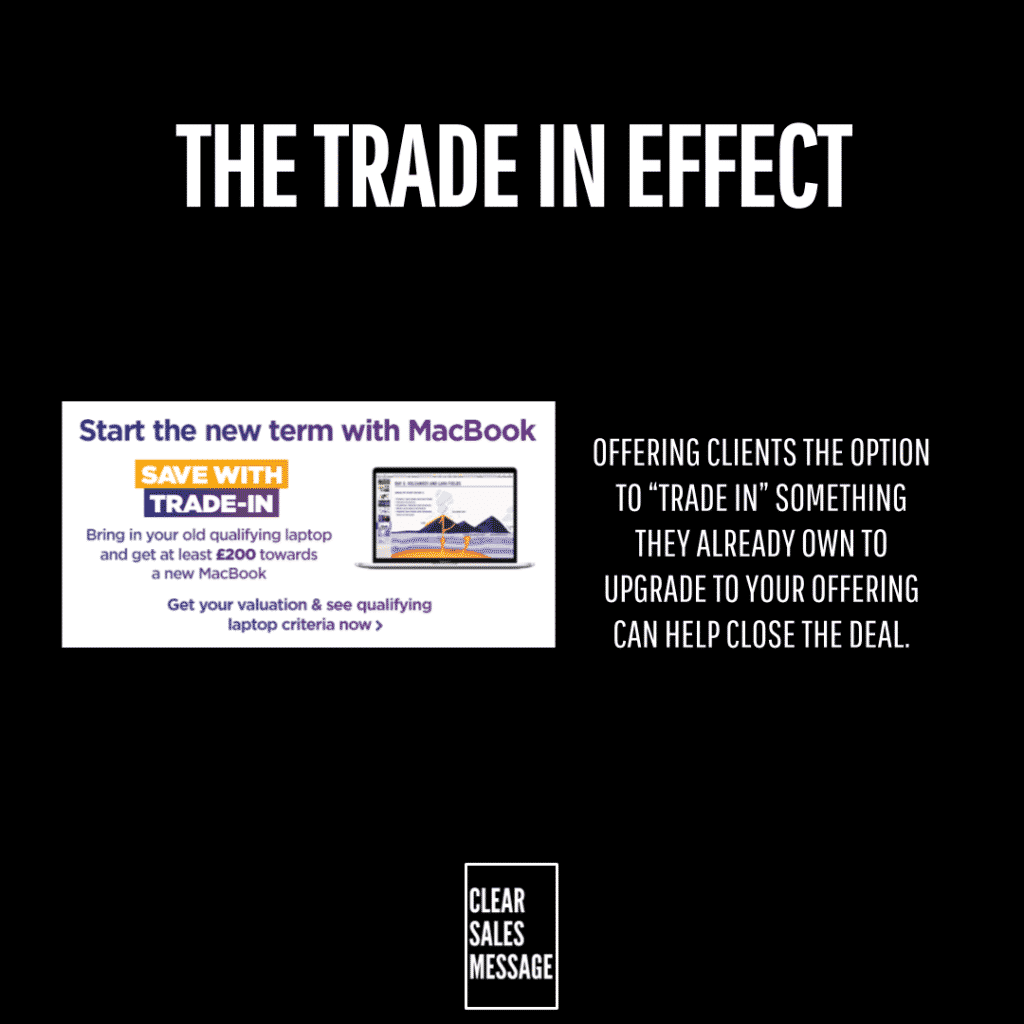
The Trade In Effect is when you offer a discount to a client when they bring their old product to you at the point of purchase. The old item pays part of the price.
It’s not just a discount. It’s a discount with a story attached, one where the buyer feels they’ve contributed something.
That contribution changes how the whole purchase feels, even when the money saved is identical to any other offer.
Why Does It Work
It works because we naturally want the latest, best, most shiniest things possible. Offering a trade in doesn’t just make that possible, it makes it cheaper too.
The old item stops being a sunk cost sitting in a drawer, and starts being active value toward something new.
That reframing does real psychological work. Spending money feels like a loss. Trading something in feels like an exchange, and exchanges feel far less painful.
How Can You Use It
Check if your offering genuinely suits it
This is best suited to a physical product offering. What discount could you offer clients in return for bringing their old, used, or faulty items to you when they purchase?
Make the value clear before they arrive
A rough estimate of trade in value, shown upfront, removes hesitation before someone even brings the old item in. Uncertainty about the discount discourages people from trying.
Offer something even when the item has no value
A free recycling option for items with no resale value still makes the buyer feel good about the exchange, even without a direct discount attached.
When It Works Best
This works best with physical products people naturally replace over time, phones, appliances, equipment, and anything with an obvious upgrade cycle.
It also works best when the old item genuinely holds some resale or recycling value, rather than being pure landfill with no real worth to anyone.
When It Becomes Dangerous
It backfires if the trade in valuation feels unfair once the buyer actually brings the item in. A lower than expected offer damages trust right at the point of purchase.
It also becomes risky if the process is slow or complicated. Friction at the trade in stage can undo all the goodwill the discount was meant to create.
Overpromising the discount in marketing, then underdelivering in store, causes its own damage, since that gap gets noticed immediately.
Common Mistakes
Making the valuation process opaque
If a buyer can’t estimate their trade in value beforehand, uncertainty discourages them from even trying. Show a clear range upfront.
Overpromising the discount in marketing
Advertising “up to £300 off” when most items qualify for far less sets an expectation that damages trust the moment reality falls short.
Making the process slow or complicated
A trade in that requires several extra steps loses people who’d otherwise have gone through with it. Keep it as simple as the purchase itself.
The Trade In Effect – An Example
Apple’s iPhone Trade-In Program
Apple offers a trade-in scheme where you can bring in your old iPhone, or even an Android device, and receive a discount on a new iPhone.
- If your current phone is in good condition, you might get up to £300 off a new one.
- If it’s not eligible for credit, Apple will recycle it for free, still making you feel like you’re doing something good.
Why it works: You feel like you’re getting value from an old device you no longer want, and it reduces the psychological pain of spending on a new one. It also helps you justify the upgrade and smooths the decision to buy.
How you can apply it:
- A gym could offer discounted memberships if you “trade in” old home gym equipment
- A clothing retailer could offer vouchers when customers bring in old clothes
- A software company could offer a discount to users switching from a competitor’s platform
It’s about making the upgrade easier and reducing friction in the buying decision.
See also