Practical Sales Training™ > How To Convert > The Tax Deductible Effect

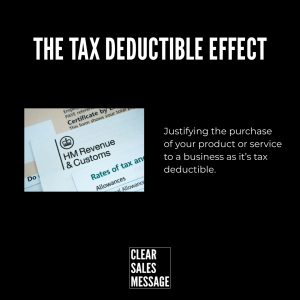
The Tax Deductible Effect
Price is rarely the real objection. Most of the time, the real objection is whether the spend feels justified. And one of the most powerful ways to shift that feeling is to change the number the buyer is actually thinking about.
When a business expense qualifies for tax relief, the true cost to the buyer is lower than the invoice says. A £1,000 purchase might effectively cost £800. A £300 monthly subscription might feel like £240. That difference is the Tax Deductible Effect at work.
Most sellers never mention it. But when you do, you make the decision easier without changing your price at all.
What Is the Tax Deductible Effect?
The Tax Deductible Effect is the psychological shift that happens when a business expense feels easier to justify because the buyer can claim it against tax. Instead of seeing the full purchase price as money spent, the buyer factors in the tax relief they’ll receive. That reduces the mental barrier and makes the purchase feel more affordable.
For example, a training course at £1,000 might effectively cost only £800 after tax relief. A software subscription at £300 a month may feel like £240 a month once the buyer considers the tax deduction. Equipment, travel, and marketing costs all tend to feel easier to approve when the buyer frames them this way.
The effect is strongest in B2B sales, where finance teams and directors regularly factor in tax treatment when they weigh up purchasing decisions. So if you sell to businesses and you don’t mention deductibility, you’re leaving a useful lever untouched.
Why Does the Tax Deductible Effect Work?
It works because buyers don’t just evaluate cost in absolute terms. They evaluate net cost, which means what the purchase actually leaves them out of pocket after any reliefs, rebates, or returns. When you show the after-tax figure, you change the number they’re working with. And a smaller number is easier to say yes to.
There’s also a justification effect. Business buyers often need to defend their spending internally. When something qualifies as a tax-deductible expense, it gives them a concrete commercial reason to approve it. So the Tax Deductible Effect doesn’t just reduce the perceived price. It also arms the buyer with language they can use to get sign-off from their finance team or director.
Decision speed improves too. When a purchase looks financially smarter on paper, buyers move faster. The tax angle removes one layer of hesitation, because the investment starts to look like good financial management rather than discretionary spend.
How Can You Use the Tax Deductible Effect In Sales?
You can work the Tax Deductible Effect into your sales conversations and proposals to make your offer easier to approve. Here’s how to do it well.
Highlight Deductibility Early
If your product or service qualifies as a business expense, say so clearly and early. Don’t wait for the buyer to ask. Many buyers don’t think about tax treatment until after they’ve already decided against something. So raising it proactively changes the frame before the objection forms. A simple line like “this qualifies as a tax-deductible business expense” can shift the entire conversation.
Show the Net Cost
Reframe the price with the after-tax figure alongside the headline price. For example: “£1,000 investment, effectively £800 after tax relief at 20%.” That framing puts both numbers in front of the buyer at once. As a result, they evaluate the net cost rather than the gross one, and the purchase feels more manageable.
Give Buyers the Words to Justify It Internally
In B2B sales, the person you’re talking to often isn’t the only person who needs to approve the spend. So give them the language to make the case upwards. Something like: “This qualifies as a training expense under HMRC guidelines, so we can offset it against our tax bill.” That sentence does a lot of work in an internal conversation. Because you’ve written the justification for them, the approval process gets shorter.
Combine It With ROI
The Tax Deductible Effect works even harder when you pair it with a commercial return. “This training programme costs £2,000, effectively £1,600 after tax relief, and our clients typically see a 20% uplift in conversion within 90 days.” Now the buyer has a lower net cost and a clear upside. That combination removes most of the financial hesitation from the decision.
Use It at the Point of Hesitation
When a buyer stalls on price, the Tax Deductible Effect gives you a way to reframe rather than discount. Instead of dropping your price, you show them the real cost after relief. You protect your margin and still make the number feel smaller. That’s a far better outcome than a discount that trains buyers to push for one every time.
When the Tax Deductible Effect Works Best
It works best in B2B sales where buyers operate as limited companies or are self-employed. Because they pay tax on profits, any expense that reduces those profits also reduces their tax bill. So the effect is real and measurable, not just a framing trick.
It also works well for higher-value purchases where the tax saving is large enough to feel meaningful. A £50 expense doesn’t move the needle much. But a £5,000 one, where the buyer saves £1,000 in tax, changes the conversation significantly. So the higher the price, the more useful this effect becomes.
Similarly, it’s powerful at the end of the financial year when businesses look to invest surplus budget before it disappears into their tax bill. Because the timing aligns their incentive to spend with your incentive to sell, the Tax Deductible Effect amplifies urgency without you having to manufacture it artificially.
When the Tax Deductible Effect Becomes Dangerous
It becomes a problem when you overstate or misrepresent what qualifies. Not every business expense attracts full tax relief, and the rules vary by structure, jurisdiction, and circumstance. So if you tell a buyer something is fully deductible and it isn’t, you damage trust at the worst possible moment. Always stay accurate and encourage buyers to confirm the position with their accountant.
It can also feel hollow when the buyer doesn’t actually pay much tax. A business in its early years, or one running at a loss, gains little from tax deductibility. So read the room before you lean on this effect. For the right buyer it’s compelling. For the wrong one it’s irrelevant, and pressing it too hard makes you look like you’re reaching.
And it loses impact when every seller in your market uses the same language. If “tax deductible” has become a standard line in your industry, it stops feeling like a benefit and starts feeling like a disclaimer. In that case, you need to make the number more specific and personal to the buyer to get the same effect.
Common Tax Deductible Effect Mistakes
Mentioning It Without Showing the Number
Saying “this is tax deductible” is far weaker than saying “this costs £1,000, so effectively £800 after tax relief.” The first is a fact. The second is a reframe. Because you’ve done the maths for the buyer, they can immediately feel the difference rather than having to calculate it themselves. Always show the net figure.
Using It Too Late
Many sellers only mention tax deductibility after a buyer raises a price objection. But by then, the buyer has already anchored on the full cost and formed a resistance to it. Raise the net cost framing early, before objections form, so the buyer evaluates the right number from the start.
Applying It to the Wrong Buyer
The Tax Deductible Effect works for VAT-registered businesses, limited companies, and the self-employed. It doesn’t work for consumers buying personally, charities in some cases, or businesses with no taxable profit. So before you use the framing, confirm that the buyer actually benefits from it. Applying it incorrectly makes you look like you don’t understand their situation.
Replacing ROI With It
Tax deductibility reduces the perceived cost. But it doesn’t justify the spend on its own. You still need to show the buyer what they get for their money. Use the Tax Deductible Effect to make the price feel smaller, but always pair it with a clear commercial return. Because a cheaper bad investment is still a bad investment.
The Tax Deductible Effect – An Example
When I travel to London to see clients and buy a coffee on expenses, it feels almost free compared to buying one personally. The cash leaves my account either way. But because I can claim it back against tax, my brain frames it differently. The cost feels lower, so the decision feels easier. That’s the Tax Deductible Effect in its simplest form.
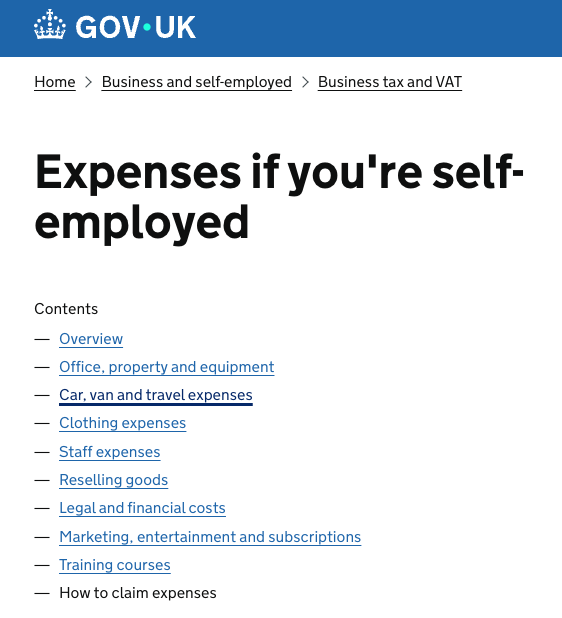
The example image below shows the HMRC guidance on allowable expenses for the self-employed. Training courses, travel, marketing, and office costs all qualify. So if you sell into any of those categories, you can use this effect with almost every business buyer you talk to.
See also