Practical Sales Training™ > How People Work > Defensible Decisions

Defensible Decisions
Many buying choices are not purely logical. People often pick the option that feels easiest to explain if something goes wrong. And that changes how buyers think about risk.
In practice, buyers are often asking questions they never say out loud. “Can I defend this to my boss?” “Will this make me look bad?” “What if it fails?” These questions sit quietly under many business decisions.
That is one reason the best solution does not always win.
What Are Defensible Decisions?
A defensible decision is a choice that feels safe and easy to explain. It does not need to be perfect. It needs to feel like a sound call if someone questions it later.
This matters most in high value or high stakes decisions where the cost of getting it wrong feels personal. In those moments, buyers are not just picking a product. They are also protecting themselves.
How Do Defensible Decisions Work?
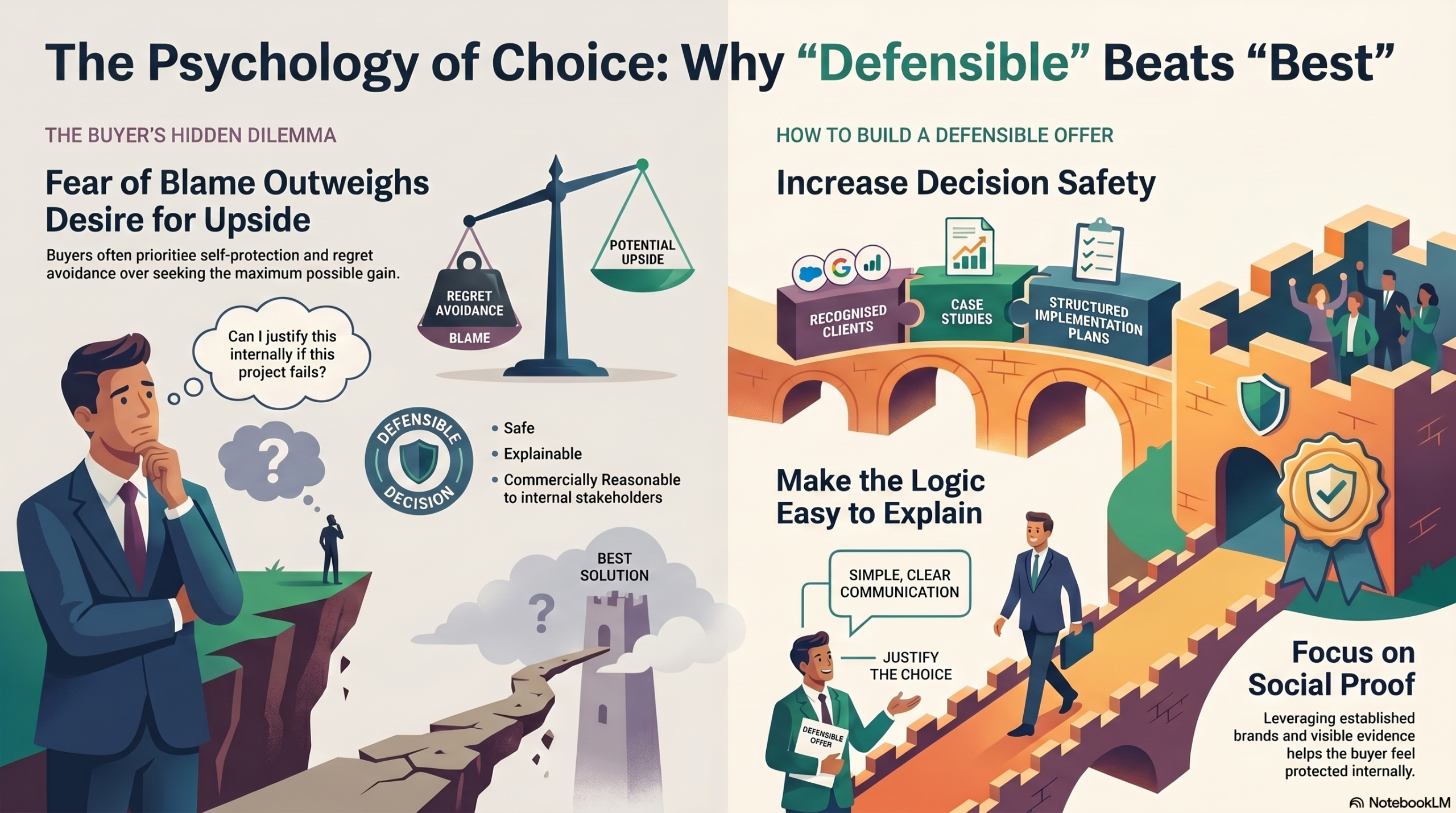
Buyers often fear blame more than they want a win. Picking an unknown supplier that fails later feels risky. But picking a well known or widely used option feels safer because it is easier to justify afterwards.
That does not mean the bigger option is better. It just means the buyer feels more protected making that call. So in many cases, the safe choice beats the smart choice. And that happens far more often than sellers expect.
People protect themselves during buying decisions. That is human nature.
How Can You Make Your Offer More Defensible?
The goal is not just to make the buyer want the deal. The goal is to help them feel safe saying yes. That means reducing the risk they feel and giving them the proof and structure they need to back up their choice.
Increase decision safety
Buyers feel more at ease when the choice looks low risk and well backed up. For example, named clients, clear case studies, a solid delivery process, and partner support all help. These things make it easier for the buyer to say yes inside their business without feeling exposed.
Make the logic easy to pass on
Hard to explain choices are hard to defend. So buyers tend to prefer options they can describe simply to others. That means how you talk about your offer matters as much as what it does. Because buyers are often thinking ahead to how they will justify the choice – not just whether it is the right one.
Share the risk
Buyers feel more at ease when they are not carrying all the risk on their own. Pilots, phased starts, and clear exit options all reduce the personal cost of the decision. As a result, the buyer feels less like they are taking a gamble and more like they are making a smart, backed up choice.
When Defensible Decisions Matter Most
They matter most when the buyer faces scrutiny or career risk. The higher the cost of getting it wrong, the more buyers look for safe signals. For example, large B2B deals, tech choices, long term contracts, and supplier reviews all trigger this kind of thinking.
When Buyers Ignore Defensibility
It matters less when the buyer is highly confident or happy to take a risk. However, most business buying leans toward self-protection. So safe tends to beat best more often than most sellers realise.
Common Defensible Decision Mistakes
The most common mistake is focusing only on being better while ignoring how the buyer feels about making the call. Being the best option is not enough if the buyer still feels unsafe choosing you.
Ignoring internal politics
Many buying decisions involve more than one person and real reputational risk. So if your offer makes the buyer look bad internally, they will slow down or walk away. It is worth asking who else needs to feel okay with this decision – not just the person in front of you.
Making the buyer feel exposed
If the buyer feels like they are taking all the risk alone, they will stall. Instead, make the choice feel supported and backed by proof. That is why well known brands, strong case studies, and plain language matter so much. They reduce the personal risk of saying yes.
Defensible Decisions – An Example
This short video explains the idea really well – and shows just how much buyer behaviour is driven by the fear of getting it wrong rather than the desire to get it right.
@podcastlegendss Why Assistants Avoid Booking A Better Flight#Financian #earn #money #usa🇺🇸
You can read more about the research behind this here: Loss Aversion and Regret Theory
See also