Practical Sales Training™ > How To Convert > The Refer a Friend Effect
The Refer A Friend Effect
What Is It
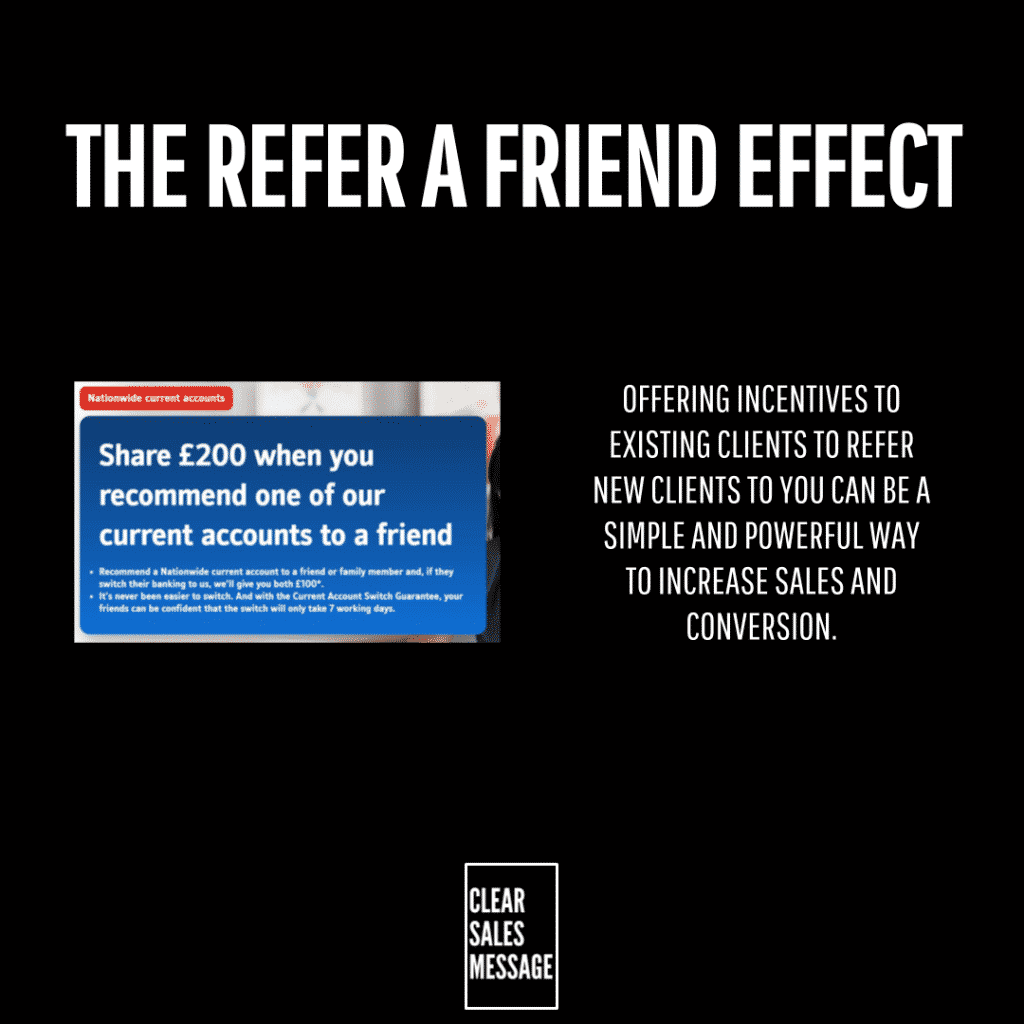
The Refer A Friend Effect is when you offer an incentive to your existing clients to recommend your offering. Not just hope they mention you, actually reward it.
Word of mouth already happens on its own. This effect just gives it a nudge, and a reason to happen more often.
It turns a passive habit, mentioning something you like, into an active one worth doing on purpose.
Why Does It Work
It works because there are few things more powerful than a personal recommendation. A friend’s word carries more weight than almost any advert you could run.
There are also few things more motivating than being paid to do something. Especially something as simple as talking to your friends about a product or service you already enjoy.
Put those two things together, and you get a recommendation that was probably going to happen anyway, just faster and more often.
How Can You Use It
Find out if your clients are even in a position to refer
Think about your current client base. Would they be in touch with potential clients for your offering? If so, you can offer them a financial or prize draw incentive to refer new potential clients to you.
Give them a clear reason and an easy way to act
Provide your current clients with a clear way to refer their friends, and a compelling reason to do so. As a result, your reach will grow exponentially.
Reward both sides of the referral
A reward just for the referrer feels transactional. A reward for both the referrer and the friend feels like a shared thank you, and that’s what actually gets shared further.
When It Works Best
This works best when your existing clients are already genuinely happy, since nobody refers a friend to something they don’t rate themselves.
It also works best in networks where clients naturally know similar people, so professional services, local businesses, and subscription products all lend themselves to it well.
When It Becomes Dangerous
It backfires if the incentive feels bigger than the honesty behind the recommendation. A friend who senses they’re being sold to, rather than genuinely helped, resents the referrer, not just the brand.
It also becomes risky if the referral process is confusing or slow to reward. A client who does the work of referring, then waits weeks to see anything back, won’t bother a second time.
Overpaying for referrals causes its own damage too. If the incentive looks desperate, it can make the whole offering seem weaker rather than more trustworthy.
Common Mistakes
Making the process too complicated
If sharing a code or link takes more than a few seconds, most clients simply won’t bother. Reduce the whole process down to one easy step.
Only rewarding the existing client
A one sided reward misses the chance to make the new friend feel welcomed too. Reward both people, and the referral feels generous rather than transactional.
Forgetting to ask at the right moment
The best time to ask is right after a client has had a genuinely great experience, not buried in a generic monthly email they might not even open.
The Refer A Friend Effect – An Example
A Meal Prep Subscription Service
They send this to existing customers:
“Love our meals? Tell your friends – and get £20 credit for every friend who joins.” Your friend also gets £10 off their first box. It’s our way of saying thanks for spreading the word.
Why it works: Sharing takes nothing more than one link, which keeps the barrier to acting almost zero. The reward is genuinely worthwhile for both parties, not just a token gesture. And it taps into the natural human habit of recommending things we already enjoy, rather than asking clients to do something unfamiliar.
You can apply the same concept in any business, just make the reward immediate, relevant, and easy to claim.
See also
- The Like & Share Effect
- Friends & Family Discount
- 180+ ways to improve conversion
- 30+ ways to encourage repeat business