
Practical Sales Training™ > How To Convert > The Qualified Effect

The Qualified Effect
What Is It
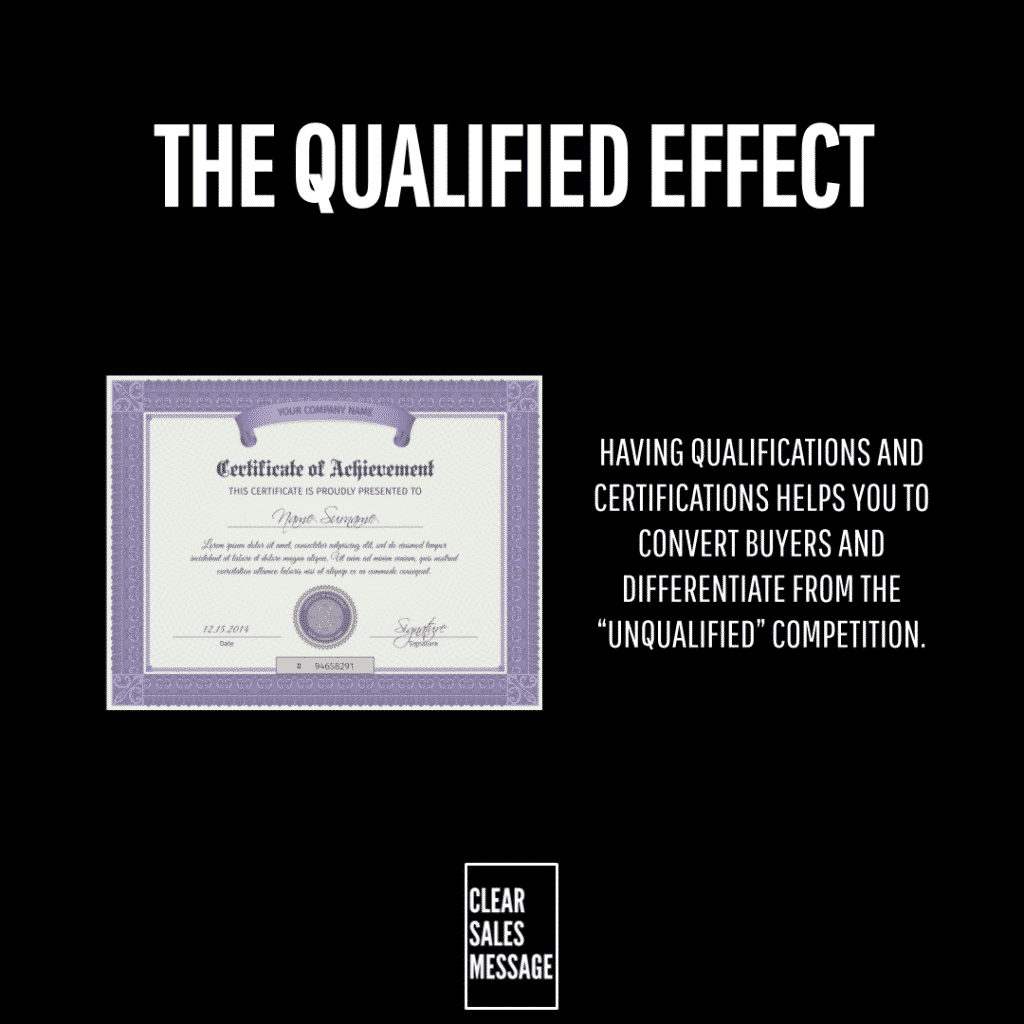
The Qualified Effect is about being qualified and certified in what you do. It’s also about actually showing it. Don’t just say you’re good. Prove it with something a third party has checked.
Anyone can claim experience. Far fewer people can point to a certificate. Or a licence. Or a body that vouches for them. That gap is exactly what this effect exploits.
It works because it hands the buyer a shortcut. They don’t have to judge your skill themselves. They can trust the judgement of whoever qualified you instead.
Why Does It Work
It reassures your potential buyer. You don’t just claim to be capable. You have documented proof. You’ve been assessed and approved by a third party.
Buyers can’t verify skill directly. So they look for signals instead. A qualification is one of the strongest signals around. Someone else already did the checking for them.
It also removes a specific kind of risk. If something goes wrong later, a qualified provider looks defensible. An unqualified one looks like a gamble the buyer chose to take.
There’s a quieter effect too. A visible qualification suggests you took your own skill seriously. So buyers assume you’ll take their job seriously as well.
How Can You Use It
List what you actually hold, however small
If you have any qualifications, certifications, or third party accolades, show them. Otherwise you risk losing buyers to the “more qualified” competition. Even if you’re just as capable.
Don’t wait until you have an impressive list either. One relevant qualification, named clearly, beats a vague claim of years of experience.
Match the qualification to the actual fear
A qualification only helps if it answers the buyer’s specific worry. A rehabilitation specialism matters to someone recovering from injury. It means far less to someone chasing general fitness. So lead with whichever qualification fits the buyer in front of you.
Show it, don’t just mention it in passing
A qualification buried mid paragraph does far less work. One named clearly in your bio, your intro, or your first conversation does far more. Buyers scan quickly. Put it somewhere they can’t miss.
When It Works Best
This works best in areas where buyers can’t judge quality themselves. Health, legal work, technical trades, anything with real consequences if it goes wrong.
It also works best against unqualified competition. If everyone in your market already holds the same certificate, it stops being a differentiator. It just becomes the entry price.
When It Becomes Dangerous
It becomes risky the moment a qualification gets stretched or misrepresented. A course certificate presented as a professional licence can unravel your credibility fast. All it takes is someone checking.
It also backfires if you lean on qualifications instead of actual results. A wall of badges next to poor outcomes doesn’t reassure buyers. It makes them feel misled.
Overloading your messaging causes its own problem too. Too many logos and certificates stop looking like proof. They start looking like compensation for something missing.
Common Mistakes
Leading with years instead of proof
“I’ve been doing this for years” sounds confident. But it isn’t checkable. A named qualification is. Buyers trust what they can verify over what they just have to take your word for.
Showing irrelevant qualifications
A qualification that doesn’t relate to the buyer’s actual need adds clutter, not credibility. Show the one that answers their specific worry. Not every certificate you’ve ever earned.
Assuming the badge speaks for itself
Most buyers don’t know what a specific accreditation body actually means. A one line explanation does more work than the logo alone ever will.
The Qualified Effect – An Example
Choosing A Personal Trainer
You’re choosing between two personal trainers.
- Trainer A says: “I’ve helped loads of people get fit. I’ve got years of experience and I love what I do.”
- Trainer B says: “I’m a certified Level 3 Personal Trainer with a specialism in rehabilitation and nutrition. I’m also accredited by the National Register of Personal Trainers.”
Who would you trust more with your fitness goals?
Even if both are equally capable, Trainer B feels more credible. Their qualifications are visible and verified. As a result, that third party endorsement builds trust before a single session happens.
Tip: You don’t need to overload your messaging with badges and logos. But showcasing relevant qualifications can give buyers confidence. It moves them closer to saying yes.
See also
- The Specialist Effect
- 180+ ways to improve conversion
- 100+ ways to differentiate
- The Certificate Effect
- Basic Legal Compliance