Practical Sales Training™ > Connect > The Donation Effect

The Donation Effect
Nobody enjoys throwing things away. It feels wasteful, and it’s often a hassle too. So most old, unused things just sit there instead.
The Donation Effect gives your buyer a reason to finally deal with it. It gives you a sale at the same time.
What Is It
The Donation Effect happens when you encourage buyers to donate old, unwanted or unused goods to charity. In return, you reward them with a discount or a free gift.
Why Does It Work
It works because people like getting something for free. But there’s more to it than that. Donating also makes your buyer feel good, since they’re helping a cause while they shop.
This is a version of the Good Cause Effect, where your charitable angle attracts buyers on its own. It also borrows from The Trade In Effect, since you’re removing the hassle of getting rid of something nobody wants.
How Can You Use It
Think about what your buyers could realistically recycle through you. It could be the older version of what you sell. Or something closely related to it.
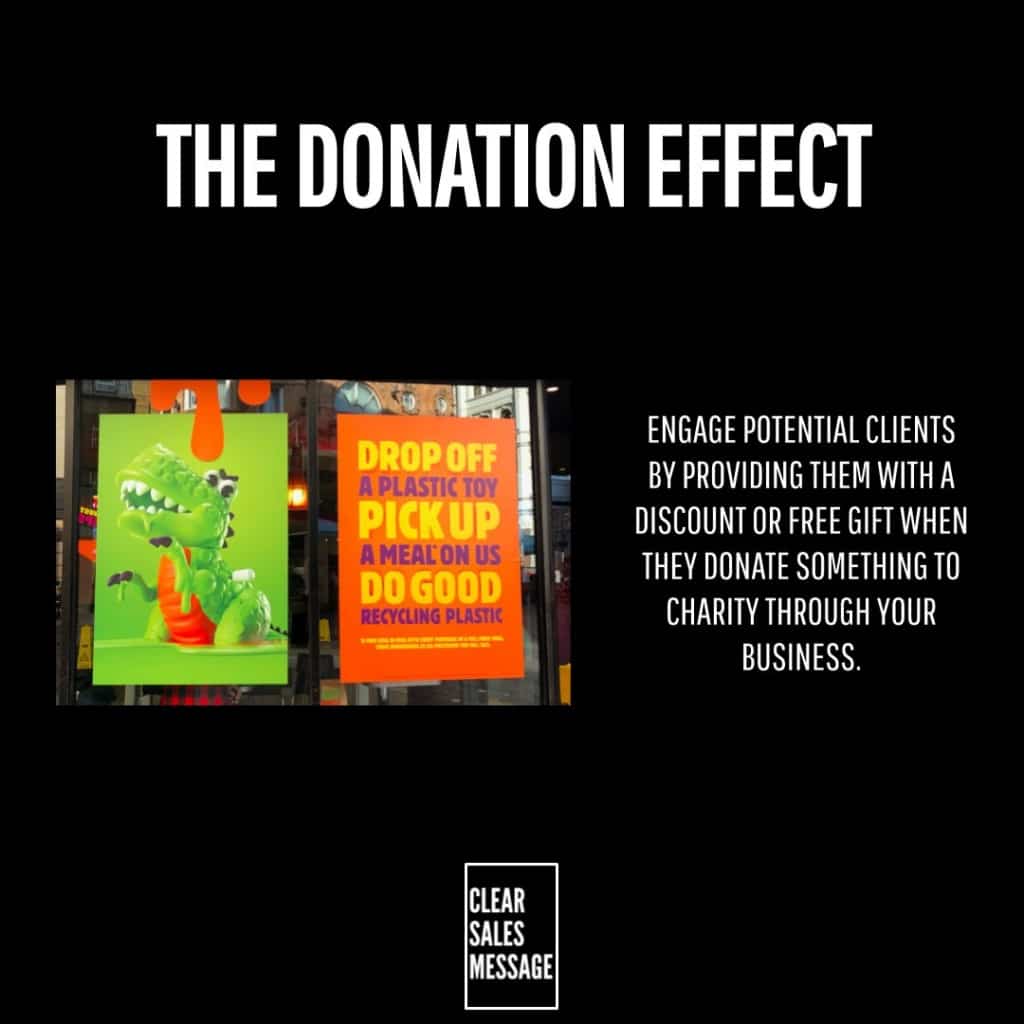
Aim for genuine synergy. One example ties recycling old plastic toys to a reward, a kids meal at Burger King. That’s the kind of natural fit worth copying, since the reward connects directly to what’s being donated.
When It Works Best
This works best with physical products your buyer is likely to replace anyway. Furniture, electronics and toys are strong territory, since there’s always an old version sitting somewhere unused.
It’s also strongest when disposal is genuinely annoying for your buyer. The more hassle you remove, the more attractive your offer becomes.
When It Becomes Dangerous
This backfires if the charity angle feels like a marketing trick rather than a real donation. Buyers spot the difference fast. A fake good cause damages trust more than no cause at all.
It also fails if the reward doesn’t feel worth the effort. Ask a buyer to haul in old furniture for a tiny discount, and they’ll just keep the furniture instead.
Common Mistakes
Choosing An Unrelated Reward
A reward that has nothing to do with the donation feels random instead of thoughtful. The stronger the connection, the more natural the whole offer feels.
Overstating The Charitable Impact
Be specific and honest about where donated items actually go. Vague claims about “helping the world” sound hollow. Buyers notice hollow claims fast.
The Donation Effect – An Example
IKEA ran a campaign where customers could bring in old furniture to be donated or recycled. In return, they received a voucher toward new furniture.
This worked on three levels at once. Customers felt good knowing their old furniture would be reused responsibly. They also had a real, tangible reason to spend money on something new. And they avoided the hassle of disposal entirely, which made IKEA the easiest choice available.
If you sell physical products, think about what your buyers are likely replacing. Offer to take the old one off their hands in exchange for something worth having. It’s part feel good, part practical, and it moves the sale forward at the same time.
See Also