

Practical Sales Training™ > How to connect with your buyer > Eponymy
Eponymy
Nobody asks for a vacuum cleaner. They ask for a Hoover. Online, people Google things. Sticky notes are Post-its. These are brand names that have become the default word for the thing itself.
That is Eponymy. And it is one of the most powerful positions a brand can reach. When your name becomes the noun, you stop competing on features or price. You become the category.
It is rare. But understanding how it happens can still shape how you name, market, and talk about what you sell.
What Is Eponymy?
Eponymy is when a brand name becomes the common noun or verb people use for the product or action itself. It goes beyond strong branding. The name itself replaces the generic term in everyday speech.
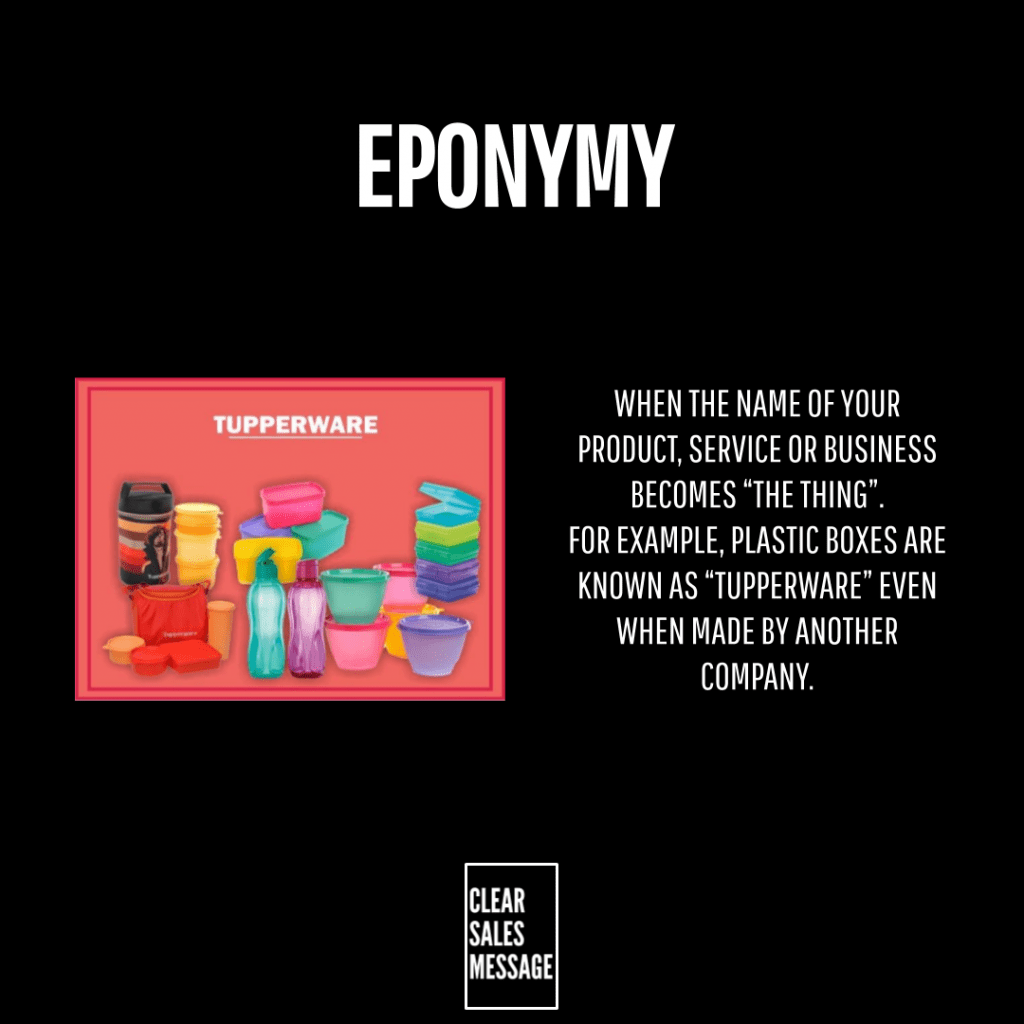
Most people have experienced Eponymy without ever thinking about it. Clean the floor and you Hoover it. Need a pen and you reach for a Biro. Leftovers go in Tupperware, and a soak in the hot tub is a Jacuzzi. In each case, a brand won so completely that its name became the word everyone uses.
In sales terms, Eponymy means your buyers do not compare you to rivals. They use your name as the reference point. Rivals get compared to you, not the other way around.
Why Does Eponymy Work?
It works because language shapes thought. When a word becomes the default way to describe something, it creates a mental shortcut. Buyers reach for the name before they even consider alternatives. The brand gets embedded at the level of habit rather than choice.
It also creates a deeper connection than a standard brand name. When your name is the word people use for the thing itself, your product has defined the category. That is a very different kind of recognition from simply being well known.
There is also a network effect. Once enough people use the name as a noun, others follow because it is the language of the group. So Eponymy becomes self-reinforcing over time.
How Can You Use Eponymy In Sales?
Be the first mover in your space
The fastest route to Eponymy is to create a new category. When you are first, there is no existing word for the thing you do. You get to name it. Buyers learn your name as part of learning what the product is. Over time, your brand and the category become one and the same. If you are launching something genuinely new, name it in a way that is built to spread.
Dominate through market leadership
The second route is sheer scale. If you serve enough buyers and carry enough of the market, your name starts to represent the category by default. This takes time and volume, but the result is the same: buyers use your name as the generic term. Think Google, Hoover, or Sellotape. None of these were first, but all of them won so completely that the name stuck.
Use your brand name as the action
One powerful way to push towards Eponymy is to build the brand name into the language of the activity. Use it as a verb in your marketing. Encourage customers to say they did the thing using your name. The more people use the name as an action word, the more it gets wired into everyday speech. This is how “Google it” replaced “search for it.”
Carry the Burden of Proof
Eponymy does not happen on its own. You have to educate the market actively. Use your name consistently in the way you want people to use it. Create campaigns, content, and conversations that model the language you want to spread. If you do not teach people how to refer to you, they reach for the generic term and rivals benefit.
When Eponymy Works Best
Eponymy works best for first movers and for businesses that win an unusually large share of their market. If you have either of those advantages, the conditions are in place. The question is whether you use them deliberately or let the moment pass.
Products people use often and talk about out loud are better placed to reach Eponymy than one-off purchases. When people describe what they do, they reach for the name they know. So frequency and visibility both matter.
Niche markets can also achieve Eponymy within their own community. You do not need to be a household name to become the default word within your sector. Being the reference point in a tight niche is still a powerful position to hold.
When Eponymy Becomes Dangerous
There is a legal risk. When a brand name becomes so widely used as a generic term, it can lose trademark protection. This has happened to brands like Escalator and Aspirin. They became so linked with the product that courts ruled the names had passed into general use. So if you achieve Eponymy, protect the trademark actively.
There is also a quality risk. When your name is the word for the category, any negative press about the category lands on you first. A problem with a rival’s product can still damage your brand if buyers think of the category under your name.
Finally, Eponymy can make it harder to extend into new areas. If your name is too tightly fused with one product, buyers may struggle to see you as anything else. So think about whether the name you are building towards is broad enough to grow with the business.
Common Eponymy Mistakes
Choosing a name that is too generic to stick
A brand name that describes what the product does will struggle to become the noun for the category. Generic names blend in rather than stand out. The names that achieve Eponymy tend to be distinctive, slightly odd, or invented. Think Hoover, Biro, or Jacuzzi. None of these words meant anything before the product. That blank slate is part of what made them stick.
Not modelling the language you want people to use
Many brands miss this chance because they use generic terms in their own marketing. So use your brand name as the verb or noun in every campaign. Show people how to refer to it. If you use the generic term yourself, buyers will too.
Assuming it will happen on its own
Eponymy is not an accident. The brands that achieved it invested in making it happen. They built the name into their campaigns, their customer language, and their culture. Treat it as a deliberate goal rather than a happy side effect.
Eponymy – An Example
The AI meeting tool that built its name into the action
A startup launches an AI meeting tool called Notably. At first, users describe it as an AI note-taking app. But the company builds phrases like “Did you Notably that meeting?” and “Send me the Notably” into all its marketing. The aim is to tie the brand name to the action itself.
Over time, users start saying “just Notably it” instead of “take notes.” The name becomes the verb. As a result, the brand no longer has to explain what it does. The name does that work. Rivals get described as “like Notably” rather than the other way around.
That shift in language is exactly what Eponymy does for a brand. It moves you from being a product to being the reference point.
See Also