Practical Sales Training™ > How To Convert > AI Assistant

AI Assistant
What Is It
An AI Assistant is a conversational tool that lets a customer describe what they want in plain language, rather than clicking through menus, dropdowns and filters themselves.
Instead of searching for a “7 seater under £450 a month,” they just say that sentence out loud or type it in, and the assistant does the filtering for them.
Why Does It Work
Traditional filters ask buyers to think like a database. Price range, category, spec sheet, all before they’ve even seen a single option. An AI Assistant flips that, letting people describe the outcome they want instead of guessing which filters match it.
It also feels personal in a way a filter panel never does. Explaining your situation in your own words and getting a tailored answer feels like talking to someone who understands you, even when it’s software doing the matching.
There’s a speed benefit too. Complex products with dozens of variables, finance terms, mileage, contract length, become one short conversation instead of a maze of dropdown menus.
How Can You Use It
Let People Describe The Outcome, Not The Specs
Design your assistant to understand what someone is trying to achieve, not just the technical terms for your product. Most buyers don’t know the right filter names anyway. Let them say what they actually want and translate that into your own product language behind the scenes.
Show Real Results Immediately, Not Just Chat
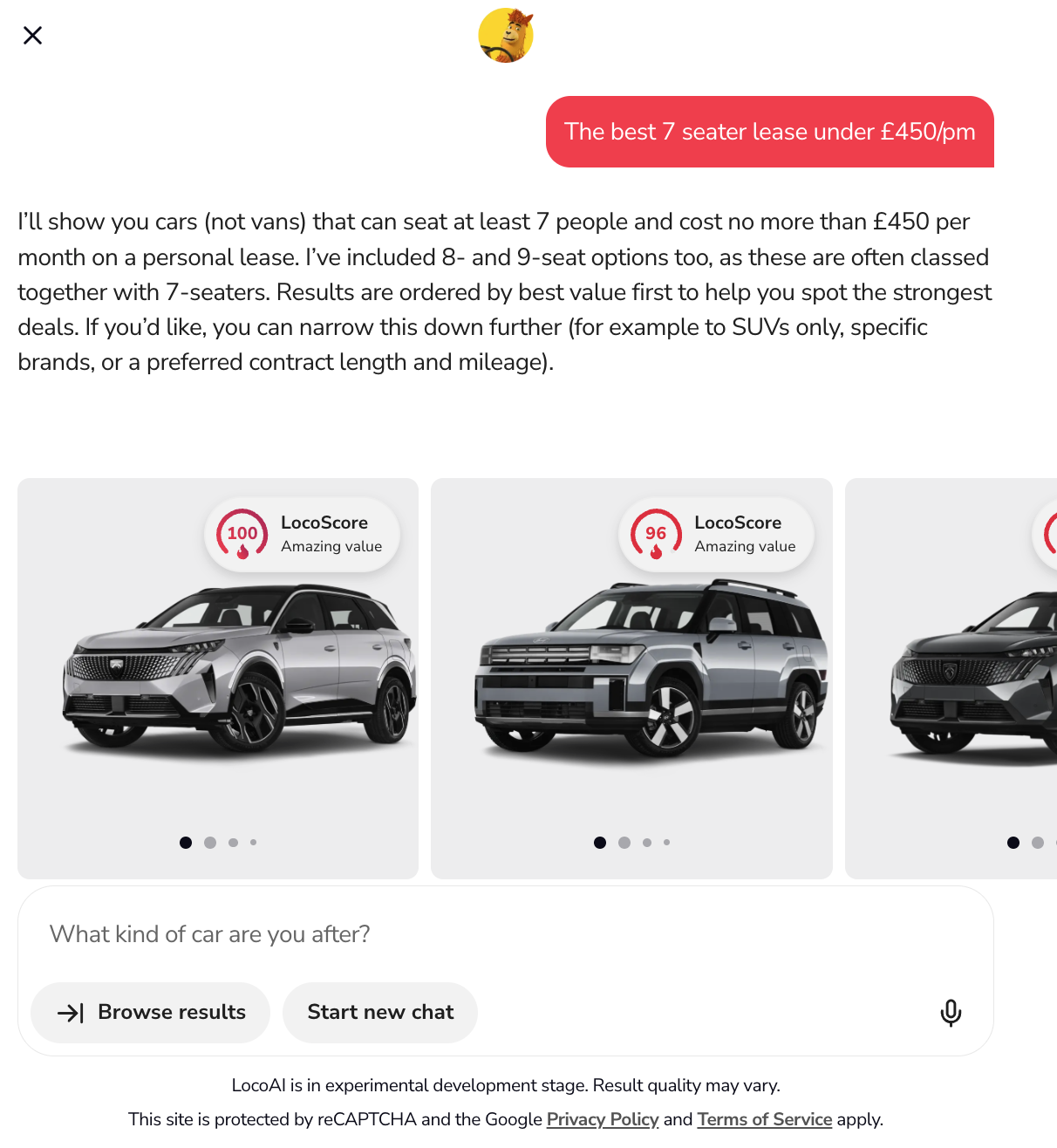
Don’t make someone sit through a back and forth before they see anything real. Pair the conversation with actual product cards, images and prices right in the same view, so it feels like progress rather than an interview.
Make Refining Effortless
Once someone sees results, let them adjust in plain language rather than starting again. “Show me cheaper ones” or “only electric” should just work, the same way it would if they said it to a person standing next to them.
When It Works Best
This works best with large, complicated catalogues, cars, insurance, finance products, anywhere there are too many combinations for a simple filter panel to handle well. It also helps buyers who don’t know the right technical terms for what they’re after, which is most people, most of the time.
When It Becomes Dangerous
It becomes risky the moment the assistant gets something wrong with confidence. A filter panel that returns zero results feels neutral. An AI Assistant that confidently recommends the wrong thing feels like it lied, and buyers remember that far longer.
It’s also dangerous if it replaces genuine human help in situations that actually need it. Some buyers want reassurance from a real person before a big purchase, and an assistant that blocks that path can lose the sale entirely.
Common Mistakes
Building A Chatbot That Just Answers FAQs
If your assistant only repeats your help documentation back at people, it isn’t doing the job. The whole point is matching someone to a real product or result, not answering questions they could have Googled anyway.
Making Buyers Answer Five Questions Before Seeing Anything
If someone has to complete a full discovery interview before a single result appears, you’ve rebuilt the slow form you were trying to avoid, just with more typing involved.
Never Admitting When It’s Unsure
An assistant that guesses confidently every time will eventually guess wrong in front of someone. Saying “I’m not certain, want to see everything close to this?” builds far more trust than a wrong answer delivered with total confidence.
AI Assistant – An Example
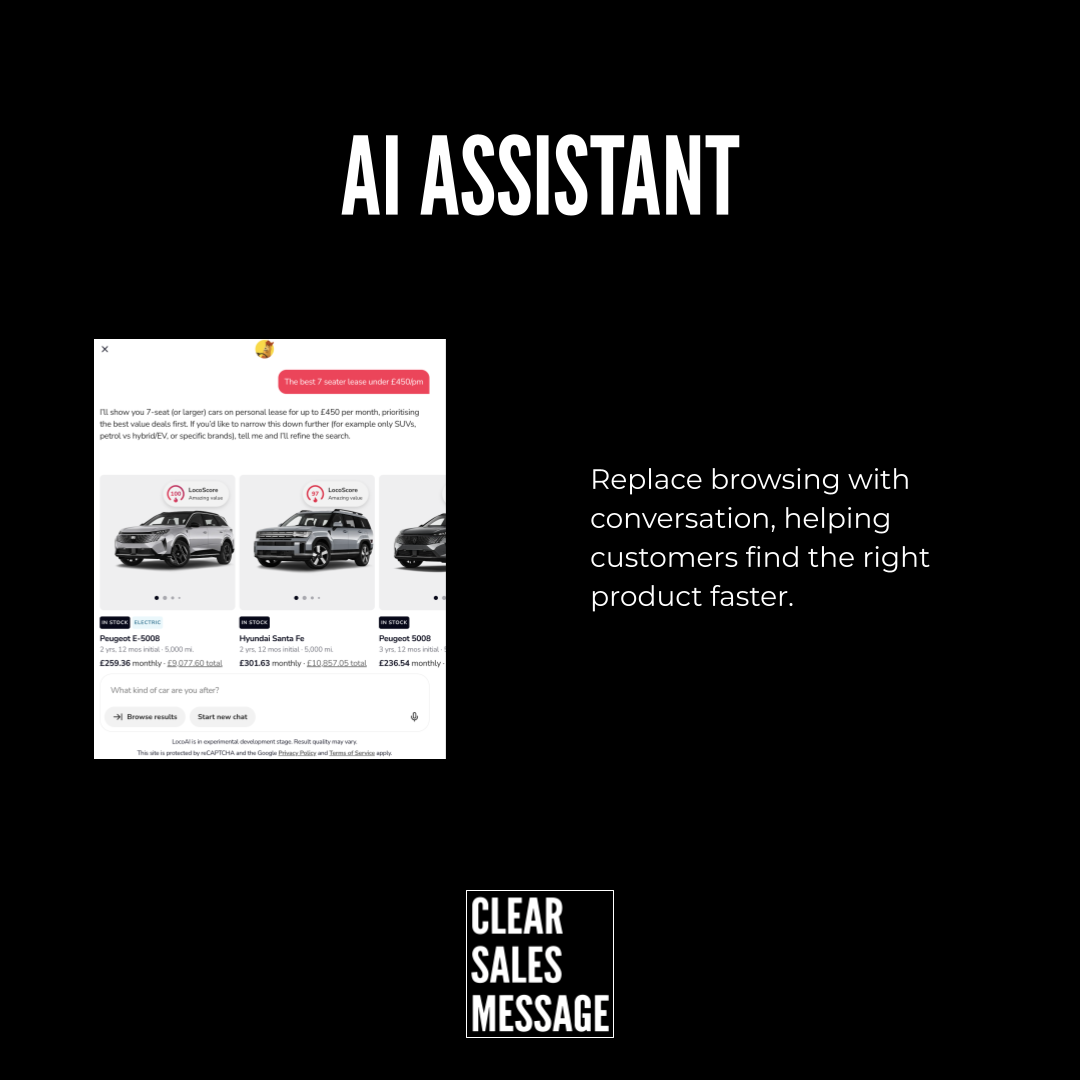
This car leasing comparison site uses an AI Assistant to help customers navigate thousands of deals in a much simpler way. Someone can type something like “the best 7 seater lease under £450 a month” and get a ranked, scored shortlist back straight away, instead of working through pages of filters for seats, budget and contract length themselves.
See also: