Practical Sales Training™ > How To Convert > Attendance Bonus

Attendance Bonus
Registrations feel like results. But they aren’t. The gap between saying yes and actually showing up is where most webinars and workshops quietly fall apart.
An Attendance Bonus closes that gap. It gives people something to lose if they don’t turn up. Not a threat – a missed chance. And because the benefit ties to being present, it turns a passive sign-up into a real decision to attend.
Most businesses work hard to get sign-ups. Fewer think about what happens next. But results come from showing up, not from registering – so that’s where the focus needs to go.
What Is An Attendance Bonus?
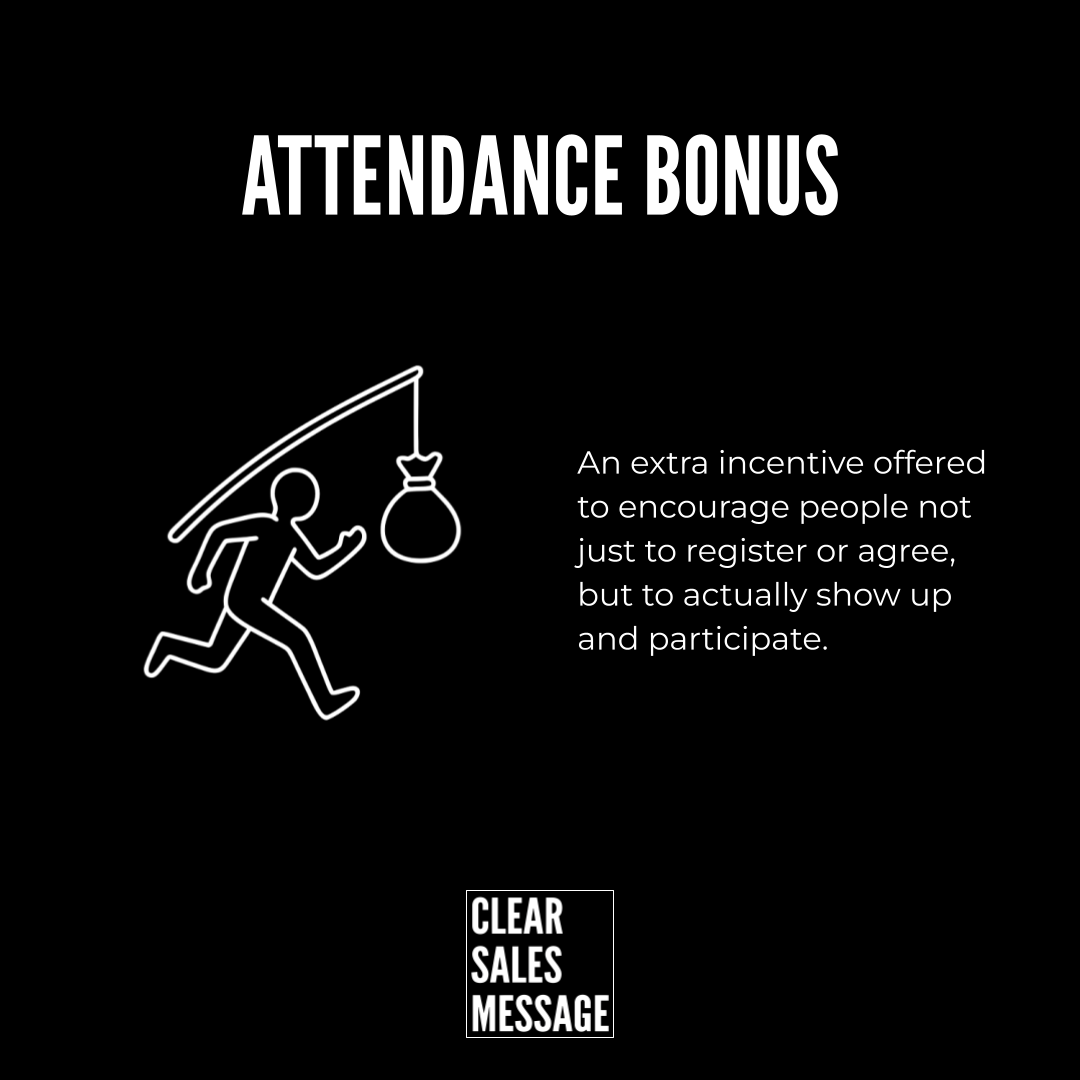
An Attendance Bonus is an extra reward for showing up and taking part – not just for signing up. It works by linking something useful to the act of being present. So missing the session means missing something specific.
This matters because intent and action are two different things. Someone can plan to attend and still not show up. However, when there’s a clear, useful benefit waiting for them live, the decision to attend becomes much more deliberate.
The bonus doesn’t need to be big. In fact, the best ones are small and practical. Something that makes the main session more useful – not an unrelated prize bolted on to look good.
Why Does An Attendance Bonus Work?
Research shows that people follow through more when a clear benefit ties to a specific action. So the more directly you link the bonus to showing up, the more it changes what people do.
There’s also a loss angle. Missing the session doesn’t just mean missing the content. It means missing something real. That shift makes the cost of not attending feel more concrete. As a result, people who might otherwise skip act more deliberately.
Commitment research backs this up too. When people know a clear benefit needs effort to access, they follow through more often. The Attendance Bonus makes that principle simple and visible.
How Can You Use An Attendance Bonus In Sales?
It works best when the bonus links logically to the session. The rule should feel obvious: “You get this because you were there.” So build the bonus around what happens in the room – not around what’s easy to offer.
Offer a tool used during the session
If you build or use a template live, make that the bonus. For example: “If you attend live, you’ll get the exact outreach template we build together.” The bonus feels earned because it came from being in the room. And it’s useful straight away, so the value is clear.
Provide a live-only resource
Keep certain materials out of the replay. A PDF, a swipe file, or a short summary shared only with live attendees creates a clear reason to show up rather than catch up later. However, make sure the resource adds real value – if it feels thin, it won’t move anyone.
Give extended Q&A or review access
Live access to your thinking is hard to replicate. A short Q&A, a hot seat, or a live walkthrough that only happens for attendees gives people a reason to be present that no replay can copy. It also tends to lift engagement during the session itself.
Offer early access to something discussed
If the session covers a new product or resource, give live attendees first access. Because they showed up, they get in before anyone else. The bonus here isn’t an add-on – it’s a direct reward for being engaged. And it makes showing up early feel worth it.
When An Attendance Bonus Works Best
It works best when being there live creates real value that a recording can’t replace. So it fits well with webinars, workshops, training sessions, community events, and product demos.
It also helps most when no-show rates run high. If a large share of people who sign up don’t attend, that’s a sign the event needs a stronger pull. An Attendance Bonus gives you a simple lever to use before you rethink the whole session.
When An Attendance Bonus Becomes Dangerous
The bonus can’t save a weak session. If the main event doesn’t deliver, no reward will make people feel good about showing up. And they’ll remember that the next time you invite them.
A bonus that feels like a bribe also tends to attract the wrong behaviour. People show up for the gift and switch off during the content. So make sure the reward reinforces taking part – not just being present.
It’s also worth being careful about rigid enforcement. If someone missed the session due to something outside their control, withholding the bonus can damage goodwill. The goal is to motivate – not to penalise people for bad timing.
Common Attendance Bonus Mistakes
Making the bonus unrelated to the session
This is the most common mistake. A generic prize might lift sign-ups, but it won’t improve attendance quality. The bonus needs to connect to the content. That’s what makes showing up feel worthwhile – not just rewarding.
Making the bonus too big
When the bonus is bigger than the session, the positioning breaks. People come for the reward, not the content. As a result, the event loses value in their eyes. So keep it useful but modest. It should add to the session – not compete with it.
Announcing it too late
The bonus only works if people know about it before they decide whether to show up. So share it at sign-up and again in your reminder emails. A bonus nobody hears about until after the session has already missed the point.
Being vague about what it is
A vague bonus won’t change behaviour. People need to know exactly what they’ll get and why it helps. Therefore, name it, describe it, and explain its value – before the event. “Exclusive bonuses for live attendees” tells nobody anything useful.
Attendance Bonus – An Example
A business coach runs a lead generation workshop. From experience, they know roughly half of sign-ups won’t attend. So they build an Attendance Bonus in from the start.
In the sign-up confirmation and every reminder, they say: “If you attend live, you’ll also get the exact outreach template we build together during the session.”
The template isn’t a freebie. They create it live, on screen, as part of the workshop. So attending is the only way to see it built – and taking it away is the reward for being there.
Show rates go up. But more importantly, so does engagement. People arrive ready to use what they came for. That’s the difference between a bonus that inflates numbers and one that actually improves the room.
See also