Practical Sales Training™ > How To Convert > Concept Proof
Concept Proof
A buyer doesn’t need to trust you yet. But they do need to believe the idea behind your offer actually works. That belief can come from somewhere else entirely.
Concept Proof does exactly that. It shows the approach itself gets results, even before anyone has tested your specific version of it.
What Is It
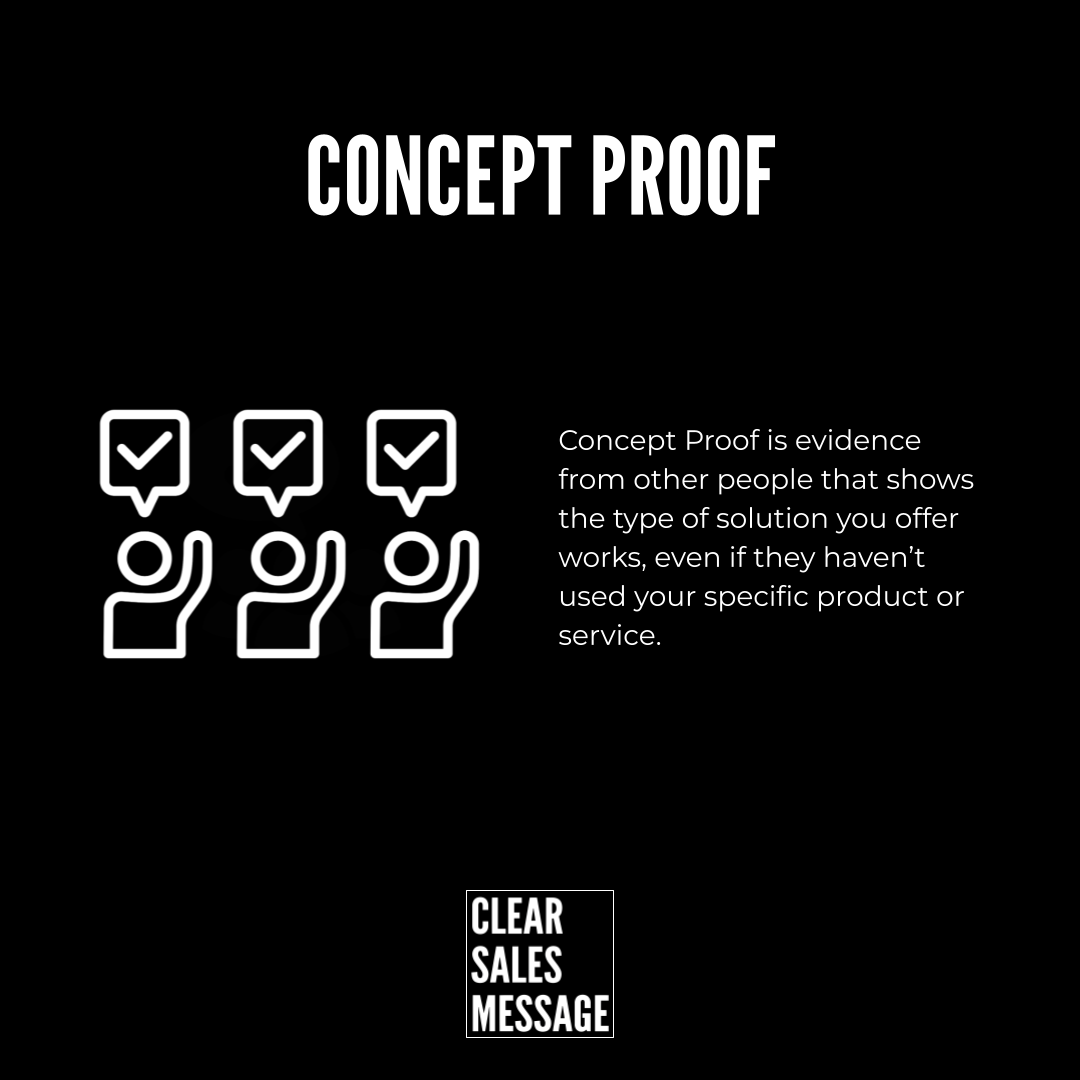
Concept Proof is evidence that the type of solution you offer genuinely works, drawn from other people entirely. They haven’t used your product or service, so this isn’t a testimonial about you. It’s proof the underlying idea holds up on its own.
That’s different to social proof, which relies on people who’ve actually bought from you. Concept Proof works earlier than that, before a buyer has even considered your brand specifically.
Why Does It Work
Buyers take on risk with every purchase, so they look for reasons the risk is smaller than it feels. If other people have proven the concept works, that risk drops immediately, even if those people never touched your business.
It also separates two decisions buyers are actually making. One is whether the idea works at all. The other is whether you’re the right one to deliver it. Concept Proof settles the first question early, so buyers can focus on the second.
How Can You Use It
Find Proof Outside Your Own Business
Look for people saying the same thing you believe, in their own words, from a completely different context. A comment, a post, or a quote from someone unconnected to you carries more weight than it seems, since it can’t be dismissed as your own marketing talking about itself.
Match the Proof to the Exact Belief
Don’t just grab any positive comment. Find proof that backs the specific claim your offer depends on. If your pitch rests on one idea, the strongest Concept Proof supports that exact idea, not something loosely related to it.
Let It Sit Before You Explain It
Show the proof first, then make your point. If you explain the idea before the buyer sees the evidence, it reads like your opinion. Show them the evidence first, and it reads like a fact you’re simply pointing at.
When It Works Best
This works best early in a relationship, before a buyer has any reason to trust your brand specifically. It’s also strong when your business is new, since you won’t have a long track record of your own yet.
It helps most when the buyer already doubts the category itself, not just your version of it. Show them the category works, and your own offer becomes far easier to believe.
When It Becomes Dangerous
Concept Proof turns risky the moment it starts to look like your own result. If a buyer assumes the quote or evidence came from your customer, and later finds out it didn’t, trust collapses fast.
It’s also weak on its own for long. Buyers eventually want proof about you specifically, so relying on borrowed evidence for too long leaves an obvious gap in your pitch.
Common Mistakes
Letting Buyers Assume It’s Your Result
Never present Concept Proof in a way that implies it came from your own customer. Even if you never say it directly, letting the assumption stand is still misleading, and buyers notice fast once they realise it.
Using Proof That’s Only Loosely Related
A quote about a nearby topic doesn’t carry the same weight as one that speaks directly to your claim. Weak, loosely related proof is often worse than no proof at all, since it draws attention to the gap instead of closing it.
Never Following It With Proof About You
Concept Proof opens the door, but it can’t carry the whole pitch. If you never follow it with proof about your own results, buyers are left believing the idea without believing you can deliver it.
Concept Proof – An Example
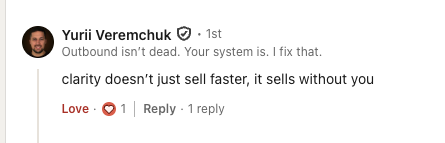
I came across this comment from Yurii Veremchuk, an email specialist, on LinkedIn.
He wasn’t talking about me or Clear Sales Message. He was just making a point from his own world of outbound email. Clarity doesn’t just help you sell faster. It sells without you even needing to be there.
That’s the bit that stuck. He said it plainly, with no reason to flatter me or reference Clear Sales Message™. That’s what makes it Concept Proof. The idea holds up in someone else’s words, from a completely different corner of sales.
See Also
- 180+ ways to improve conversion
- 83+ ways to justify the price of your offering
- Social Proof
- Specific Proof