Practical Sales Training™ > How To Lose The Sale > Confusing Messaging

Confusing Messaging
What Is It
Confusing messaging is any message that needs a second read to make sense. It’s not about being wrong. It’s about making a buyer pause, frown slightly, and think “wait, what does that actually mean?” before they can move forward.
It often shows up when a business tries to be clever, blending two ideas into one line without checking whether they actually fit together. The result reads well on paper. But it stalls in someone’s head, and a stalled thought rarely turns into a sale.
Why Does It Work Against You
Buyers don’t read carefully. They skim, and they decide fast. So the moment your message asks for extra thought, most people simply move on rather than working it out. Confusion doesn’t intrigue people the way many businesses hope. It just costs them the sale quietly, without complaint.
This matters because clarity and trust are closely linked. When a message is easy to follow, it feels honest. When it needs untangling, buyers start to wonder if something’s being hidden. Since trust is fragile at the best of times, confusing messaging chips away at it before a conversation has even started.
How Can You Fix It
Read It As A Stranger Would
You already know what your message means, so you can’t judge it fairly. Show it to someone with zero context and watch their face. If they pause or ask “wait, what?”, that’s your answer. Fix it before it ever reaches a real buyer.
Check For Mixed Signals
Confusion often comes from combining two different offers or ideas that don’t naturally sit together. A 24/7 promise next to a cut off time is a good example. Separate the ideas clearly, or drop one of them entirely, rather than forcing them into a single line.
Say Less, Not More
When a message feels confusing, the instinct is often to add more explanation. That usually makes it worse. Instead, strip the message down to the single clearest fact, and build back up only if it’s genuinely needed.
Test It Out Loud
Say your message out loud to someone else. If you find yourself adding “what I mean is” straight after, the message on its own isn’t doing its job. That extra explanation is a clue your original wording needs work.
When It’s Most Damaging
Confusing messaging hurts most at the exact moment a buyer is deciding whether to engage at all, like a shop window, a homepage headline, or an ad someone scrolls past in seconds. These are low patience moments. There’s no time for a buyer to puzzle things out, so unclear wording there costs you before the conversation even begins.
When It Becomes Dangerous
It becomes dangerous when it starts to look deliberate. A vague or contradictory message can read as a business trying to promise more than it can deliver, using confusion to blur the gap. Once a buyer suspects that, no amount of clever wording wins them back.
It’s also risky in high trust sectors like healthcare, finance or legal services, where a confusing message doesn’t just cost a sale. It raises doubt about competence itself.
Common Mistakes
Combining Two Offers Into One Line
Squeezing two separate ideas into a single sentence often creates tension instead of clarity. Give each idea its own space instead.
Assuming Buyers Will Fill In The Gaps
Most buyers won’t do the extra thinking for you. If a gap exists in your message, they simply walk away rather than trying to close it themselves.
Prioritising Clever Over Clear
A witty line that needs decoding rarely outperforms a plain one that lands instantly. Clear almost always beats clever when a sale is on the line.
Confusing Messaging – An Example
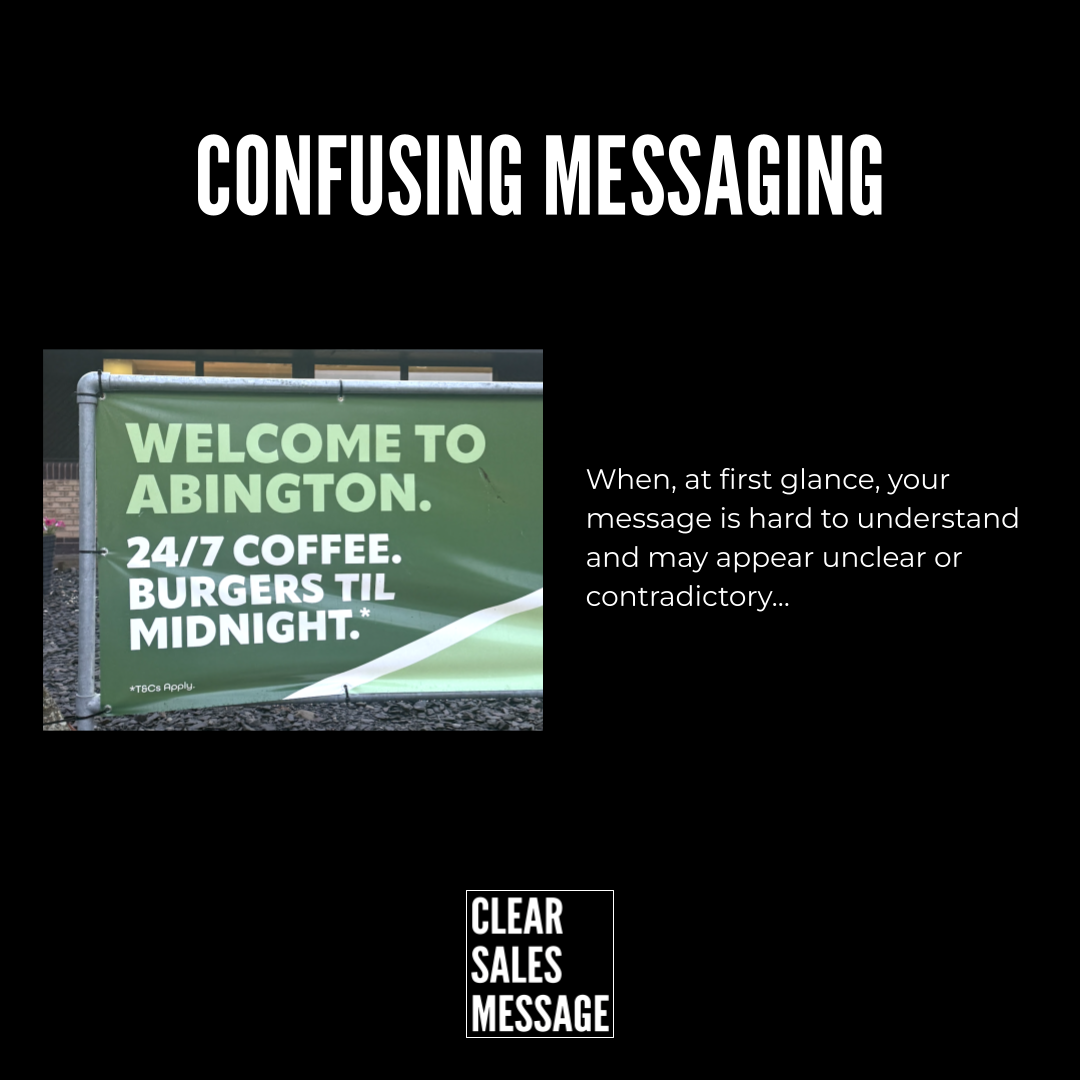
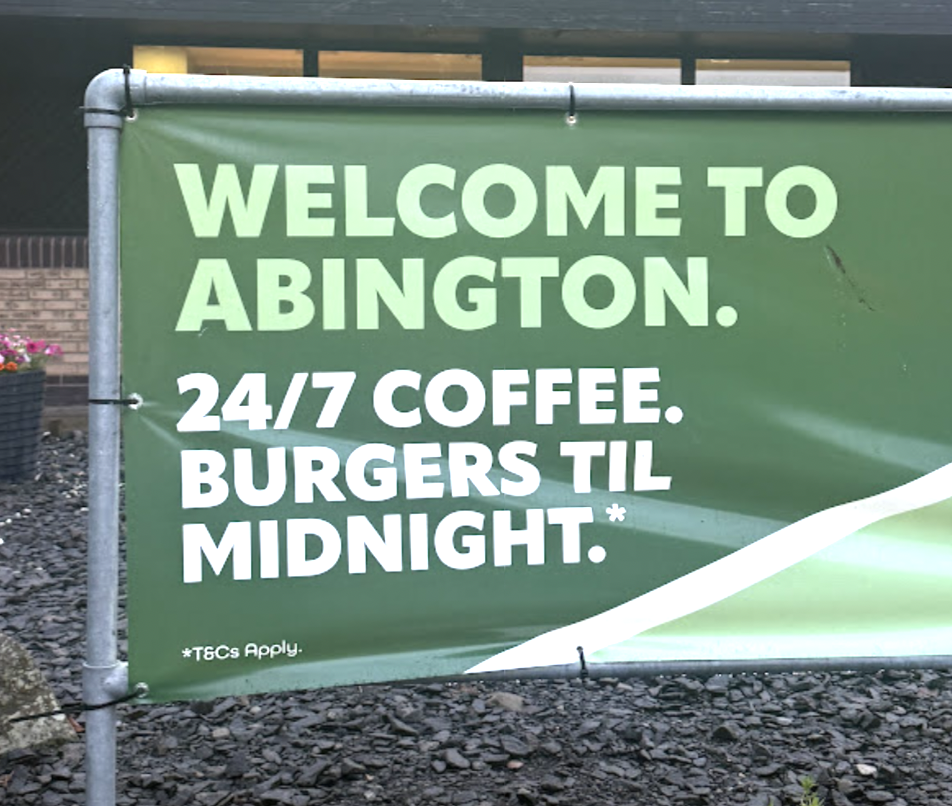
A banner outside a service station reads “24/7 coffee, burgers til midnight.” On the face of it, this feels clever. Two offers, one punchy line.
But think about what it actually says. A 24 hour promise sits right next to a cut off time, so your brain has to stop and untangle which part applies when. That small mental snag is enough to lose someone who was only glancing at the sign for a second anyway.
See Also
- 60+ ways to LOSE the sale
- Oxymoron
- The Mis-Read Effect
- Read, Write, Speak, Spell
- The Cleverness trap