Practical Sales Training™ > How To Get Attention > Emojis
Emojis
People don’t read first. They scan. And in a busy feed or inbox, their eyes need something to land on before they’ll read a single word.
That’s what a well-placed emoji does. It’s not about being cute. It’s about being clear, fast, and scroll-stopping.
What Is Emoji Attention?
Emoji attention is the strategic use of emojis in your content to catch the eye, guide attention, and drive engagement. In a noisy feed or cluttered inbox, an emoji breaks the pattern and draws the eye straight to it.
It helps a buyer spot what matters, understand your tone, and know what to do next, often before they’ve read a single sentence.
Why Does It Work?
Used well, emojis signal meaning at a glance. They highlight key points or offers, break up text to improve readability, and boost clicks in subject lines, captions and calls to action.
They catch the eye because they break up walls of plain text instantly. They’re faster to process too, since a symbol communicates quicker than a full word ever could. They add emotion or tone without needing extra words, which makes a message feel more human and relatable.
Most importantly, they act as a pattern interrupt. A feed full of plain text all looks the same, so a single emoji stops the scroll just long enough for your message to register.
How Can You Use Emojis?
Start Posts With A Scroll-Stopping Emoji
Open a post with something visual, like 📣 or 🔥, before the reader even reaches your first word. That single symbol earns you the extra half-second you need to be noticed.
Use Icons As Visual Bullet Points
Replace plain bullets with icons like ✅ or 💡. They break up text and let a reader scan your key points far faster than a wall of dashes ever could.
Mark Actions Like DMs Or Links
A simple 👇 or 📲 next to a call to action makes the next step obvious. Readers glance at the icon before they even process the surrounding text.
Reflect Tone Without Adding Words
An emoji can signal friendly, urgent, or helpful in a single glance. That saves you a whole sentence of tone-setting language elsewhere in the message.
If you’re posting on social media, writing emails, or sending DMs, emoji attention works anywhere your words are competing for focus. It suits LinkedIn posts, Instagram captions, email subject lines, cold outreach, and product descriptions equally well. It helps your message look human, stand out, and get acted on, especially in fast-moving feeds or busy inboxes.
When It Works Best
Emojis work best in fast-scrolling environments, like social media feeds and email subject lines, where you’re competing for a split second of attention. They also work well as visual shorthand in bullet points, since a symbol replaces a word without losing meaning.
They’re especially effective in informal or consumer-facing communication, where a friendlier, more human tone is expected anyway.
When It Becomes Dangerous
Emojis backfire fast in formal or high-stakes communication. A string of icons in a legal document or a serious complaint response reads as flippant, not friendly.
Overuse also dilutes the effect completely. A message with an emoji after every single word loses the pattern-interrupt benefit entirely, since nothing stands out when everything is decorated the same way.
Common Mistakes
Using Too Many At Once
A sentence packed with five emojis stops feeling like emphasis and starts feeling like noise. Use them sparingly enough that each one still earns attention on its own.
Choosing The Wrong Tone For The Audience
An emoji-heavy message to a formal B2B buyer can undercut your credibility. Match your use of emojis to what your specific audience actually expects from you.
Ignoring How Symbols Render Across Platforms
Some emojis display differently, or not at all, on certain devices and email clients. Test your message across platforms before sending it widely.
Emojis – An Example
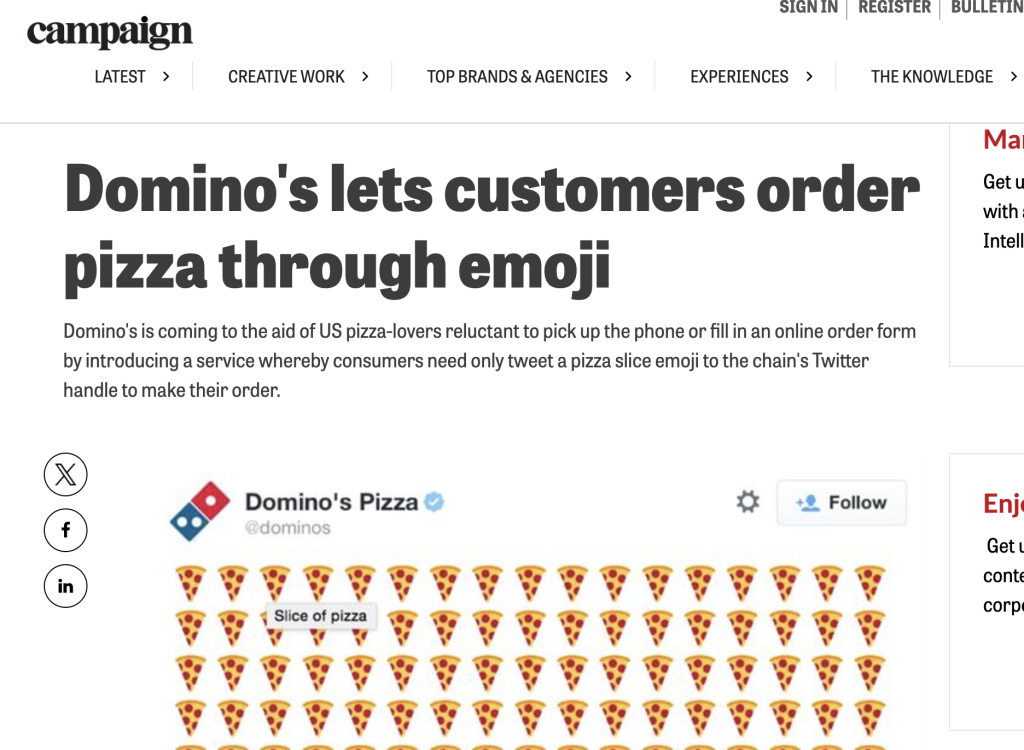
Ordering Pizza With Emojis Alone
Domino’s ran a campaign that let customers order pizza using nothing but a pizza emoji, sent directly to the brand. It’s a bold example of how far this technique can go, turning a familiar symbol into a functional shortcut that skipped an entire ordering process.
See Also
- The Bizarreness Effect
- The Font Effect
- Unicode
- The Signature Emoji
- 100+ ways to seize buyer attention