Practical Sales Training™ > How To Convert > Friends & Family Discount
Friends & Family Discount
What Is It
A Friends & Family Discount extends your regular customer offer to the people they know too. Instead of a private perk just for existing customers, the offer explicitly invites them to bring others in.
It turns a one-off discount into something worth telling someone about, since the customer isn’t just saving money, they’re handing a genuine gift to someone they care about.
Why Does It Work
Being explicitly told “you’re allowed to bring people in” makes an existing customer feel like more than just a buyer. It’s a small signal of trust, and people respond to that by actually doing the sharing.
Sharing a good deal also feels generous rather than transactional. A customer handing a friend 25% off feels like giving a gift, even though the business is the one actually paying for it.
There’s a trust transfer too. A recommendation from a friend carries far more weight than any advert, so the business ends up with a warm lead who already trusts the source, at a fraction of the effort of paid advertising.
How Can You Use It
Make It Easy To Share, Not Just Easy To Use
Build the sharing mechanism directly into the offer, an email button, a text prompt, a social share link, right there next to the discount itself. If sharing takes real effort, most people simply won’t bother, no matter how good the deal is.
Put A Real Date Window On It
Name a specific start and end date rather than leaving it open-ended. A tight window gives people a genuine reason to share it today, instead of meaning to pass it on and forgetting entirely by next week.
Let Customers Feel Like They’re Doing The Inviting
Frame the language around the customer sharing a treat, not the business running a referral scheme. “Share this with someone you love” lands very differently to “refer a friend for £10 off,” even when the mechanics are identical.
When It Works Best
This works best for retail and consumer brands with an existing loyal customer base, run as an occasional promotional window rather than a permanent fixture. It suits brands people are already proud to be associated with, since sharing feels natural rather than forced.
When It Becomes Dangerous
It becomes a problem the moment it runs so often it stops feeling exclusive. If “Friends & Family” shows up every few weeks, it quietly becomes just another regular discount, and the specialness that made people want to share it disappears.
It’s also risky if the margin can’t handle genuinely wide sharing. A generous discount that works fine for a small, controlled group can badly damage margin if it spreads further than expected.
Common Mistakes
Running It So Often It Stops Feeling Exclusive
The word “exclusive” only means something if the offer genuinely is rare. Running it constantly trains customers to wait for the next one, rather than treating this specific window as something worth acting on right away.
Making The Terms Too Complicated To Explain
If a customer can’t explain the offer to a friend in one sentence, they won’t bother trying. Keep the discount, the dates and who it applies to simple enough to repeat from memory.
Forgetting To Make Sharing The Easiest Part
A great discount buried behind a clunky sign up form or an awkward printout process loses most of its referral value. The share step should take less effort than the customer used to find the offer in the first place.
Friends & Family Discount – An Example
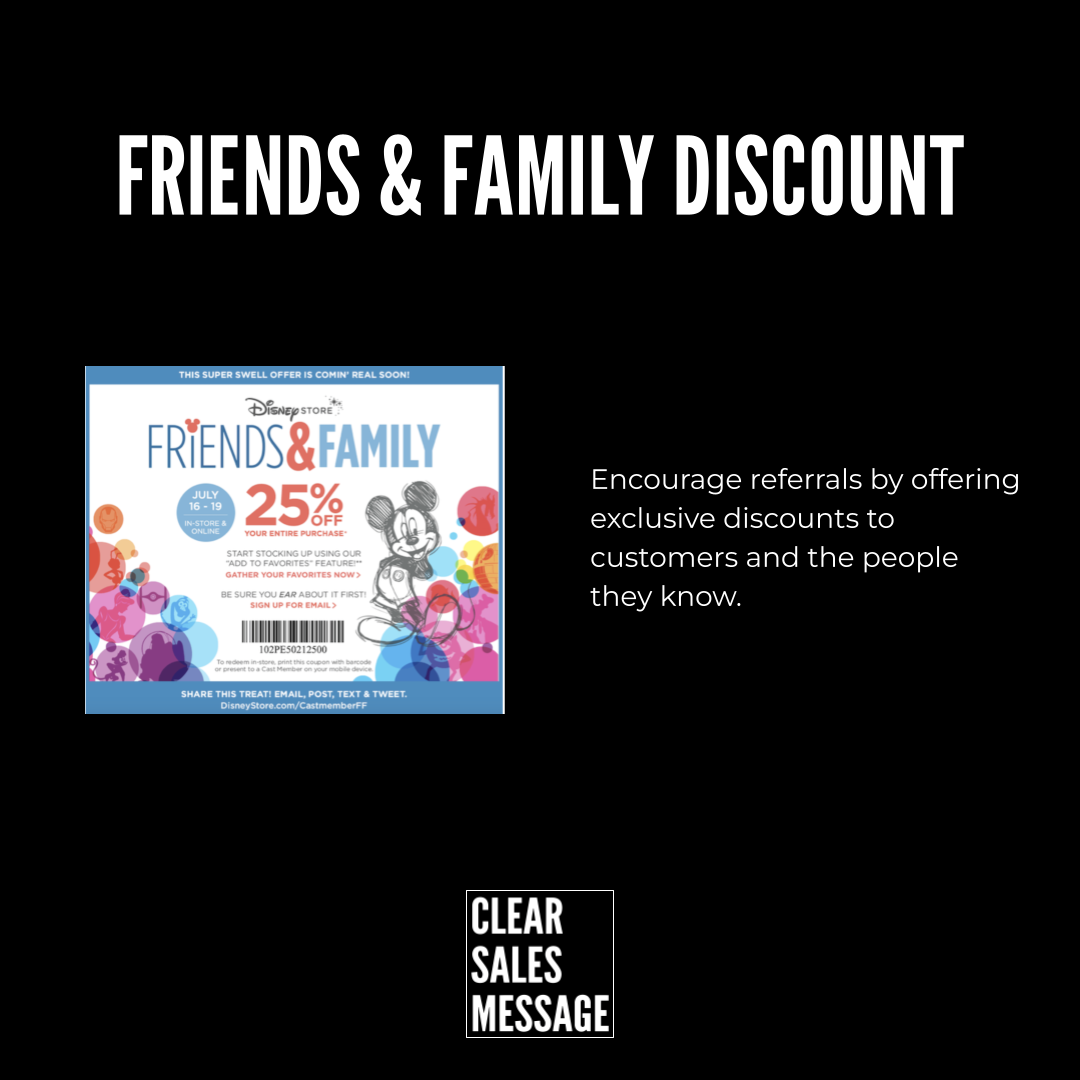
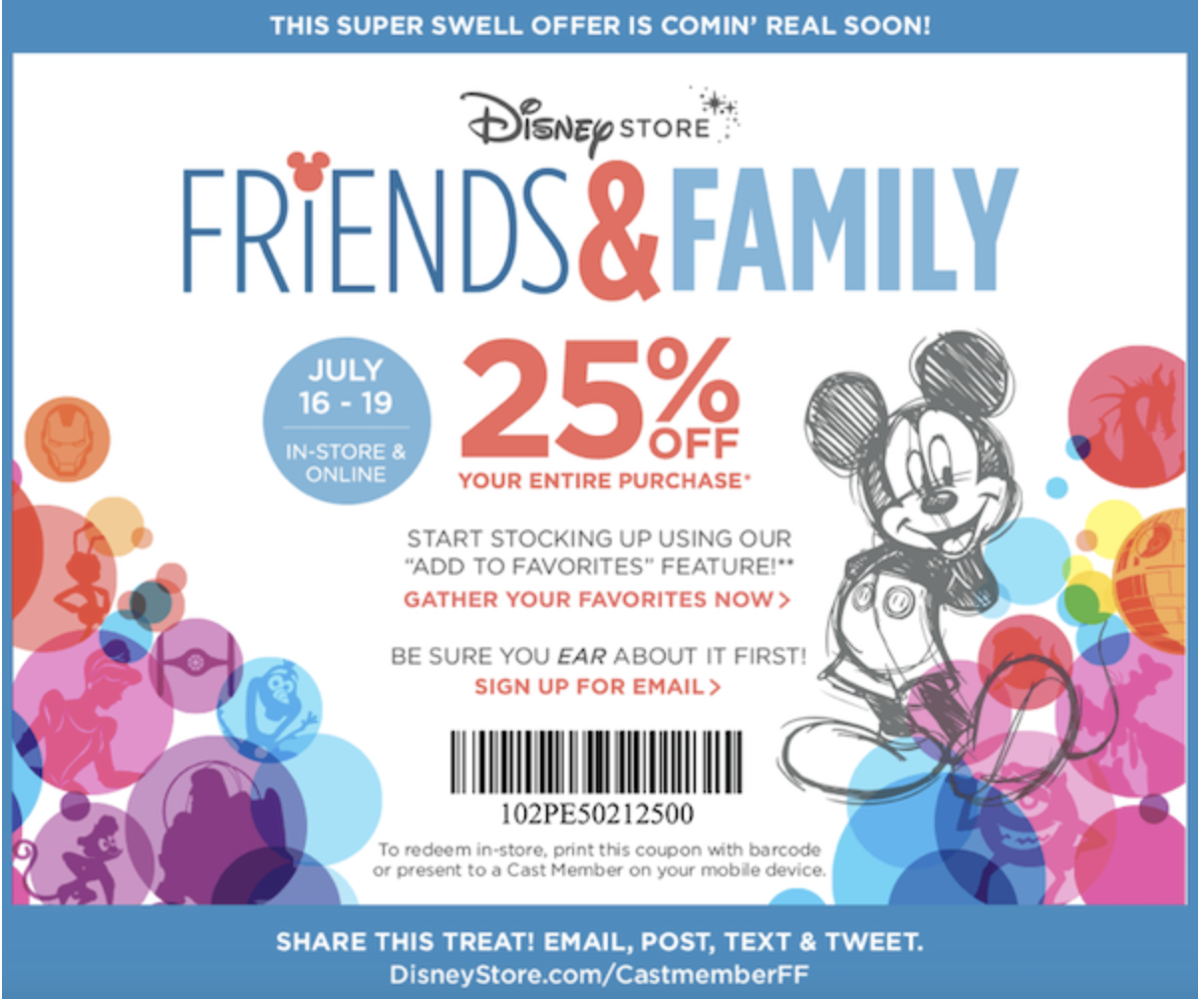
Disney Store’s Friends & Family promotion is a strong example of this. It runs across a specific, narrow date window, offers 25% off the entire purchase, and is built to be shared directly by email, text or social media, with a barcode customers can simply show or print at the till.
See also:
- 180+ ways to improve conversion
- 30+ ways to encourage repeat business
- The Like & Share Effect
- The Refer A Friend Effect