Practical Sales Training™ > How To Convert > Instant Quotes
Instant Quotes
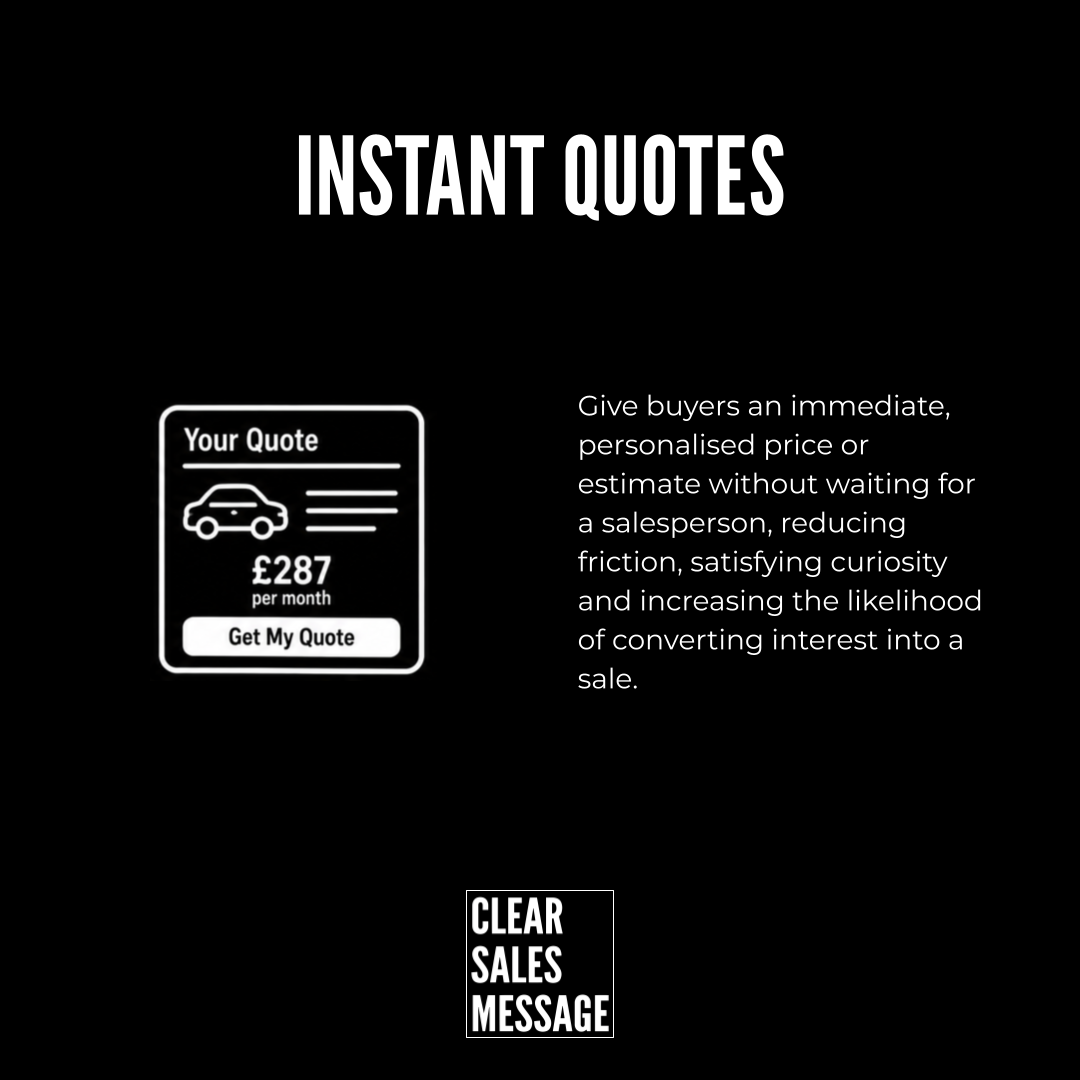
You’re on a website and you like what you see. Then the price says “call us for a quote”. So you close the tab and look at the next firm. Ever done that? An instant quote fixes that exact moment.
It gives the buyer a price built around their own needs. Sometimes that’s a close guide price. Either way, they pick a few options and see the number straight away. As a result, they get the one thing they came for. The sales call can still happen later, if they want one.
What Is an Instant Quote?
An instant quote is a tool that works out a price on the spot. It can sit on your website, in your app or behind an ad. First, the buyer answers a few quick questions about size, style or use. Then the tool shows a price that fits their choices. In other words, they skip the wait and the sales call.
Most buyers want a rough price long before they want to talk to you. So an instant quote meets them where they are. As a result, “I wonder what this costs” turns into “right, so that’s the price”. And that shift moves them closer.
Why Do Instant Quotes Work?
Price is the first question in most buyers’ heads. Yet lots of firms hide it. They fear the number will scare people off. But the buyer simply fills the gap with a guess. And that guess is often far higher than your real price.
An instant quote also removes the fear of the sales call. In fact, plenty of people would rather wait than face a pushy rep. So let them see the price alone, in their own time. That takes away a big reason to stall.
There’s a third reason too. This time, the buyer builds the quote themselves. They pick the size, the style and the extras. In fact, people value things more when they’ve helped make them. So a number they built feels fairer than a number you sent.
How Can You Use Instant Quotes?
The tool itself is the easy bit. However, the hard part is building one that buyers trust and finish. Here’s where I’d put my effort.
Ask Fewer Questions Than You Think
Each extra question gives the buyer a fresh chance to give up. So strip the quote back to the few inputs that move the price most. You can sort the fine detail later, once they’re keen. For most products, three or four steps is plenty. Past that, it starts to feel like a form. And forms don’t excite anyone.
Show a Range When You Can’t Be Exact
Some prices really do depend on a site visit or a chat. That’s fine, though. Instead of hiding the price, give a low and a high figure. Then say what pushes it up or down. That still beats “call us”. Also, it shows the buyer you’re being straight with them from the start.
Make the Next Step Obvious
Once the price is on screen, the buyer needs a next step. So put one clear action right under the number. That might be book a visit, save the quote or check finance. Then pick the one that moves most buyers forward.
Also, let buyers save or email the quote to themselves. After all, big buys often need a partner’s nod. So give them something easy to share at the kitchen table.
Use What the Quote Tells You
Each quote shows you what the buyer wanted and what they were ready to spend. So follow up with that in mind. For example, someone who priced the top option needs one kind of chat. But someone who priced the basic one needs another. As a result, your follow up sounds like help rather than a chase.
When Do Instant Quotes Work Best?
Instant quotes shine when your price follows a few clear rules. Think size, style, term or number of users. Can a simple sum work out your price? Then you can show it on the spot.
They also work well for big home buys that make people nervous. For example, home projects, car leases and home or car cover. Buyers in these markets often shop around at night. By then, your team has long gone home. So a quote that works at 10pm wins the buyer who’s ready at 10pm.
And they suit any market where rivals still say “call for a price”. In that case, just showing the number can win you the first look.
When Do Instant Quotes Become Dangerous?
An instant quote is a promise. So if the final bill comes in much higher, the buyer feels tricked. And that feeling spreads fast, through reviews and chats with friends. So keep the gap between quote and final bill small. And say clearly what could change it.
It also gets risky when your value takes a bit of work to explain. Say buyers see a high number first. If they don’t yet get what’s behind it, they judge you on price alone. In that fight, the cheapest firm wins. So for complex offers, pair the number with a short line on what they get.
Finally, watch out for tools that turn into lead traps. For example, some firms ask for a phone number before they show the price. Buyers see through that fast. As a result, many will leave, and the rest will feel played.
Common Mistakes With Instant Quotes
Most mistakes I see come from treating the quote as a trick. Sadly, buyers spot it every time.
Hiding the Price Behind a Form
Asking for an email before the number appears feels like a toll gate. You promised an instant price, so give it. Then ask for contact details once they’ve seen the number. The best time is when they want to save it. At that point, it feels like a service to them.
Asking Too Much Up Front
I’ve seen quote tools that drag on for a dozen steps. By step six, the buyer has lost the will to live. So each step should earn its place by moving the price. If a question leaves the number the same, move it to later.
Showing a Number With No Context
A bare price gets a bare reaction. Is that good? Bad? The buyer can’t tell. So add a line about what’s included, how long it lasts or what it saves. Now the number has a story. And the buyer can repeat it to others.
Forgetting the Human Behind the Tool
Some buyers will still have questions after they see the price. But if there’s no easy way to ask, they’ll go quiet. So keep a phone number, chat box or call booking right next to the quote. Now the tool opens the sale. Then a real person finishes the job.
Instant Quotes – An Example
Pricing a Conservatory Without a Sales Call
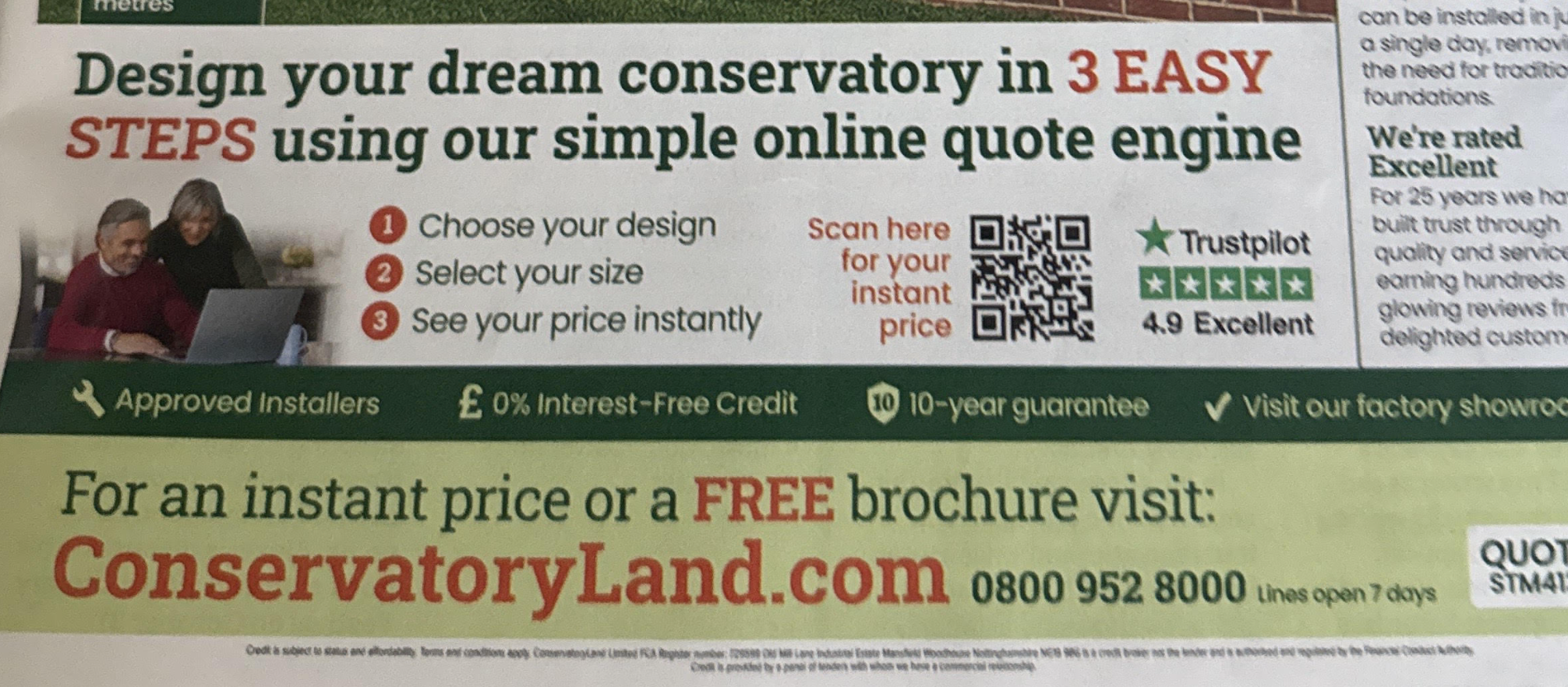
This Conservatory Company allows you to configure and get an instant quote without needing to book a sales call.
What I like here is how small the ask feels. After all, a conservatory is a big, costly job. So lots of people put off even asking about one. Many also dread a sales rep sat in the front room for two hours. This firm turns that around. You get the price first, at your own pace, before anyone knocks on the door.
They push the instant price in their print ads too. So a reader can go from page to price in seconds. And the quicker someone sees a real number, the quicker the dream feels within reach.
See Also