
Practical Sales Training™ > How To Convert > The Self Service Effect

The Self Service Effect
What Is It
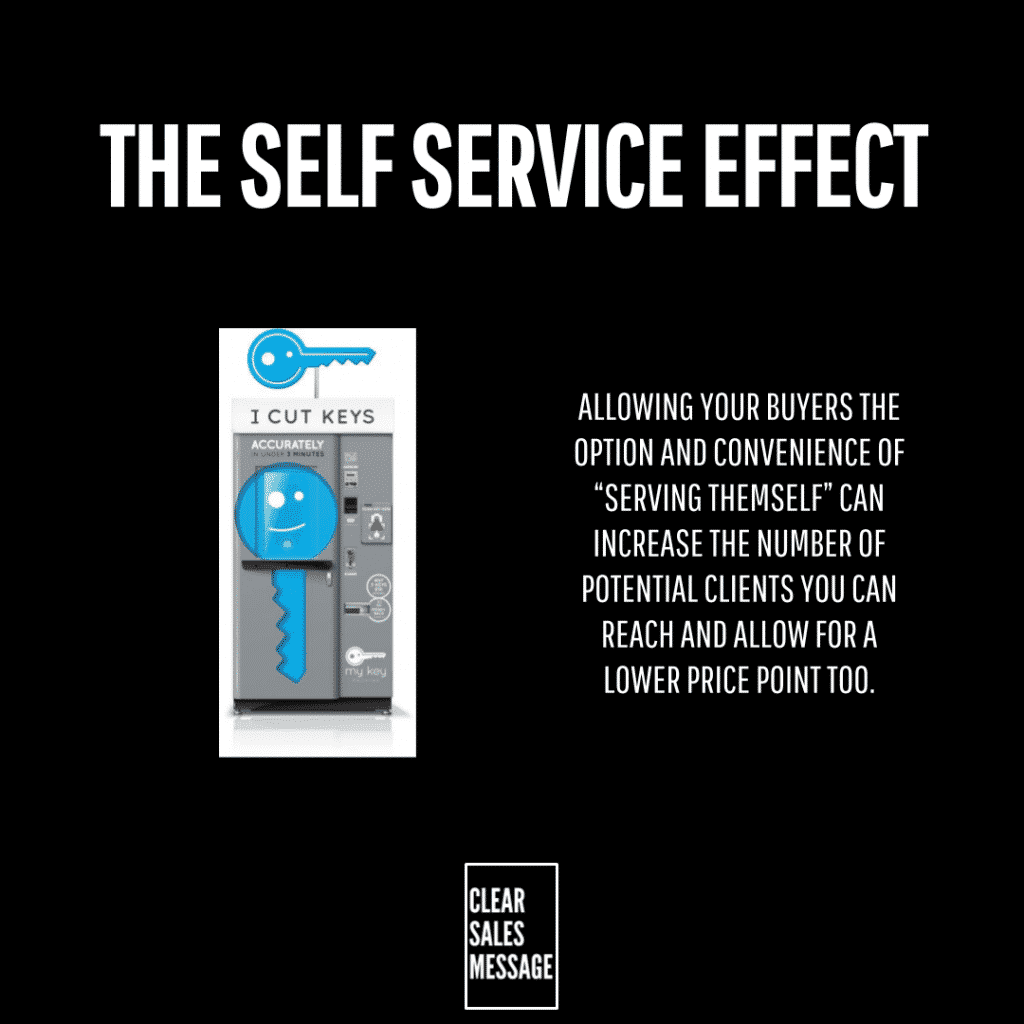
The Self Service Effect is about reaching new potential clients in new locations, and at a lower price point, by providing the means for them to serve themselves.
It’s not a lesser version of your offering. It’s a different route to the same result, built for a buyer who was never going to book the full version anyway.
That distinction matters. You’re not discounting your main offering. You’re creating a separate path into it.
Why Does It Work
It works because it creates another version of your offering, and another route to market. Some buyers can only access your offering at a certain price point and in a certain way.
Creating a self service offering lets you reach yet more potential buyers, the ones priced out, geographically out of reach, or simply not ready for the full experience yet.
There’s a longer term benefit too. A buyer who starts with the self service version often becomes a full price customer later, once they’ve already experienced real value from you.
How Can You Use It
Package everything a buyer needs to do it alone
Depending on your offering, this isn’t always applicable. From vending machines for physical products, and kits containing everything required to deliver a result, to online training, books, and courses, it’s all about giving buyers everything they need to achieve the result they want by themselves.
Keep the core result identical, just the delivery different
A self service version should aim for the same outcome as your full offering, just delivered without you in the room. If the result changes too, it stops being a genuine alternative.
Build in a path back to the full offering
A self service product works best when it naturally leads somewhere. A discount code, an upgrade option, or a clear next step turns a standalone purchase into the start of a longer relationship.
When It Works Best
This works best when your core service has a genuine lower cost, DIY equivalent, one that still delivers a real result without your direct involvement.
It also works best when there’s a clear group of buyers currently priced out or geographically excluded from your main offering entirely.
When It Becomes Dangerous
It backfires if the self service version genuinely disappoints. A buyer who has a poor DIY experience assumes your full offering would disappoint too, even if that’s not true.
It also becomes risky if it visibly undercuts your main offering’s value. If the cheap version looks nearly as good, buyers may wonder why they’d ever pay full price at all.
Neglecting the self service product over time causes its own damage. An outdated kit or a stale course reflects badly on the whole brand, not just that one product.
Common Mistakes
Making the self service version feel like a lesser product
A watered down, obviously inferior offering damages trust rather than opening a new market. It should feel different, not worse.
Forgetting to build in an upsell path
A self service product with no route back to your full offering wastes the relationship it just started. Always include a clear next step.
Leaving buyers unsupported if they get stuck
Self service doesn’t mean no support at all. A small amount of help when things go wrong protects the reputation of the whole offering.
The Self Service Effect – An Example
A Skincare Clinic
Original Offering: In-person consultations and treatments costing £150+ per session, offered in a single clinic location.
Self Service Version: You create a “Skin Confidence at Home” kit for £39, which includes:
- A step-by-step digital skin analysis (via your app or website)
- A 7-day treatment plan with recommended products
- Access to a private online community
- A discount code for a future in-person consultation
Why it works: You reach people outside your physical location, and you cater to buyers who can’t afford or aren’t ready for a full appointment. At the same time, you create a lead-in product that builds trust and can upsell later.
See also