Practical Sales Training™ > How To Convert > Lifetime Pricing

Lifetime Pricing
What Is It
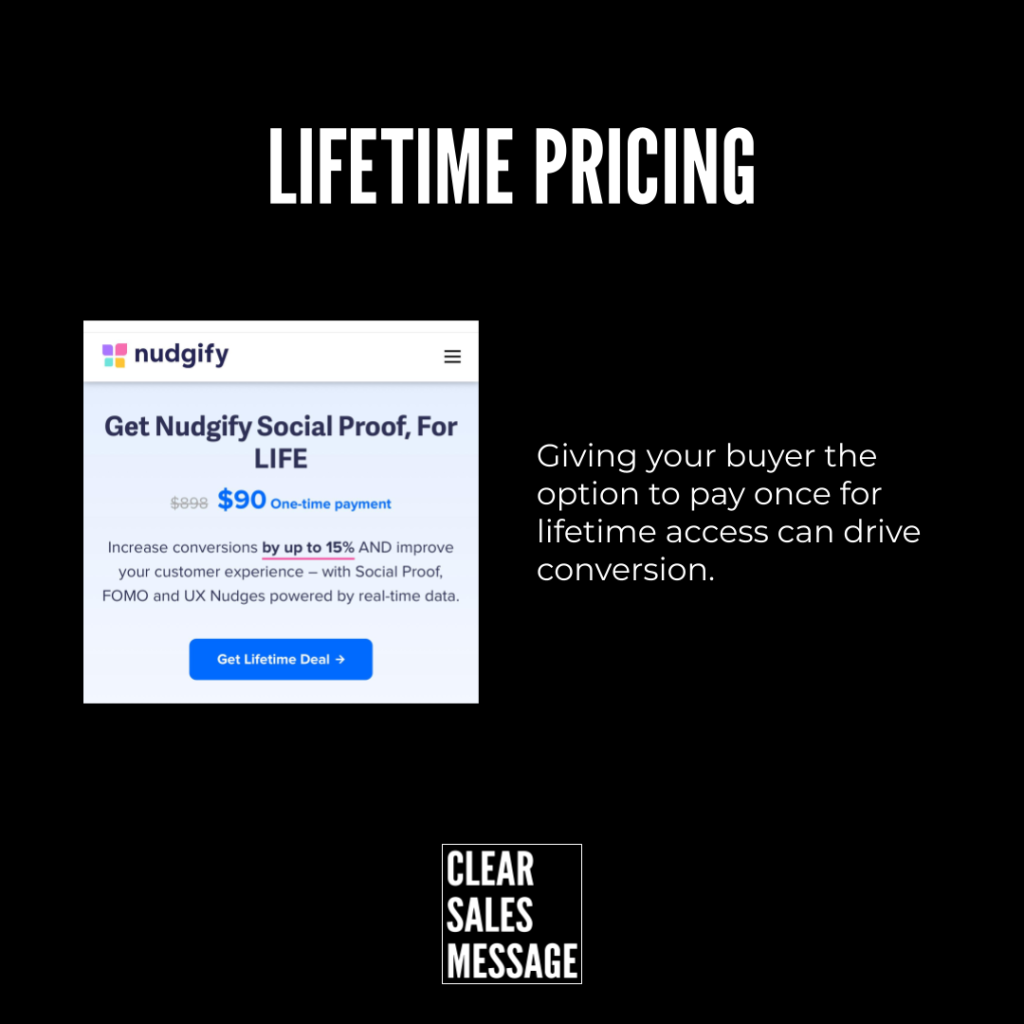
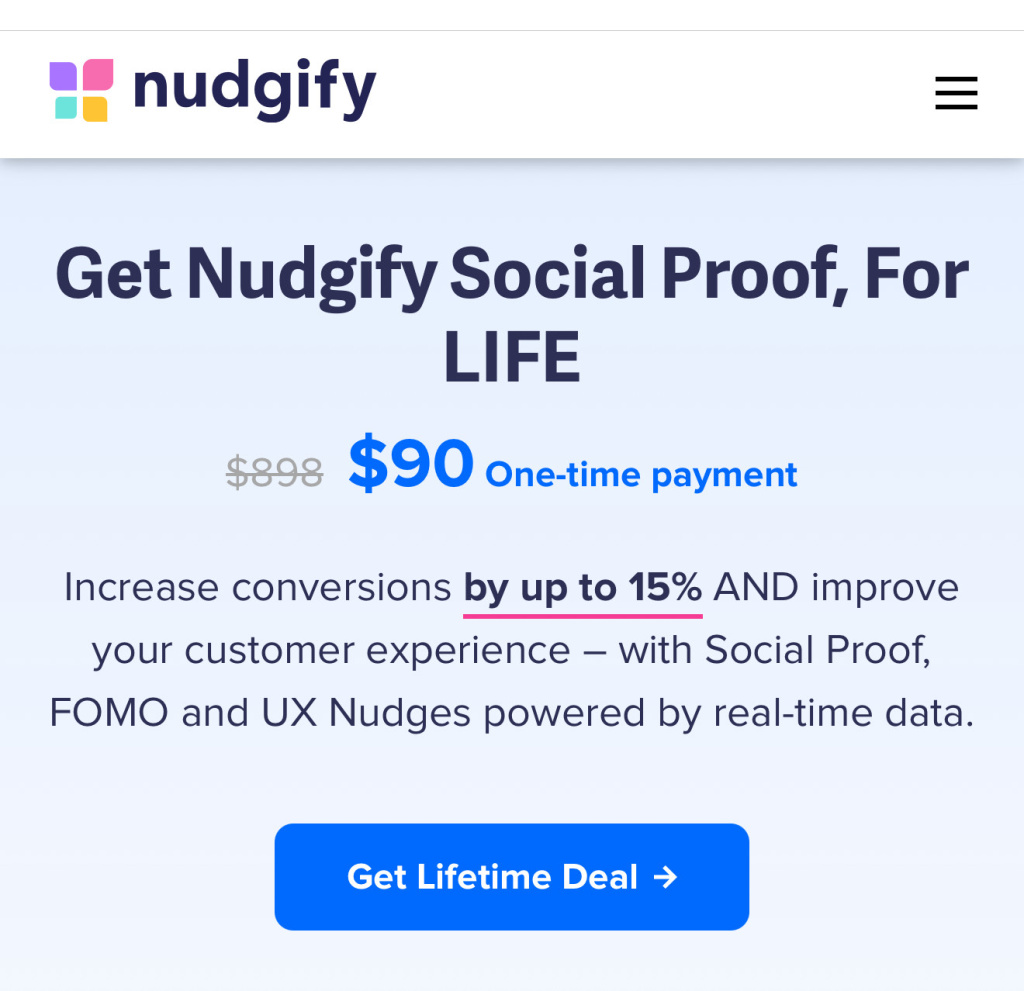
Picture never getting a bill for this again. One payment, and the thing is yours for good. That’s the pitch behind Lifetime Pricing.
You charge one upfront fee instead of monthly or annual payments. The customer pays more today, but never pays again. No renewals, no price hikes, no ongoing cost. It’s a popular move for software, courses, memberships, and other digital tools.
Why Does It Work
It works because both sides come out ahead. So you get more cash upfront. That helps cash flow, and cuts churn to almost nothing. The customer skips the worry too. No rising prices, no lost access down the line.
It also builds a sense of ownership. Paying once feels different to renting access every month. And plenty of people simply prefer one-and-done pricing over another subscription to track.
How Can You Use It
Offer It As A Limited-Time Deal
So offer Lifetime Pricing as a limited-time option, an upgrade, or a one-off launch deal. Show the maths. Let people see exactly how much they’d save over time.
Frame It As Buy Once, Benefit Forever
Position it as buy once, benefit forever. Add urgency if the offer is only around for a short window. That combination pushes fence-sitters to decide now instead of later.
Target Your Most Loyal Buyers
It’s also especially strong with loyal customers. So people who already know they’ll stick around would often rather pay more now than keep paying forever.
When It Works Best
This works best when your product has staying power, and customers are likely to use it for years. Longer stays make the deal look better. In hindsight, it feels like a steal.
It also works well as a launch tactic, rewarding early buyers for taking a chance on something new. Scarcity and reward combine well. Together, they make one strong offer.
When It Becomes Dangerous
This becomes risky if your costs rise over time but the customer’s price never does. One sale can quietly become a loss. Years later, you’re the one paying for it.
It also backfires if you never build support and updates into the original price. So budget for years of service, not just the one transaction.
Common Mistakes
Pricing It Too Low
Some brands price the lifetime deal too low, chasing quick cash instead of long-term value. Run the maths first. Commit to a number only once it holds up.
Offering It To Everyone
Others offer it to absolutely everyone, which erodes the price of the regular plan. So keep it scarce, or tie it to a specific moment like a launch.
Breaking The Promise Later
Some brands promise lifetime access, then quietly sunset the product a year later. So only make the promise if you can actually keep it.
Lifetime Pricing – An Example
A Launch Week Lifetime Deal
Picture a small project management tool priced at twelve dollars a month. So during launch week, the founder offers a one-time payment of two hundred dollars instead, for lifetime access.
Early customers do the maths fast. Two hundred dollars pays for itself in well under two years. And after that, the tool is free forever. So the offer sells itself. The founder also banks a wave of cash right when the business needs it most.
See also:
- The Fixed Price Effect
- Grandfather Pricing
- 180+ ways to improve conversion
- 100+ ways to differentiate