Practical Sales Training™ > How To Lose The Sale > Messaging Mismatch

Messaging Mismatch
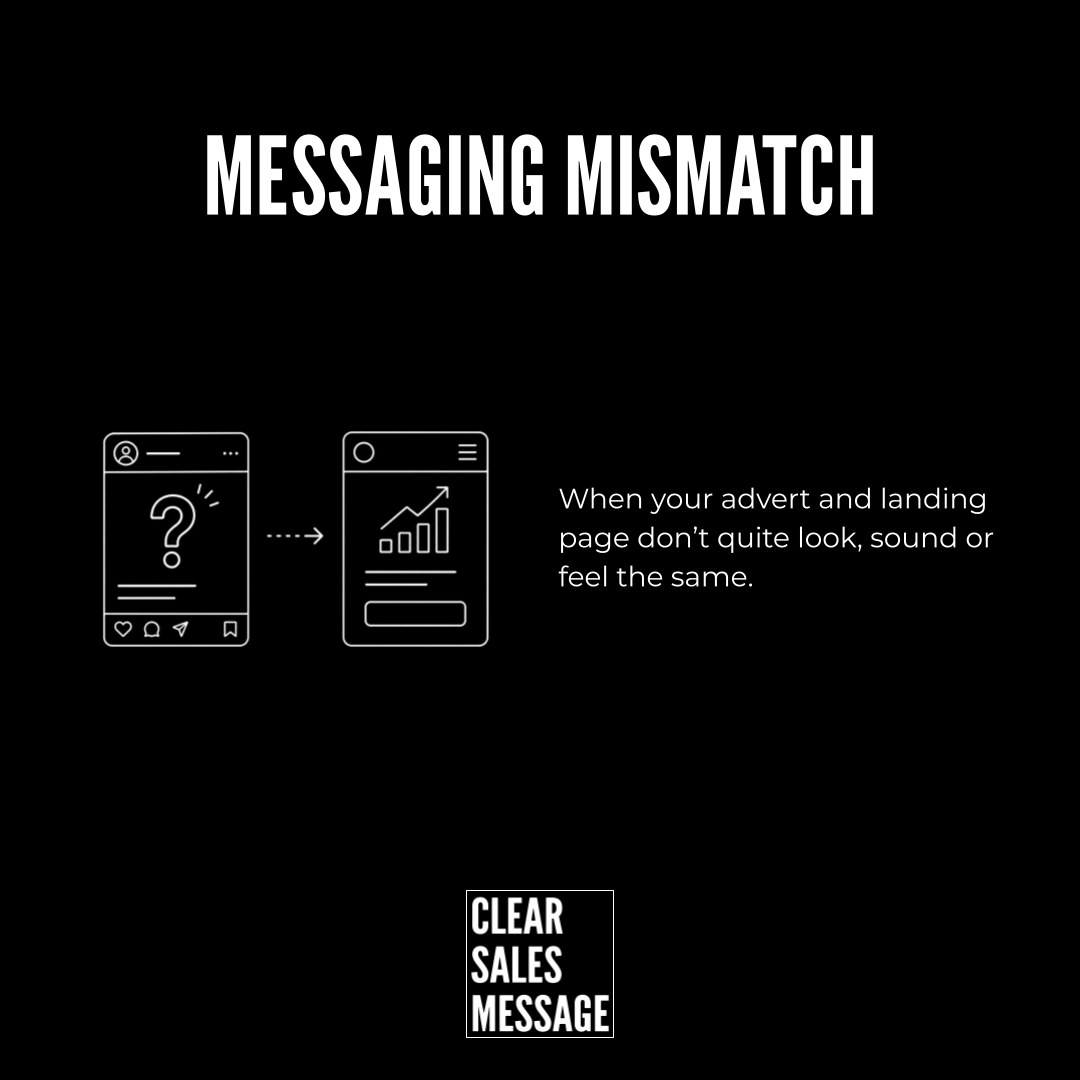
You spend money on an ad. Someone clicks. Then they land on a page that doesn’t sound like the ad at all. So that gap is a Messaging Mismatch, and it costs you sales every single day.
What Is It
A Messaging Mismatch happens the moment your ad and your landing page stop speaking the same language. Your ad might promise a fix for one problem. But the page then jumps to a result, without mentioning that problem again. Buyers notice the shift, even when they can’t explain why. So they just feel confused, and confused buyers don’t buy.
This shows up in more than tone. It happens with headlines, offers, and even the images you use. When your ad shows a struggle and your page shows a celebration, the buyer’s brain has to work harder. So it takes real effort to reconnect the two. That gap is where trust leaks out.
Why Does It Work
Buyers move fast online. They form a first impression in seconds, then look for proof that impression was right. When the page confirms what the ad promised, they relax and keep reading. If it doesn’t, their guard goes straight up.
This is a trust problem more than a design one. A buyer who feels tricked once assumes you’re exaggerating every other claim too. So even a strong offer gets read with suspicion, and suspicion kills conversions faster than a weak headline ever could.
How Can You Use It
Match The First Five Words
So read your ad headline, then read your page headline straight after. If the first five words don’t match in meaning, buyers feel the jolt before they’ve even scrolled. Fix the headline first. Everything else can follow later.
Reuse The Ad’s Exact Language
Pull the exact phrase from your ad and drop it into your headline or subheadline, word for word. In fact, this one small habit does more for conversion than almost any design change. It removes the moment of doubt where a buyer checks they’re in the right place.
Test The Screenshot Alongside The Copy
Take a screenshot of your ad and a screenshot of your landing page, then put them side by side. Squint at both. If your eye can’t tell they belong to the same brand and the same offer, buyers can’t either. So this quick visual check catches mismatches a written checklist misses every time.
When It Works Best
A mismatch does the most damage on paid traffic. Someone who clicks a cold ad has no relationship with you yet. The page becomes their only proof you’re legitimate. So any gap between the promise and the delivery reads as a red flag straight away.
It also hurts more on short attention spans. Mobile users scroll fast and judge faster too. A five second gap between what they expected and what they got is often enough to lose them for good.
When It Becomes Dangerous
The real danger appears when a business scales its ad spend without checking the page keeps pace. Early on, a founder writes both the ad and the page from the same head, so they naturally match. Once a team grows, a marketer writes the ads and someone else owns the page. The two drift apart without anyone noticing.
By the time the mismatch shows up in the numbers, it usually looks like a traffic problem. So budgets get raised to fix a leak that was never about traffic at all.
Common Mistakes
Testing The Ad Alone
Most split tests only change the ad and leave the page untouched. That tells you which hook gets clicks, but nothing about which hook the page can actually deliver on. A winning ad paired with a mismatched page can still lose money, even while the click through rate looks great.
Letting Brand Guidelines Override The Match
Some pages get forced into a house style that overrides whatever language got the click. The visuals stay on brand, but the words stop matching the promise. Buyers don’t care about your style guide. Instead, they care about getting what they were told they’d get.
Fixing The Page But Not The Ad
When a business finally notices the mismatch, it’s usually the page that gets rewritten. The ad, often the older and more tested asset, gets left alone. So the two drift apart again within a few months, just from a different direction.
Messaging Mismatch – An Example
What This Looks Like In Practice
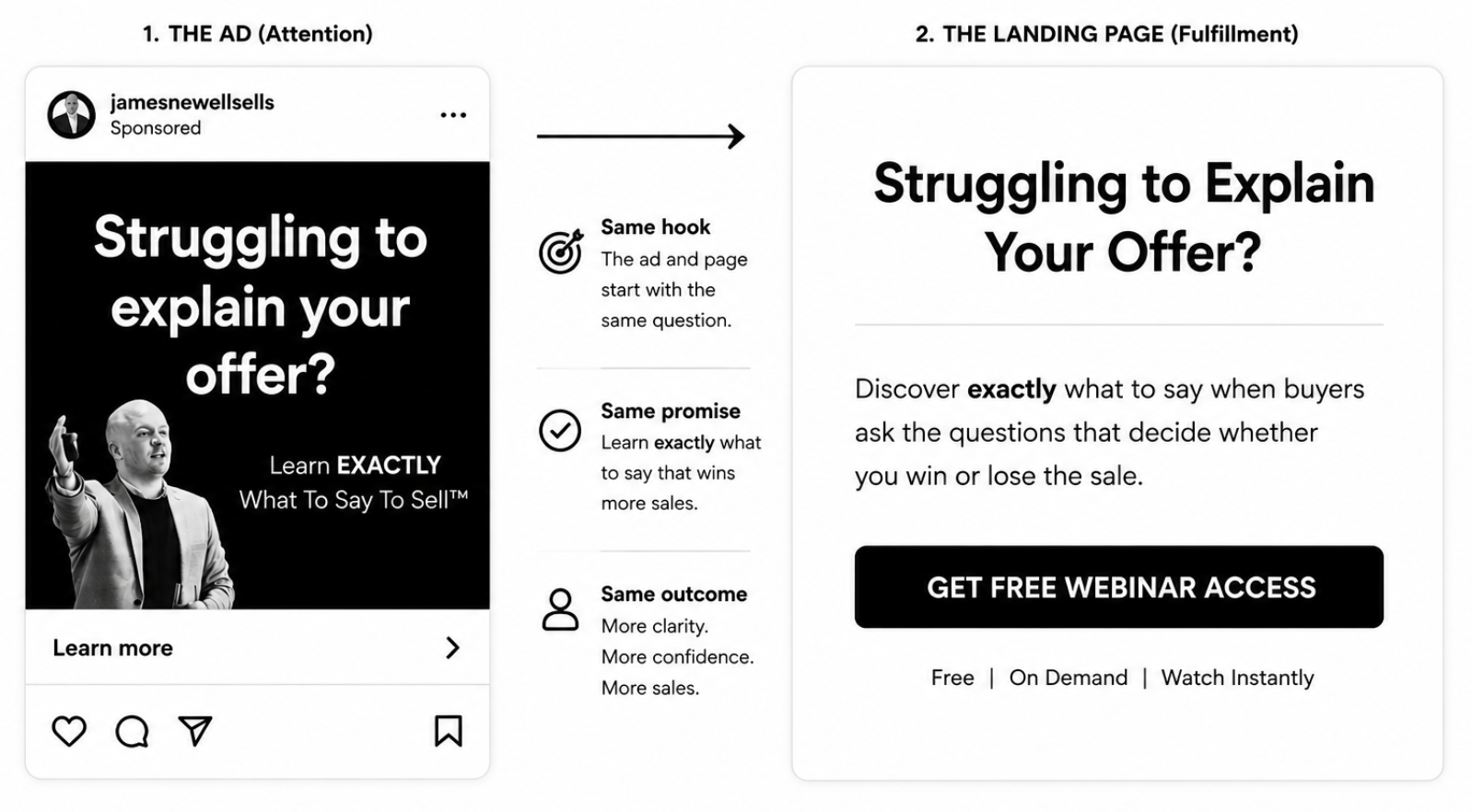
For my own What To Say To Sell™ ads and free webinar, I keep one rule. The hook, the promise and the outcome stay the same all the way through. Click the ad, and you land on a page that finishes the exact sentence the ad started.
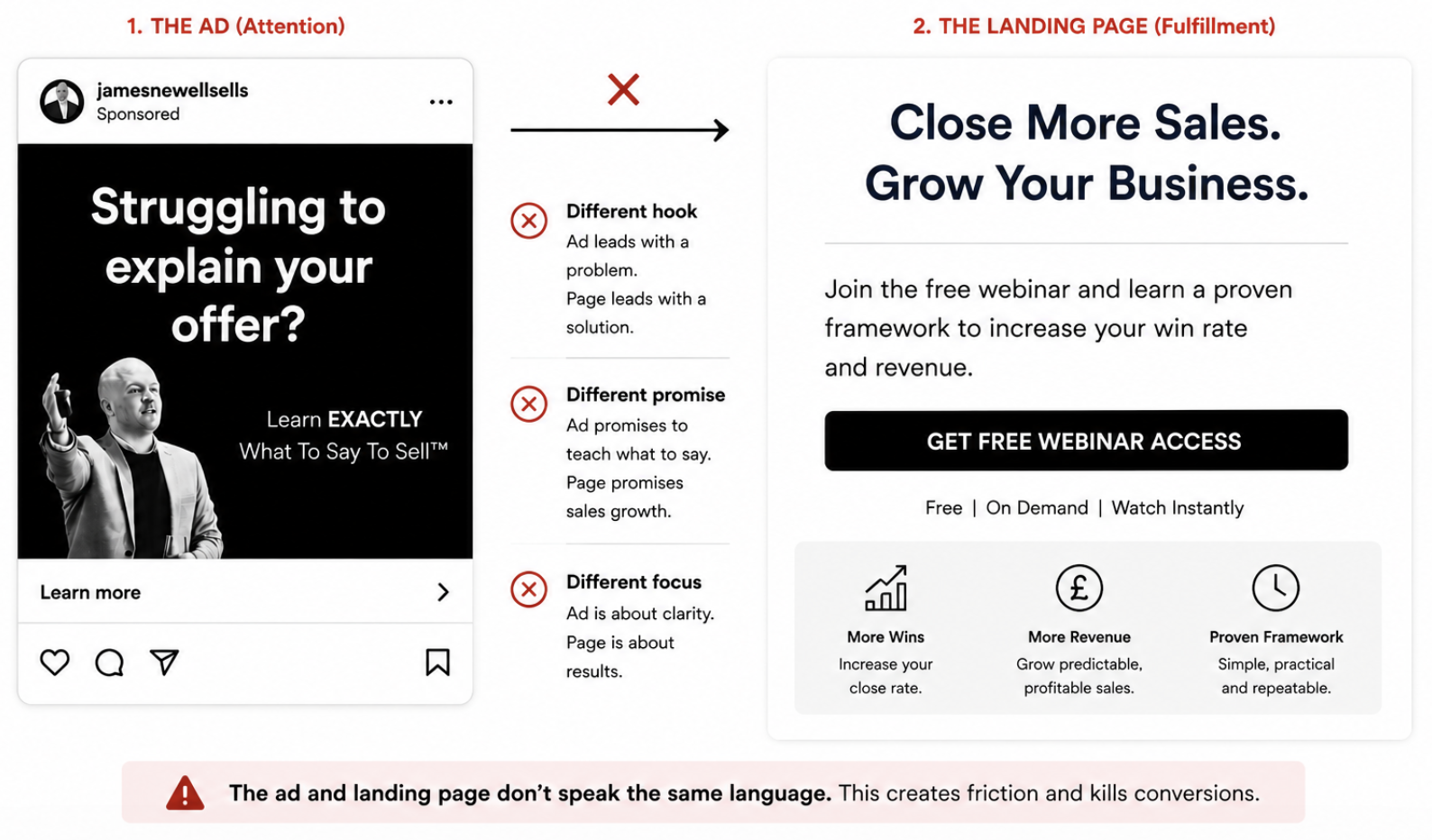
Now picture the opposite. The ad asks one question, but the page answers a completely different one. That’s the mismatch buyers feel within seconds, and it’s the fastest way to burn ad spend without knowing why.
See Also
- 60+ ways to LOSE the sale
- Confusing Messaging
- The Mis-Read Effect
- Read, Write, Speak, Spell
- The Cleverness Trap