Practical Sales Training™ > How People Work > Pattern Interrupts

What is it?
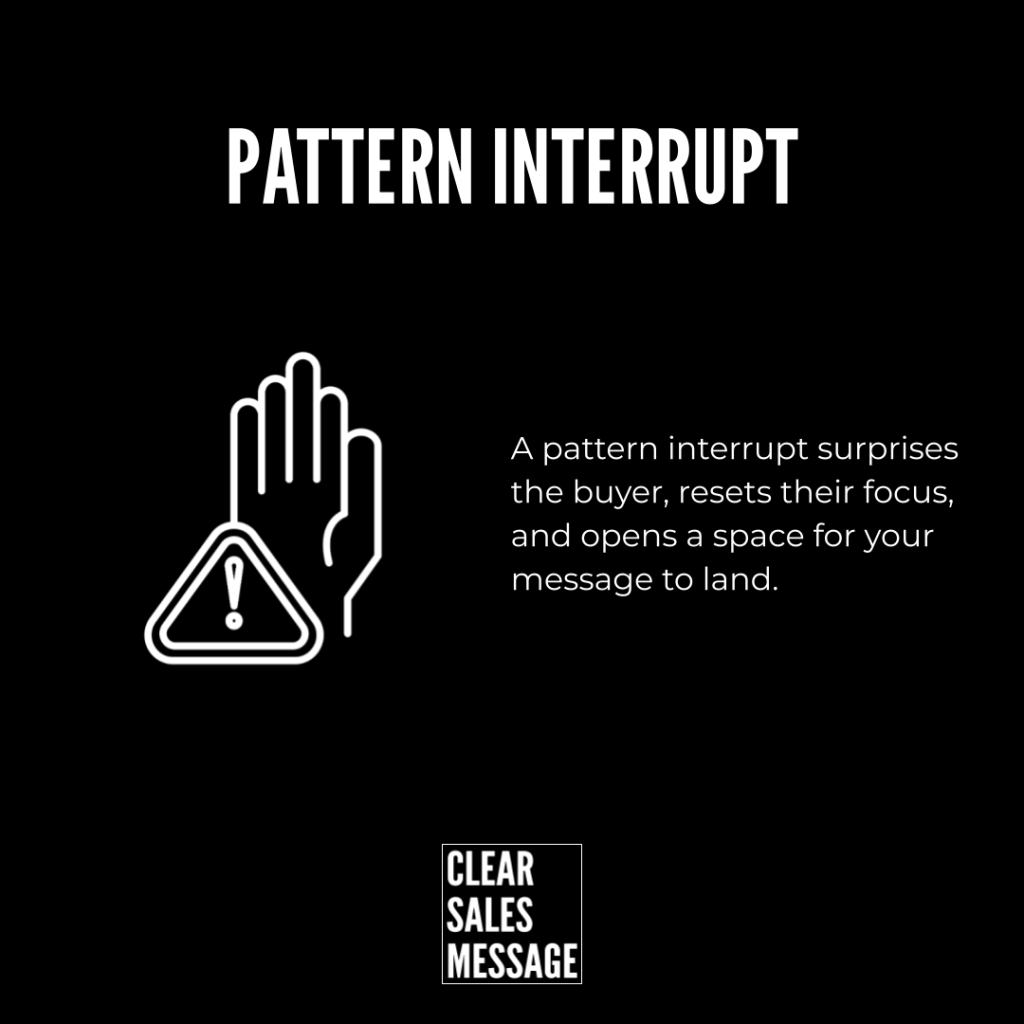
A pattern interrupt is any unexpected action, word, or moment that stops the usual flow of a sales interaction. It could be spoken, written, visual, or even physical. The goal is to break auto-pilot and bring the buyer’s attention back to you.
How does it work?
A pattern interrupt works by breaking the expected flow of communication and resetting the buyer’s attention. Here is the process:
-
Expectation is set
Buyers are used to hearing the same lines and pitches. Their brain switches to autopilot and starts filtering you out. -
The interrupt happens
You say, show, or do something they do not expect. It could be an unusual phrase, a sudden pause, a bold statement, or even a visual or sound. This moment stands out because it disrupts the normal rhythm. -
The brain reacts
The human brain is wired to notice change. When something unexpected happens, it triggers a quick alert. For a second, the buyer’s attention is fully back with you. -
You add value immediately
If you use that moment to deliver a useful insight, proof point, or benefit, the buyer stays engaged. Without value, the interrupt feels like a gimmick. With value, it feels refreshing. -
The frame shifts
Now the buyer is looking at the conversation in a new way. You have shifted them from auto-pilot to active thinking, and you control the frame of the discussion. -
You guide the next step
Once attention is earned, you move to a small, safe next step – a question, a short call, or an invitation. The buyer is more likely to say yes because you have reset the interaction on your terms.
How can you use it?
1. Words
-
Saying something the buyer does not expect
-
“This is a sales call. You can hang up in 30 seconds if it is not useful.”
-
“I do not want to sell you anything today. I want to show you something.”
-
-
Using humour or curiosity
-
“Before you scroll, you might want to keep this one.”
-
2. Noises / Sounds
-
A deliberate pause in a call or presentation
-
A clap, knock on the desk, or tapping a pen to break silence
-
Playing a short sound effect in a video or presentation to refocus attention
3. Visuals
-
Switching slides to a single bold word or unexpected image
-
Using a prop in a meeting (holding up an hourglass to talk about wasted time)
-
In an email, using a short one-line subject like “Wait. This matters.”
4. Physical / Behavioural
-
Standing up during a meeting to shift energy
-
Changing tone of voice suddenly (from soft to loud, or vice versa)
-
Writing one word in big letters on a flip chart to anchor the point
5. Digital
-
A bold ad that says “Stop. Don’t buy more leads yet.”
-
A LinkedIn post that starts with “Ignore this post if you already close 100 percent of your pipeline.”
-
A follow-up email that begins “Permission to close your file?”
Hypothetical Example
Starbucks Barista – Instead of the usual:
“Can I get your name for the cup?”
The barista says with a smile:
“What’s your superhero name for today?”
Why it works:
-
People expect a routine transaction.
-
The unusual question breaks their autopilot, sparks a smile, and makes the interaction memorable.

See also
- 50+ ways that people work & make decisions
- 100+ ways to seize buyer attention
- The Bizarreness Effect
- Motion Bias