Practical Sales Training™ > How People Work > Pavlovian Trigger

Pavlovian Trigger
What Is It
A specific sound plays, and your mouth waters before you even see food. That’s conditioning at work, and it’s exactly what a Pavlovian Trigger does to your buyers.
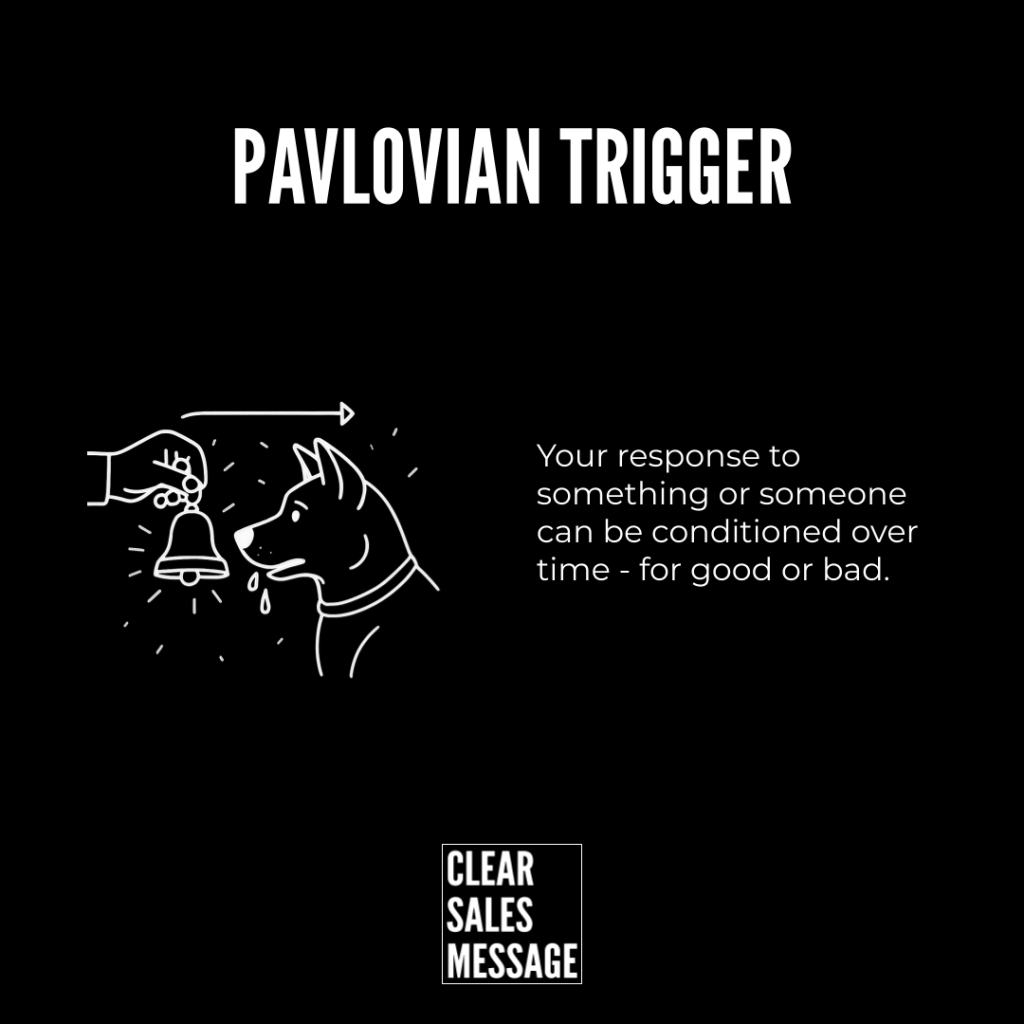
It’s a cue that causes an automatic reaction because of past conditioning. So Pavlov rang a bell every time he fed his dogs. Eventually the dogs salivated at the bell alone, food or no food. In sales, the same thing happens. A word, sound, visual, or phrase starts to mean value, urgency, or trust. Your audience has simply felt that before.
Why Does It Work
It works through repeated association. So the more often something positive shows up alongside a specific cue, the faster people respond. Eventually they react without thinking at all.
The pattern runs in three steps. So you use a consistent cue. Then the audience gets something genuinely valuable right after it. Over time, the cue alone starts to trigger trust or action, no full pitch required.
How Can You Use It
Repeat High-Impact Language
So find a phrase that already converts well, on your sales page or on calls. Repeat it everywhere. In email, video, and landing pages, until it sticks.
Use Consistent Visual Or Auditory Cues
Pick a sound or visual cue too. A short audio sting in your videos, or a red underline on key offers. So pair it with something genuinely good every single time, and it becomes a trigger for trust.
Create A Buyer Routine
Build a routine your audience learns to expect. So a weekly email that always opens with one sharp tip becomes something they anticipate. That’s the conditioned response.
When It Works Best
This works best when the trigger genuinely predicts something valuable, every single time it appears. So consistency builds the association.
It also works well in channels you control regularly, like email or a weekly video series. So repetition needs a steady rhythm.
When It Becomes Dangerous
This becomes hollow if the cue shows up without the value behind it. So break the pattern once, and the whole trigger starts to lose its pull.
It also backfires if you overuse the trigger until it feels manipulative rather than familiar. So a noticed cue already stopped working.
Common Mistakes
Changing The Cue Too Often
Some brands change the cue too often, resetting the conditioning before it has time to form. Pick one signal, and stay with it.
Attaching It To Inconsistent Value
Others attach the cue to inconsistent value, sometimes great, sometimes weak. So that inconsistency confuses the association instead of building it.
Turning It Into A Gimmick
Some brands lean on the trigger so hard it starts to feel like a gimmick. So let the cue support value.
Pavlovian Trigger – An Example
The Same Three Words, Every Week
A coach opens every weekly email with the same three words, one quick win. So subscribers know exactly what’s coming before they even read the subject line. Over months, that phrase alone starts to trigger anticipation. So open rates climb, even though the offer inside never gets mentioned in the subject line at all.
See also:
- The Law of Past Experience
- 50+ ways that people work & make decisions
- 100+ ways to seize buyer attention
- 100+ ways to be more memorable