Practical Sales Training™ > How People Work > Perceived Disintermediation

Perceived Disintermediation
What Is It
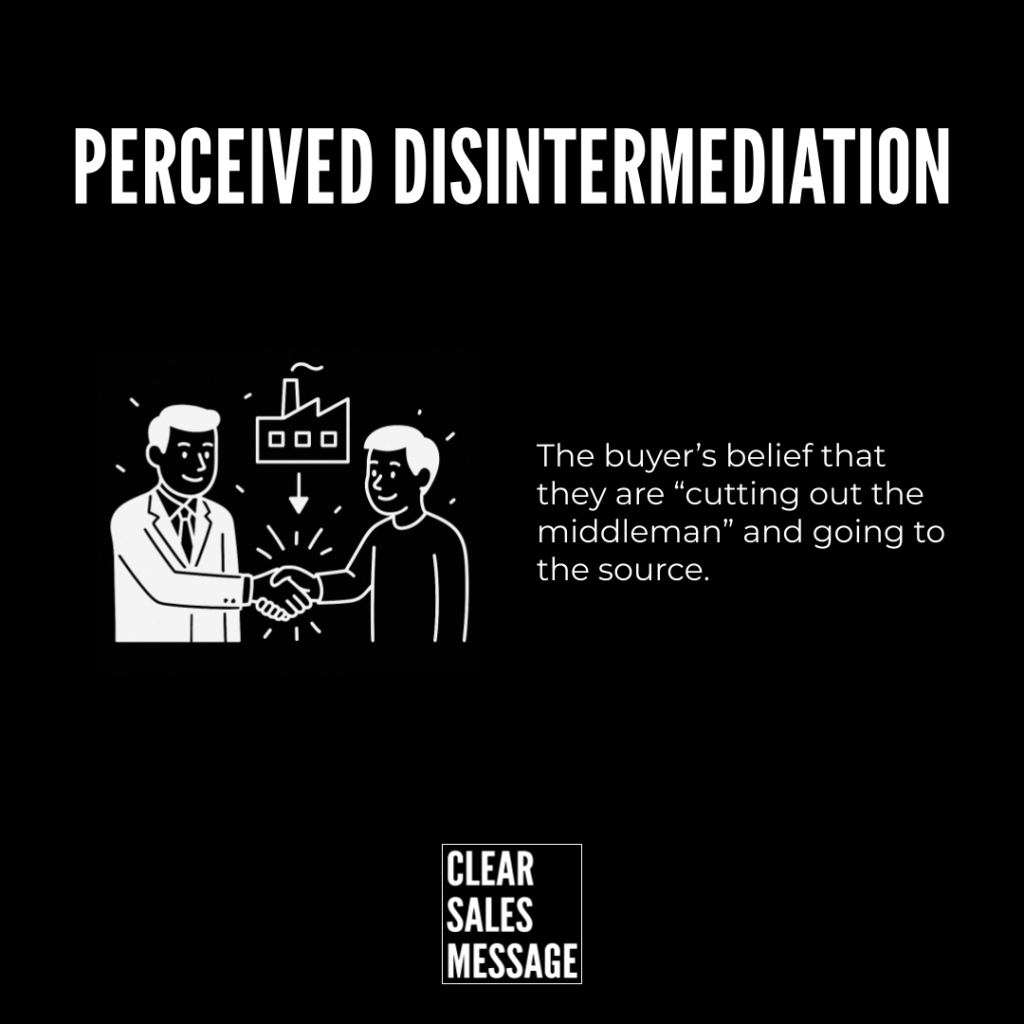
A buyer feels like they’re talking straight to the source, no middlemen, no markup. That feeling alone makes the sale easier, even when it isn’t strictly true.
That’s Perceived Disintermediation. It’s the belief that a buyer deals directly with the source, not through resellers, brokers, or unnecessary go-betweens. So it creates a sense of exclusivity. No hidden markups. A relationship that feels direct and personal. Even as a reseller, if the buyer feels unfiltered access, the sale gets emotionally easier. This doesn’t require deception. It’s about transparency, proximity, and positioning.
Why Does It Work
It works because buyers are more skeptical than ever. So they want speed, simplicity, and control. Direct access seems to promise all three. When they believe they’re dealing with the source, they trust everything more. So the price, the product, the process, all of it.
Trust rises when fewer people seem involved. Risk also feels lower with direct communication. And value feels greater when access feels exclusive. So language, structure, and visual cues can reinforce that directness, even inside a longer chain.
How Can You Use It
Use Language That Suggests Direct Access
So use language that suggests direct access. From the source, no middlemen, our own network, exclusively available to you. Phrases like these reinforce directness, even when your model has layers behind it.
Position Yourself As The Buyer’s Insider
Position yourself as the buyer’s insider. If you’re a broker, frame yourself as the one giving VIP access others can’t get. So make them feel friction disappear.
Simplify The Experience
Then simplify the experience itself. Less paperwork, faster access, direct communication. So a lean process reinforces the feeling of dealing with the source, even from the middle of the chain.
When It Works Best
This works best when the underlying experience genuinely feels simple and direct, not just the language describing it. So the perception needs real substance.
It also works well with skeptical, self-directed buyers who actively avoid layers of process. So the fewer obstacles they hit, the more the perception strengthens itself.
When It Becomes Dangerous
This becomes dishonest the moment the language claims something that’s flatly untrue. So never say no middlemen if middlemen are, in fact, involved.
It also backfires if the buyer eventually discovers the layers you downplayed. So the gap between perception and reality becomes the whole story once it surfaces.
Common Mistakes
Using The Language Without The Substance
Some brands lean on the language without simplifying the actual experience behind it. So words alone don’t create the feeling, the process has to match them.
Overclaiming Access Or Exclusivity
Others overclaim access or exclusivity that doesn’t hold up under any scrutiny. So keep every claim defensible, even under a direct question.
Losing Trust Once It Breaks
Some brands forget that trust, once broken here, rarely comes back. So protect the perception by keeping it honestly earned, not just cleverly worded.
Perceived Disintermediation – An Example
From The Workshop, Not The Warehouse
A furniture reseller drops the word wholesale from every page, and replaces it with straight from our workshop. The buyer pictures a small team. Building the piece by hand. Not a warehouse full of stock bought from someone else. Nothing about the product changes. The perception does, and so does the price the buyer feels comfortable paying.
See also: