

Practical Sales Training™ > How People Work > Recognise The Bias
Recognise The Bias
Sometimes your best answer for a client is also your priciest one. That looks suspicious, even when it’s true. So name the bias yourself, before your buyer starts wondering about it.
Why Does It Work
It works because buyers are naturally cynical. If you recommend your priciest option and say nothing, they assume you’re chasing commission. So naming the bias yourself removes that suspicion early. Once you’ve said it, they stop hunting for the angle, because there’s nothing left to find.
How Can You Use It
Name The Bias Yourself
Say the obvious thing out loud. If your best answer happens to be your priciest product, tell them straight. A line like “I know I’m biased, but you need this” does the job. Because you named it first, they never get the chance to think it themselves.
Lighten It With Humour
Use humour to soften the moment. Because a joke about your own bias lands better than a serious defence. So keep it light. A quick, self-aware line beats a paragraph of justification.
When It Works Best
This works best whenever your advice lines up with your own interests. High-ticket items and your own core service both qualify. So use it any time the right answer is also the profitable one.
When It Becomes Dangerous
It becomes dangerous if you use it as an excuse, not an admission. Saying “I know I’m biased” doesn’t excuse pushing the wrong thing. Only use this when the recommendation is actually correct. The joke works because it’s honest.
Common Mistakes
Using It On Every Recommendation
Using this on every recommendation is the most common mistake I see. Because if every pitch comes with a bias disclaimer, none of them mean much. So save it for moments where the bias is obvious, not as a habit.
Sounding Defensive Instead Of Light
Sounding defensive instead of light is the second mistake. Because a stiff justification makes the bias feel like a problem, not a fact. So keep the tone easy. Confidence sells the point better than caution does.
Recognise The Bias – An Example
The LinkedIn Comment
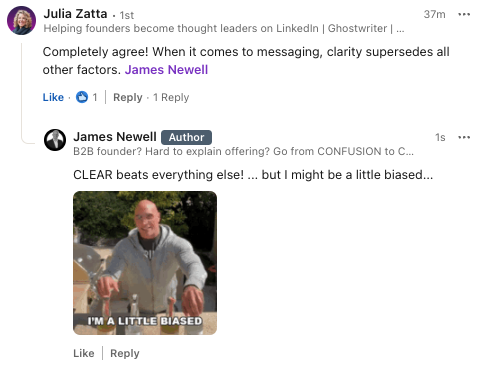
I did this myself on LinkedIn, replying to a comment about clarity in messaging. So I agreed, then owned my own bias toward my own framework. I paired it with a meme admitting, in big text, that I’m a little biased. It got a laugh. So the recommendation landed harder for it.
See Also