Practical Sales Training™ > How People Work > Soft Yes
Soft Yes
You’ve had a great call. The buyer nodded along and said it all made sense. They even said “let’s do it.”
Then the emails went quiet.
That’s a soft yes. And it’s one of the costliest moments in sales. It feels like a win, so you stop selling. But the buyer never actually decided anything.
What Is a Soft Yes?
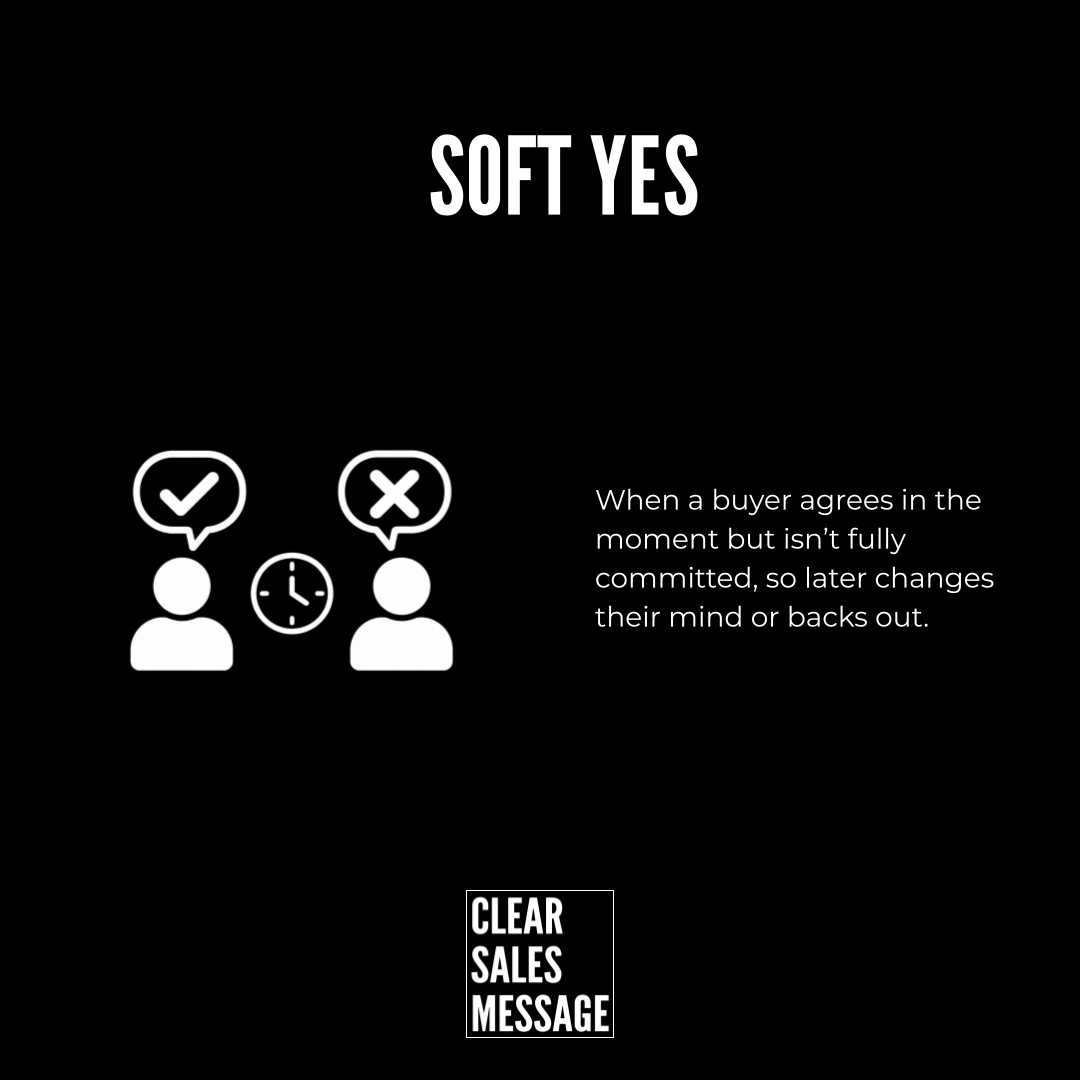
A soft yes is agreement without commitment. The buyer says yes in the room. Yet in their head, the purchase still hasn’t happened.
Most soft yeses sound polite. “That sounds good.” “Send me something over.” “Let’s pick this up next week.” Each one feels like progress. However, none of them costs the buyer anything.
That’s the tell. A real yes usually has effort attached. It comes with a date, a name, a budget or a next step the buyer owns.
So a soft yes is easy to give and easy to take back. In fact, the buyer often means it when they say it. They just haven’t thought about what saying yes will cost them yet.
Why Does a Soft Yes Happen?
Saying yes is easy. Saying no to a nice person’s face is awkward.
Most people avoid conflict. So when a seller is warm and keen, the buyer agrees to ease the tension. It ends the call on a good note. It also buys them time.
Then there’s the moment itself. On the call, your energy carries them along. But an hour later, they’re back at their desk with a full inbox. And the buzz fades fast.
Still, the biggest reason is often the simplest. Your buyer liked what they heard, but they can’t explain it to anyone else.
That matters because most buyers can’t sign alone. They need a boss, a finance team or a colleague to agree too. If they can’t repeat your idea in a line or two, their yes dies. It happens in the very next internal meeting.
This is why I say most deals are lost in explanation. The buyer said yes to you. Still, they never got the words to sell it on.
How Can You Spot and Firm Up a Soft Yes?
Buyers will always give soft yeses. However, you can catch them early and turn some of them into firm ones.
Listen for What the Yes Costs Them
Every firm yes costs the buyer something. Time, budget, effort or a bit of reputation.
So after any yes, ask yourself one question. What did they just agree to do? If the answer is “nothing,” you’ve got a soft yes.
A promise to “have a think” is free. A promise to book in their finance director is not.
Ask for a Small Action Before the Call Ends
Pin the next step down before you hang up. So ask for something small that happens while you’re both still there.
For example, open your calendars and book the follow up together. Or ask who else needs to see this, and get their name.
Small actions matter because people like to stay consistent. Once a buyer has done one thing, the next step feels natural.
Make It Safe to Say No
This one feels odd, but it works. Tell the buyer a no is fine.
Something like, “If this isn’t right for you, just say. I’d rather know now.” That takes the social pressure off.
As a result, the people who still say yes tend to mean it. And the ones who were only being polite tell you early. That saves you weeks of chasing.
Check They Can Explain It Back
Ask the buyer how they’d describe this to their boss. Then listen closely.
If they fumble, your message is too complex to travel. So help them. Give them one simple line they can repeat word for word.
You’ll often find this one question firms up more deals than any closing line.
Find the Other People Who Need to Say Yes
The person on the call is rarely the only vote. Ask who else has a say and what they’ll care about.
Then help your buyer prepare for those chats. Even a short summary they can forward makes a big difference.
Agree What Happens If It Goes Quiet
Ask up front, “If I don’t hear back by Friday, what should I take that to mean?”
It sounds blunt. Yet buyers respect it, and it gives you permission to follow up properly later.
When Does a Soft Yes Matter Most?
Soft yeses show up everywhere. But they do the most damage in a few places.
Big deals are the first. The more money involved, the more people need to agree. So one keen buyer means less than it seems.
Long sales cycles are another. A yes in March has plenty of time to cool off by June.
They also matter when you’re very likeable. Warm sellers get more soft yeses, because buyers find it harder to disappoint them.
And watch out at the end of a quarter. That’s when sellers most want to hear yes. As a result, it’s also when they’re least likely to question it.
When Does a Soft Yes Become Dangerous?
A soft yes becomes dangerous the moment you treat it as a firm one.
The first risk is your forecast. Put soft yeses in the pipeline and your numbers look great. Then three deals slip in the same month, and suddenly you’ve got a cash problem.
The second risk is starting work too early. Some sellers book resources or start onboarding before anyone signs. If the buyer backs out, you lose that time and money.
Then there’s the risk of pushing too hard. Once you spot a soft yes, it’s tempting to press for a firm one. But pressure makes buyers defensive. In fact, it can turn a soft yes into a firm no.
Finally, soft yeses waste your attention. Every hour spent chasing a polite maybe is an hour you could spend on a real buyer.
What Are the Common Soft Yes Mistakes?
Most sellers lose soft yes deals in the same few ways.
Hearing What You Want to Hear
“Sounds interesting” and “let’s go ahead” are very different. Yet when you want the deal, they blur together.
So write down the buyer’s exact words after each call. Then judge the deal on those words alone.
Making a Proposal the Next Step
“Send me a proposal” is one of the softest yeses there is. It lets the buyer end the call without deciding anything.
Instead, agree a time to walk through the proposal together. That way you’re in the room when they read it.
Chasing With “Just Checking In”
Vague follow ups give the buyer nothing to respond to. So they don’t.
Each follow up should add something useful. For example, a short answer to a question their boss is likely to ask.
Giving the Buyer Too Much to Explain
Long decks and detailed proposals feel thorough. But your buyer has to retell all of it to someone else.
The more they have to explain, the more likely the yes falls apart. Keep your core message short enough to survive the retelling.
Taking It Personally
When a soft yes goes cold, it’s easy to feel misled. But most buyers were being kind in the moment.
Treat it as useful data. Then fix the step in your process that let it slip through.
Soft Yes – An Example
The Call That Went Too Well
Picture a seller pitching a training programme to a head of sales. The call goes brilliantly. The buyer laughs at the right moments and says, “This is exactly what we need. Send me the details.”
So the seller sends a long proposal that afternoon. Then they wait.
A week goes by. Two follow ups get no reply. Eventually the buyer writes back, “We’ve decided to hold off for now.”
What happened? The head of sales took it to the sales director. But they couldn’t explain why it was worth the money. The director asked two tough questions, and the deal stalled right there.
Now replay that call with a few small changes. The seller asks, “How would you explain this to your director?” The buyer struggles, so the seller gives them one clear line about the deals the team keeps losing.
Then the seller asks who else needs to agree. They book a short call with the director before ending the first one.
Same buyer. Same product. But this time the yes has a date, a name and a message that travels.
See Also