Practical Sales Training™ > How To Keep Your Clients Happy > Spend Reallocation

Spend Reallocation
Many businesses focus entirely on helping clients save money. But the bigger opportunity is often helping them spend that money better.
Instead of being seen as a cost cutter, you start being seen as someone who helps the client make smarter decisions with the money they already have. That is a very different conversation – and a much easier one to have.
What Is Spend Reallocation?
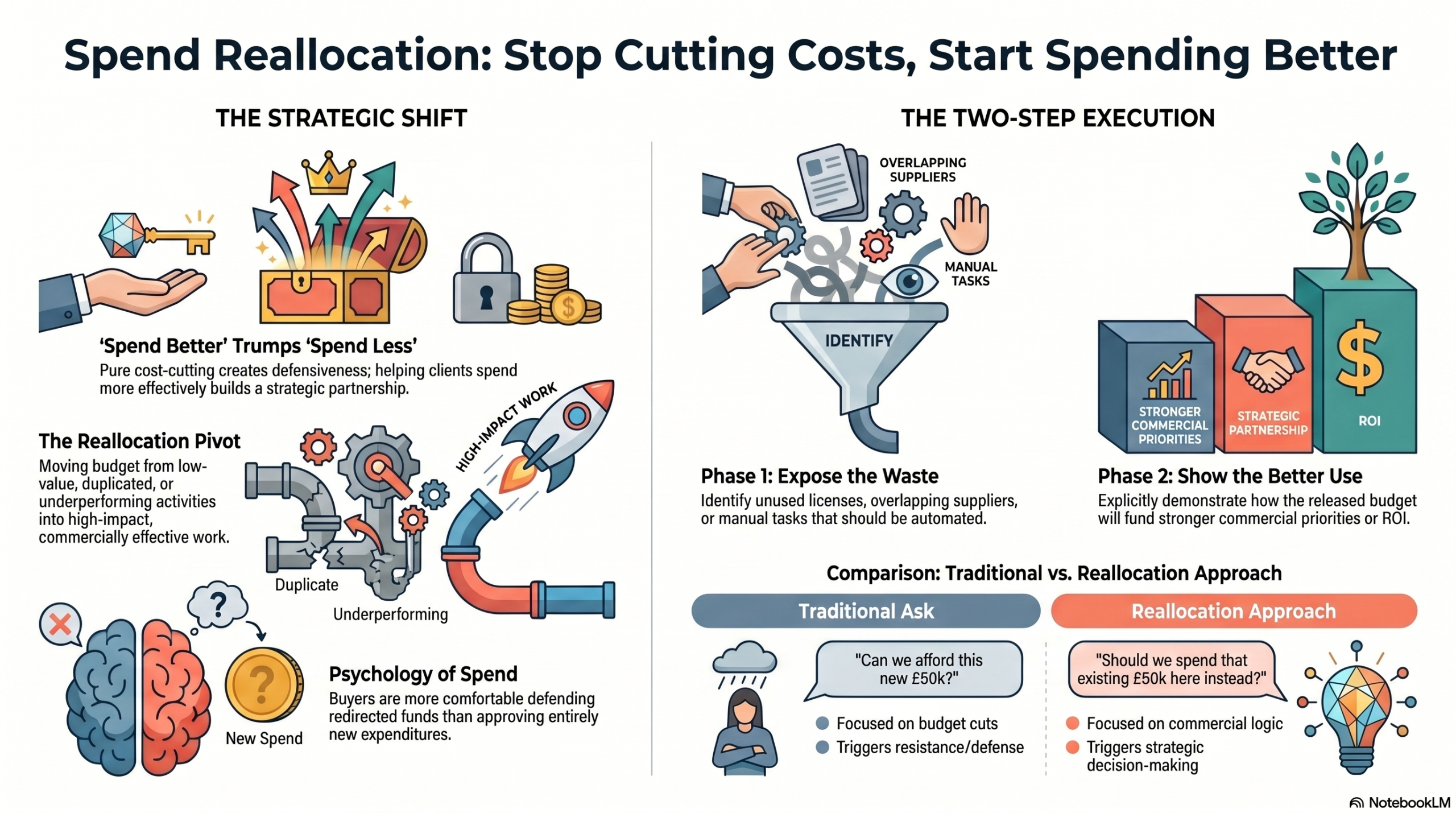
Spend reallocation is the process of helping a client move budget away from low-value, duplicated, or poor performing activity and into something more useful. For example, that might mean cutting unused software licences, dropping weak suppliers, or replacing manual work with a tool that does it faster.
The key point is that the money does not have to leave the business. It just needs to work harder inside it.
How Does Spend Reallocation Work?
Buyers are often more open to improving existing spend than approving brand new spend. Asking a client to “spend another £50,000” creates resistance. But showing them that £50,000 already exists inside waste or poor performance feels very different.
So the question shifts from “Can we afford this?” to “Should we be spending the money there instead?” As a result, the whole conversation feels less like a sales pitch and more like a smart business decision.
How Can You Use Spend Reallocation?
Spend reallocation works well when your product or service improves efficiency, output, or commercial return. The key is to find existing spend that is not doing enough – and show a better home for it.
Show the existing waste
Clients are often unaware how much budget leaks through duplication, poor use, or activity that no longer creates enough value. For example, unused software licences, overlapping suppliers, weak marketing spend, or manual work that could be automated. Once buyers can see the waste clearly, the reallocation talk becomes much easier.
Show the better use of budget
The strongest version of spend reallocation is not just showing what to cut. It is showing where the money would work harder. That might mean replacing a weak supplier, consolidating fragmented systems, or funding a stronger priority. Buyers are usually more comfortable defending redirected spend than brand new spend.
When Spend Reallocation Works Best
It works best when buyers are under pressure to improve results without raising their overall costs. For example, budget reviews, supplier audits, and cost reduction projects are all good moments to raise it. In these situations, buyers are actively looking for ways to get more from the money they already spend. So the timing feels natural rather than forced.
When Spend Reallocation Becomes Difficult
It gets harder when internal politics get in the way. Sometimes the problem is not logic. It is defensiveness. A team may resist cutting spend because that budget represents influence or status inside the business. That happens more often than people admit. So if the conversation stalls, it is worth asking who owns the spend you are talking about.
Common Spend Reallocation Mistakes
The biggest mistake is making it sound like a budget cut. Pure cost reduction makes buyers feel restricted and defensive. But spend reallocation should feel like a smarter commercial choice – not a squeeze.
Making it sound like budget cutting
If the conversation feels like “spend less,” the buyer gets defensive. However, if it feels like “spend better,” the tone becomes more strategic. So frame it around improvement, not reduction. That one shift changes how the whole conversation lands.
Showing the waste but not the alternative
Another common mistake is pointing out what to cut without showing where the money should go instead. Buyers need to see where the value improves – not just where the spend disappears. So always pair the problem with the better option.
Spend Reallocation – An Example
A tech firm spots that a client pays for multiple overlapping software tools, duplicate reports, and unused licences across their teams. Instead of just cutting costs, they show how consolidating those systems could free up budget for automation, better data tools, and improved customer experience.
The client does not feel like they are spending more. They feel like they are making smarter decisions with money they already have. That is the difference between a cost conversation and a value conversation.
You can read more about the research behind this here: Loss Aversion
See also