
Practical Sales Training™ > How To Convert > The Refunded Upsell

The Refunded Upsell
What Is It
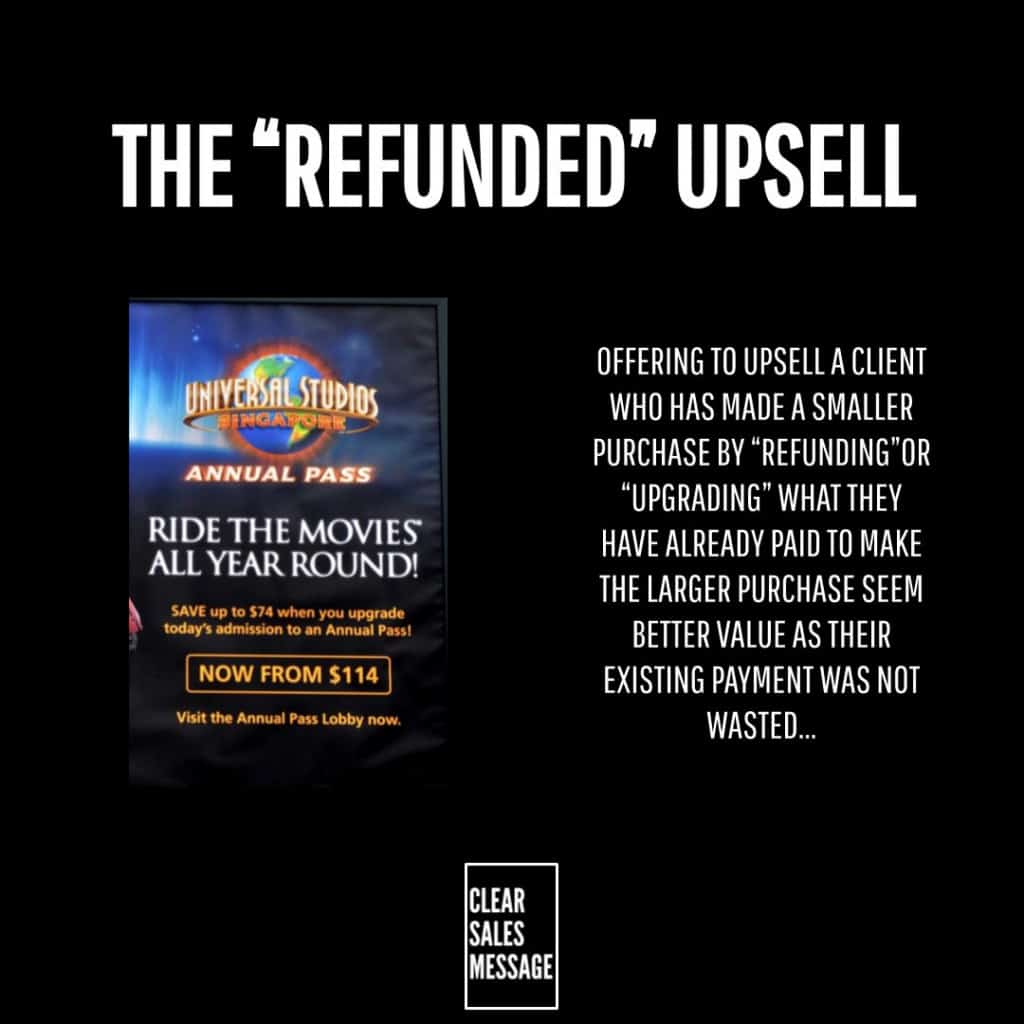
The Refunded Upsell occurs when a client makes a purchase, and you can upsell them using the money they already spent to put toward the larger price. The first purchase becomes credit toward the second.
It’s a small shift in framing with a big effect on how the second price feels. The number on the invoice hasn’t really changed. The story around it has.
That story is what makes the upgrade feel like a smart move, rather than an extra cost.
Why Does It Work
It works because we’re more likely to buy something of lower value first. Once we make that purchase, we then get a chance to spend more. Since we’ve already spent on our initial purchase, we view the larger purchase as much cheaper.
For example, I buy a theme park ticket for the day for £50. They offer me an upgrade to an annual pass for £100. Having already spent the original £50, the jump to the higher annual pass price feels much lower. It even makes me feel like my visit today was “free,” since they handed the money I spent back to put toward the larger annual pass. So it feels like a refund.
The net result is I spent £100, but I feel great. In reality, the pass should have cost £100 on its own, but I got it for “only” £50 more, because my perception of price shifted along the way.
How Can You Use It
Design a genuine small first step
Depending on your offering, promote a smaller, lower priced version of it to make the sale. This lets you upsell these clients to a larger spend now they’ve already experienced your offering.
Frame the credit as a refund, not a discount
“Get your £49 back” lands very differently to “£49 off.” The first tells the client they’ve earned something for what they already did. The second just sounds like a sale.
Time the offer right after the first win
The upsell lands best right after someone has experienced real value from the smaller purchase, not before. That’s when the credit feels earned, rather than like a pushy add-on.
When It Works Best
This works best when there’s a genuine, larger version of the offer worth upgrading to, not just a marked up version of the same thing.
It also works best when the smaller product delivers real value on its own. A client who feels the intro purchase was worthwhile stays far more open to the next step.
When It Becomes Dangerous
It backfires if the “credit” turns out to be fake maths. A buyer who works out that the numbers don’t really add up notices the manipulation, not a reward.
It also becomes risky if the small first product feels like a deliberate teaser rather than something complete in itself. Buyers resent it when a business deliberately makes the first purchase feel incomplete on purpose.
Overusing the tactic wears it thin too. A client you upsell this way repeatedly starts noticing the pattern, and the “refund” framing stops landing at all.
Common Mistakes
Making the small product deliberately weak
If the first purchase feels stripped down on purpose, buyers sense the setup instantly. The small product needs to stand on its own merits too.
Overcomplicating the credit
If the buyer needs a calculator to understand their discount, the whole psychological effect falls apart. Keep the maths simple enough to say out loud.
Pitching the upgrade too early
Offering the upsell before someone experiences any value from the first purchase skips the exact feeling that makes this effect work in the first place.
The Refunded Upsell – An Example
An Online Course Platform
A buyer purchases a £49 introductory course called “Selling Confidence 101.” After completing the course, they receive this message:
“Loved the intro course? Upgrade to the full Sales Mastery program and get your £49 back.” The full program is £299 – but with your £49 credit from the intro course, you only pay £250.
Why it works: The buyer already feels invested, since they’ve completed and enjoyed the first course. That investment reframes the full course as a discount rather than an expense. And the buyer feels they didn’t waste money on the smaller product, they just unlocked more value from it.
You can use this in software, memberships, coaching, training, or physical goods, as long as the upgrade path is clear and the “credit” feels like a refund rather than an extra cost.
See also