Practical Sales Training™ > How to connect with your buyer > Suggestion Box

Suggestion Box
Many businesses spend too much time guessing what buyers want. But the answer is often already there – sitting inside sales calls, emails, objections, reviews, and off-hand comments from buyers.
A suggestion box approach creates a simple way for buyers to tell you what they want, what they do not get, and what would make the buying choice easier.
Ask properly and buyers will often tell you exactly what to fix.
What Is a Suggestion Box?
A suggestion box is any simple way of inviting buyers or customers to share ideas, requests, gripes, or useful thoughts. In sales, it is really any way of listening to buyer input before, during, or after the sale. For example, feedback forms, survey questions, post-purchase reviews, or questions asked on a sales call.
The point is not to collect feedback for the sake of it. The point is to use buyer language to improve your offer, your message, or your sales process. So the goal is action, not data.
How Does the Suggestion Box Effect Work?
Buyers reveal useful things when they feel heard rather than sold to. A buyer might tell you what confused them, what nearly stopped them buying, or what would have made them feel more sure. That insight is more useful than internal guessing because it comes straight from the people you are trying to win over.
In many cases, businesses build their message around what they think buyers care about. But a suggestion box approach helps you hear what buyers actually care about. And those two things are often very different.
How Can You Use a Suggestion Box?
The goal is not just to collect views. The goal is to find useful buying insight that helps you sell more clearly. That means asking better questions and looking for the patterns in what you hear.
Ask better questions
Weak questions create weak answers. If you ask “Any feedback?” most buyers will say nothing useful. Instead, try questions like “What nearly stopped you buying?” or “What confused you most?” or “What would have made you more sure?” These are far more likely to reveal the real friction in the sale – and give you something you can actually act on.
Look for repeated patterns
One comment may just be one comment. But repeated comments are where the money is. If buyers keep raising the same doubt, the same gap in proof, or the same unclear step, there is something worth fixing. As James says – assumption is the mother of all lost sales. So listen for the patterns, not just the one-offs.
Use buyer language in your message
When buyers describe your product or service in their own words, pay close attention. Because that language is often clearer, more real, and more persuasive than the words you would choose yourself. So use it. Put it in your copy, your pitch, and your proposals. Keywords are a human thing, not a Google thing.
When Suggestion Boxes Work Best
Suggestion box thinking works best when buyers are hesitating, going quiet, or asking the same questions over and over. Often, the answers are already sitting in buyer conversations – the business just is not paying close enough attention yet. For example, if prospects keep delaying, buyers keep asking the same reassurance questions, or offers convert at different rates, there is usually a pattern worth finding.
When Suggestion Boxes Become Less Useful
When businesses collect feedback but never act on it. Buyers notice quickly when input is asked for but nothing ever changes. As a result, trust drops and the process starts to feel like a box-ticking exercise. If nothing changes, the suggestion box becomes decoration. So only ask if you are willing to do something with the answers.
Common Suggestion Box Mistakes
Most mistakes come from asking questions that are too vague to be useful, or collecting answers and doing nothing with them. However, both problems are easy to fix.
Asking generic questions
Questions like “Any feedback?” tend to produce answers like “All good thanks.” They do not work because buyers do not know what kind of answer is useful. So be specific. Ask about friction, doubt, and confusion. Specifics sell. Generics repel.
Ignoring what buyers tell you
Collecting buyer comments and doing nothing with them is worse than not asking at all. If buyers keep raising the same concern or gap, it should change something – your offer, your message, your website, or your sales process. The value is not the suggestion box itself. The value is what changes because of it.
Suggestion Box – An Example
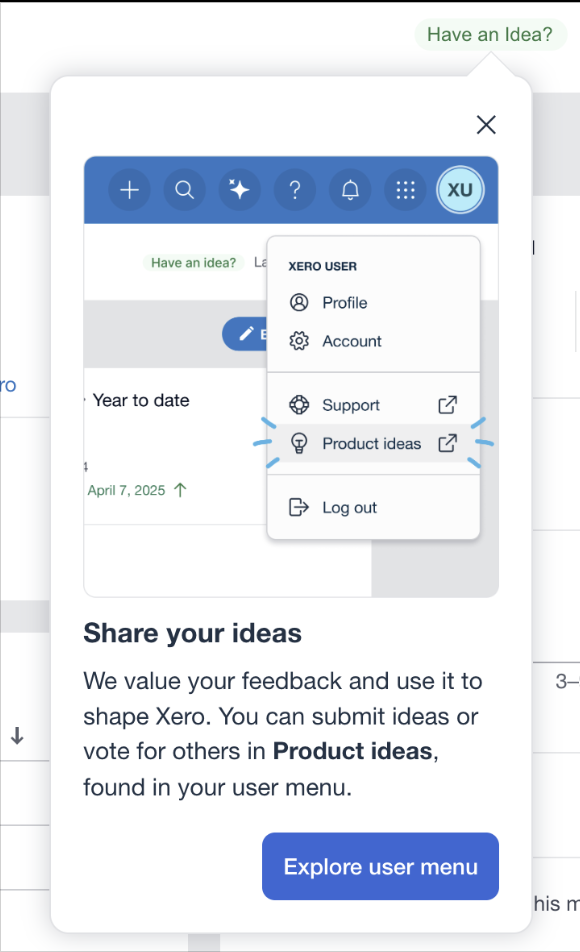
Xero actively invites users to submit product ideas from inside their platform. It is a live, always-on suggestion box built directly into the tool. As a result, users feel heard, and the product team gets a constant stream of real input from the people who use it every day.
You can read more about the research behind this here: Voice of the Customer
See also