
Practical Sales Training™ > How to connect with your buyer > The User Generated Content Effect

The User Generated Content Effect
What Is It
The User Generated Content Effect encourages your clients and users to add their creativity to your offering. It happens right there on social media.
So the content stops being just yours. It becomes something the audience helps build.
That shift changes how people relate to your brand entirely.
Why Does It Work
It works because it shows you care about your clients. You’re seeking their input, not just talking at them.
More importantly, it lets you see how your offering gets used in the real world. Sometimes it even shows you how it could be improved or adapted.
Watching real use in the wild teaches you things no internal meeting ever could.
How Can You Use It
You can engage your clients on social media by asking them to share their experience of your brand. You can also ask for suggestions or requests for future improvements.
When It Works Best
This works best on visual or shareable products, ones people naturally want to photograph, style, or show off.
It also works best with a simple, memorable hashtag or prompt. It should be easy enough that people join in without much effort.
When It Becomes Dangerous
It backfires if you never actually feature the content people create. Asking for participation, then ignoring it, feels like a broken promise.
It also becomes risky if the content shared reflects badly on your brand. Not every submission will be flattering, and you need a plan for that too.
Overmoderating or heavily editing user content causes its own problem. It starts to feel staged rather than genuinely user generated.
Common Mistakes
Asking for content and never sharing it
Asking for content, then never sharing any of it, wastes the goodwill you just built. People stop bothering once they feel ignored.
Making participation too complicated
Making participation too complicated discourages people from joining in at all. Keep the ask as simple as a single photo and a hashtag.
Having no plan for off brand submissions
Ignoring negative or off brand submissions leaves you unprepared when one appears. Have a plan for handling it gracefully.
The User Generated Content Effect – An Example
A Coffee Brand’s Hashtag Campaign
Hypothetical Example: A coffee brand launches a new seasonal blend. They encourage customers to share photos of how they enjoy it at home, using the hashtag #MyMorningBlend.
Customers start posting pictures of their coffee setups, latte art, and creative mugs, tagging the brand. The company shares the best posts on its own social channels, thanking customers for their creativity.
Not only does this boost engagement and free word of mouth marketing. The brand also gains insight into how people actually enjoy their coffee, informing future product ideas and campaigns.
The Starbucks White Cup Contest
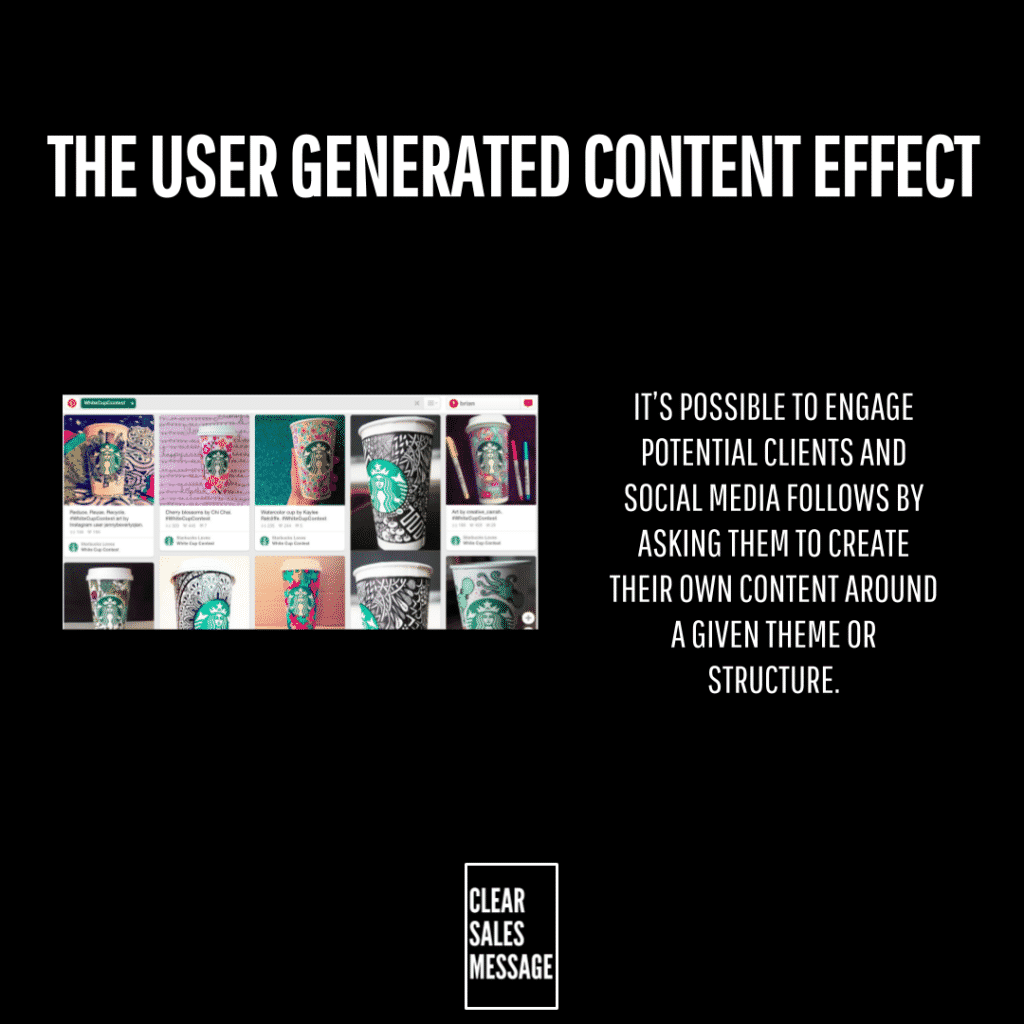
A similar, larger scale example is the Starbucks White Cup Contest. Starbucks asked customers to doodle on their plain white cups and share photos.
The winning design became a limited edition cup. It generated huge organic engagement, entirely from customer creativity.

See also