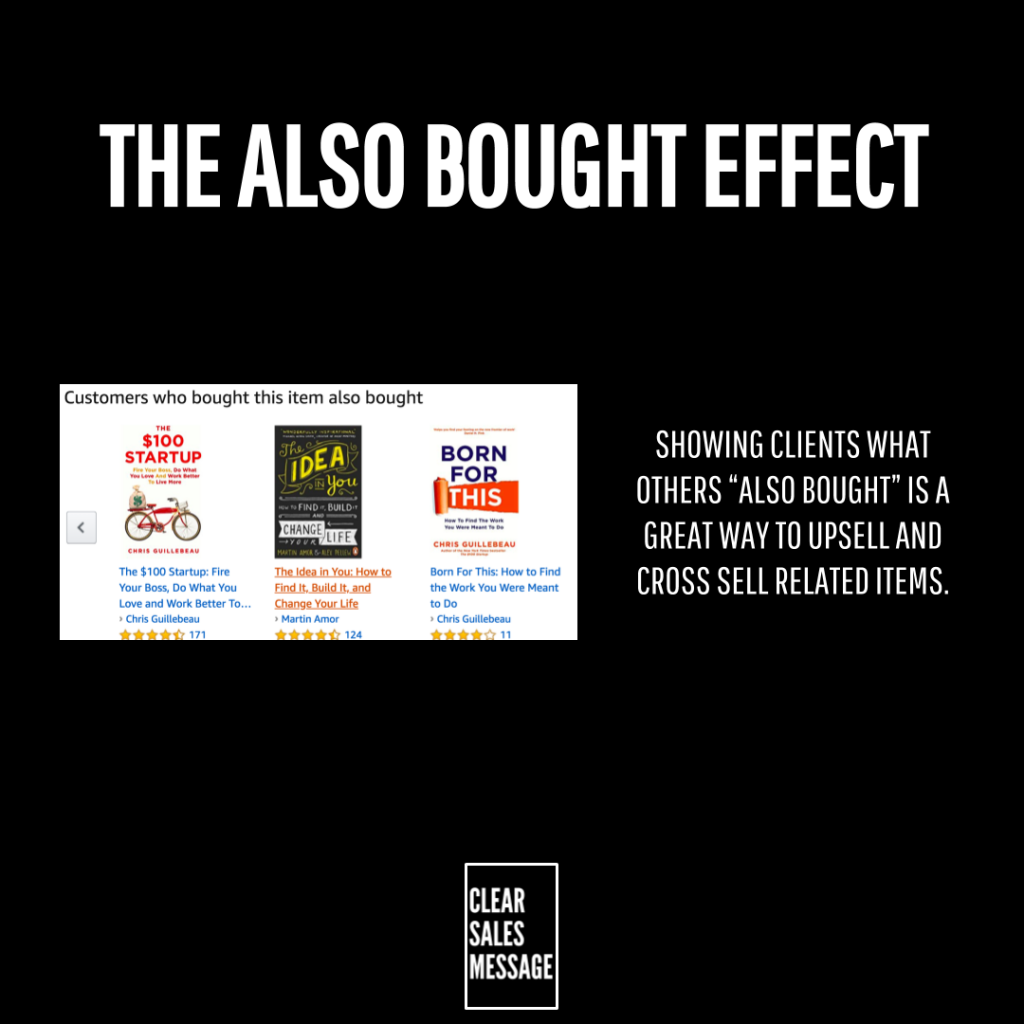
Practical Sales Training™ > How To Convert > The Also Bought Effect
The Also Bought Effect
When a buyer sees what other people in the same situation also chose, something shifts. They stop wondering what else they need and start thinking: if all those people did, maybe I should too. That is the Also Bought Effect.
It is one of the simplest and most effective tools in any seller’s toolkit. Tell the buyer what similar buyers did, and a significant number of them will follow.
The Also Bought Effect means showing buyers what similar customers also bought. They can then follow that path without working out what they need themselves.
What Is The Also Bought Effect?
We follow the behaviour of others, especially those we see as being in the same situation. If ten people who bought the same product also bought a particular accessory, that pattern signals something. It implies that the accessory is useful, necessary, or at least worth considering. Because similar people made the same choice, the buyer trusts the suggestion.
There is also a gap-filling effect. Many buyers do not know what they do not know. They come with one need but may have several. When you show them what others bought, you help them spot gaps they had not thought about. Because it comes from buyer behaviour rather than a seller, the suggestion feels like advice rather than a pitch.
This also works as a subtle form of social proof. The Also Bought Effect communicates that a product is popular, relevant, and trusted by people in the same position. That reassurance reduces the risk of adding something to a basket without much thought.
Why Does The Also Bought Effect Work?
The core mechanism is behavioural cues. Buyers look at what similar people did and use it as a shortcut for their own decision. Because someone else already evaluated the options and made a choice, the new buyer can skip that work and follow the same path. That shortcut is both efficient and reassuring.
It also works because it removes a specific type of doubt: am I missing something? Buyers often worry that they are not thinking of everything they need. An Also Bought suggestion answers that worry directly. It says: other people in your position also found this useful. You are not missing out.
There is also a commercial upside that aligns with the buyer’s interests. When the suggestions are genuinely useful, the buyer ends up better equipped and more satisfied. Because both sides benefit, the Also Bought Effect is one of the most natural forms of selling.
How Can You Use The Also Bought Effect?
Start by identifying the patterns in your own data. What do buyers typically purchase together, what do they buy first and follow up with later, and what add-ons do your best customers tend to have? Each of these patterns is a candidate for an Also Bought recommendation.
Time It Right
Make the suggestion visible and well-timed. The best moment is right at purchase, when a buyer has committed and is most open to adding another. On a product page, in a post-purchase email, or in a follow-up call. Because the timing is right, the suggestion feels helpful rather than pushy.
Match the Recommendation to the Purchase
Also Bought suggestions only work when the link between items makes sense. A buyer who just bought a laptop needs to see a laptop bag, a mouse, or a screen protector, not a hiking jacket. Because the logic is obvious, the suggestion requires no explanation. So keep the recommendations closely related to what was just bought.
Use It in Service Businesses Too
As a consultant or coach, you can tell clients what most people in their situation also did next. That guidance carries the same weight as a product recommendation. Clients in your situation typically find X useful after the first phase is the service equivalent of customers also bought. Because the suggestion is grounded in the behaviour of similar clients, it feels like natural guidance.
When The Also Bought Effect Works Best
This works best when the recommendations draw from real buyer behaviour rather than what the seller wants to push. Buyers can sense when a suggestion is about their interest versus the seller’s margin. Patterns drawn from real data land with far more credibility than arbitrary upsells.
It also works well when the buyer is unfamiliar with the full range of what they might need. New buyers, in particular, benefit most from seeing what experienced buyers in the same situation also chose. Because they have less context, the social cue carries more weight.
It is also effective immediately after a first purchase. The period just after a buyer has committed to one thing is one of the highest-intent moments in the buying journey. They are already in buying mode. They have already decided you are trustworthy. An Also Bought suggestion at that moment is timely, relevant, and easy to act on.
When The Also Bought Effect Becomes Dangerous
The main risk is making suggestions that feel random or self-serving. If the Also Bought items bear no obvious connection to the purchase, buyers disengage. Worse, it can undermine trust by making the seller look opportunistic. Every recommendation needs a clear logic behind it.
There is also a risk of overwhelming the buyer with too many suggestions. A single, well-matched Also Bought recommendation is more persuasive than a page full of them. When everything is suggested, nothing feels relevant. Keep it focused.
Common Also Bought Effect Mistakes
Not Doing It at All
The most common mistake is not doing this at all. Many businesses have the data. They know what buyers typically choose together. But the Also Bought information never gets shown to new buyers, so new buyers have to figure it out themselves. Many will not. So you lose the sale and the buyer loses the benefit.
Placing It Where Buyers Cannot See It
A second mistake is placing the Also Bought section where buyers are unlikely to see it. Burying a recommendation in a confirmation email after the buyer has moved on makes it nearly invisible. Place it where the buyer is still in buying mode: product page, checkout, or first follow-up message.
Using It to Push Instead of Guide
A third mistake is using the Also Bought section to push high-margin items rather than genuinely relevant ones. Buyers notice when the connection does not make sense. So base your recommendations on what buyers actually do together, not what you would like them to buy. The more natural the link, the more the suggestion will land.
The Also Bought Effect – An Example
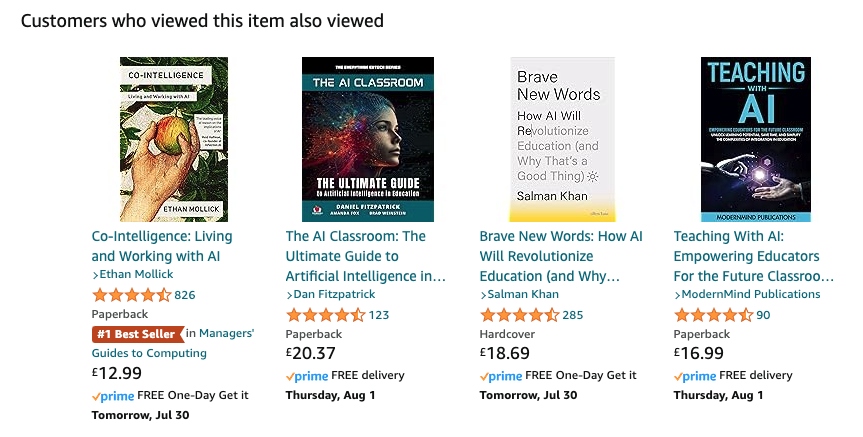
Amazon’s also viewed and also bought sections are the most well-known example of this effect at scale. When a buyer views an AI book, Amazon shows them what other buyers in that position also looked at. Buyers who had not thought of another title now see it. Many of them buy it. The seller benefits. So does the buyer. That is the best version of the Also Bought Effect: useful to both sides.
Show buyers the path others took. Then step aside and let them follow it.
See Also
- The Popular Effect
- The Similar Effect
- The Comparison Effect
- 180+ ways to improve conversion
- 140+ ways to be easier to buy from