
Practical Sales Training™ > How To Convert > The Popular Effect

The Popular Effect
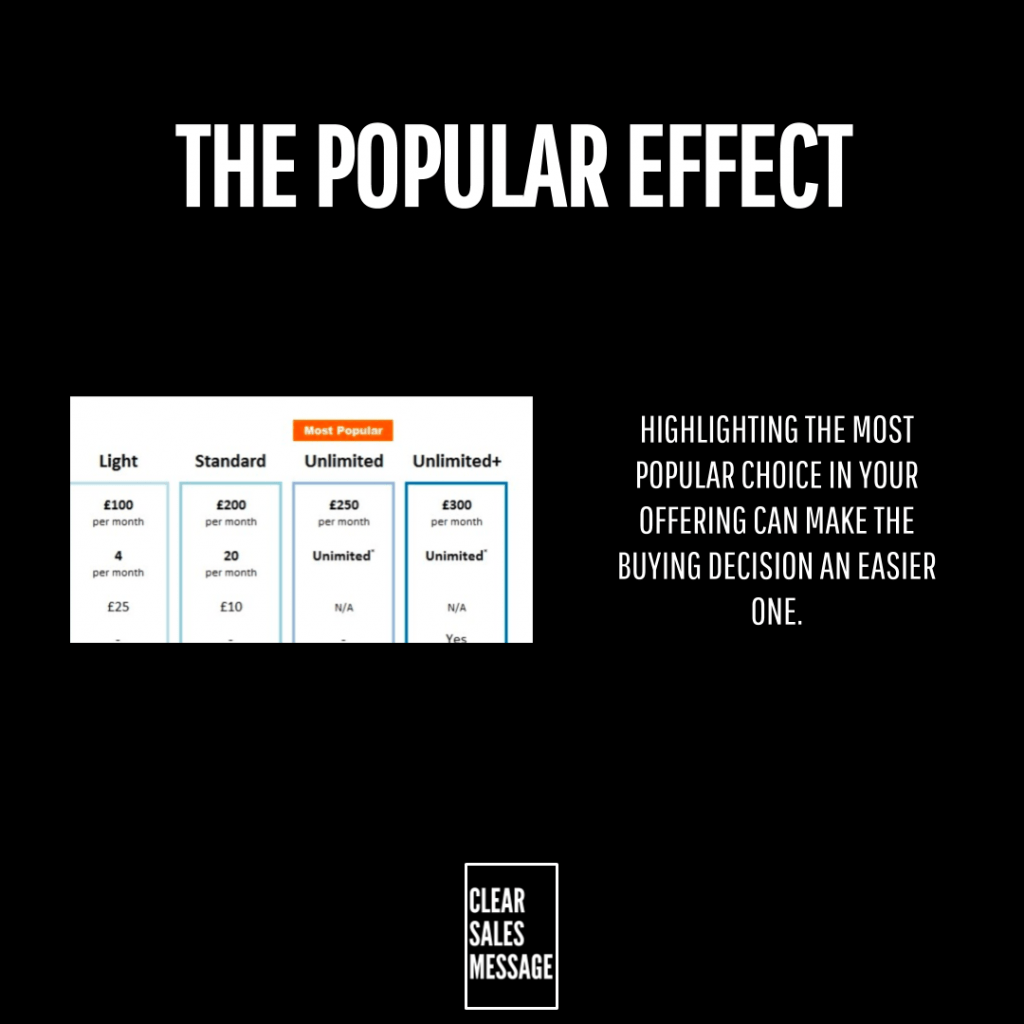
A buyer who doesn’t know what to choose looks for a shortcut. The Popular Effect gives them one.
You’re not describing your product. Instead, you’re showing them the decision other buyers already made.
What Is It
The Popular Effect means highlighting the most popular choices your current buyers make. So future buyers can use that as a shortcut.
Why Does It Work
It works because it makes deciding easier. So does Social Proof. A visible trend tells a buyer that plenty of people already checked this out.
Buyers often want reassurance more than they want more information. So telling them what’s popular can be the only push they need.
How Can You Use It
Show A Rolling Window Instead Of A Lifetime Total
A number like “200+ bought in the past month” beats a bigger lifetime total. So it signals momentum happening right now, instead of a good month years ago. That’s the difference between still selling and once sold.
Use A Specific Number Instead Of A Round One
An oddly specific figure reads as real. But a suspiciously round one, like “thousands sold,” reads as spin. So use the actual number, even if it’s smaller than you’d like.
When It Works Best
This works best for products with genuine, ongoing demand. So a stalled or seasonal product can backfire. The wrong moment does the opposite job.
It also works best when the number is left to speak for itself. Don’t explain why it’s popular. So let the buyer fill that gap in on their own.
When It Becomes Dangerous
This becomes risky the moment the number stops flattering you. So a low count next to a competitor’s higher one actively discourages a purchase.
It also backfires if you apply it to every product automatically. So surface popularity selectively, only where the number genuinely helps. Don’t expose every weak seller alongside your strong ones.
Common Mistakes
Rounding The Number Until It Sounds Fake
Vague claims like “thousands sold” read as marketing spin to a skeptical buyer. So use the real figure, even an unglamorous one. Specificity reads as honesty.
Applying It Automatically Across Every Product
Displaying a sales count on every page, including your slow sellers, undermines trust. So show it only where the number actually works in your favour.
The Popular Effect – An Example
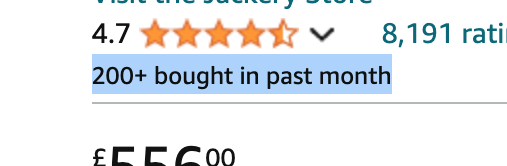
Amazon shows a simple line under many listings: “200+ bought in the past month.”
That single line does more work than a star rating alone. So it’s specific, and it’s recent. It implies ongoing demand, rather than a one off spike from years back.
The same listing might also show a strong star rating from thousands of reviews. But it’s the “bought in the past month” line that does the real work. So it tells a buyer someone chose this recently. It’s still working for them right now.
See also
- The Also bought Effect
- The Similar Effect
- The Comparison Effect
- 180+ ways to improve conversion
- 140+ ways to be easier to buy from