Practical Sales Training™ > How To Convert > The Buy What You See Effect
The Buy What You See Effect™
Someone sees a product they like. They think “I’ll get that later.” But later almost never happens.
That gap between seeing something and buying it is where most sales quietly die. So The Buy What You See Effect™ closes that gap by putting the purchase option right where the product already is.
This page covers what the effect is, why it works so well, and how to use it across video, social media, and even physical spaces.
What Is The Buy What You See Effect™?
The Buy What You See Effect™ is the idea that people buy far more often when the option to purchase appears at the exact moment they see the product.
It isn’t later. It isn’t after searching, and it isn’t after trying to remember. Instead, it’s right there, on the screen, in the moment.
It means placing a buy now link, button, or QR code directly next to the content, so the viewer can buy what they’re looking at instantly. As a result, there’s no friction, no delay, and no mental gap to cross.
So when attention and action sit in the same place, sales go up.
Why Does The Buy What You See Effect™ Work?
Most sales get lost in the gap between desire and action. Someone sees a product, likes it, and tells themselves they’ll get it later. But later rarely arrives.
The Buy What You See Effect™ removes that gap entirely. While someone is watching a video, reading a post, browsing a catalogue, or even walking past a printed poster, you place the purchase mechanism right beside the product itself, whether that’s a live price, a buy button, a QR code, or a direct link.
In other words, you’re collapsing the distance between seeing and buying. Psychologically, this works for three reasons. Attention peaks the moment someone first sees the product, and emotion runs strongest while it’s still visible. Also, effort drops to almost nothing when buying takes one click.
So sales follow energy. If you make someone leave that moment to go searching elsewhere, you lose the momentum you just built. But if you let them act instantly, you capture it before it fades.
How Can You Use The Buy What You See Effect™ In Sales?
Add It To Social Media
Put a direct purchase link in any post where the product appears. So if someone can see it, they should be able to buy it without leaving the post.
Add It To Video Content
On YouTube, place links or pinned comments with a clear buying path while the product is on screen or being discussed. Similarly, on webinars, show a live order link while you’re explaining the offer.
Add It To Printed And Physical Spaces
Use QR codes next to the product image on printed materials, instead of hiding them on the back page. In physical spaces, also place scannable codes next to items in windows, showrooms, or even on packaging itself.
Follow The One Simple Rule
If someone can see it, they should be able to buy it. That rule, therefore, applies everywhere, on every channel, without exception.
When The Buy What You See Effect™ Works Best
It works best for impulse-friendly products, things people decide on quickly once they’re emotionally interested. Fashion, food, gadgets, and gifts all benefit, because the decision rarely needs much deliberation once desire kicks in.
It also works well anywhere attention is fleeting, like a scrolling feed, a passing advert, or a video someone’s only half watching. So the shorter the attention span, the more this effect matters.
When The Buy What You See Effect™ Becomes Dangerous
It backfires when the buy option feels intrusive rather than helpful, like a pop-up that blocks the content someone actually wants to see. In fact, a clumsy buy button can damage the experience it’s meant to support.
It also creates risk for considered purchases. A big-ticket item bought on impulse, with no time to think it through, can lead to regret and returns. So match the speed of the buy option to how much thought the purchase genuinely needs.
Common Buy What You See Effect™ Mistakes
Hiding The Buy Option
A QR code on the back of a poster or a link buried three scrolls down defeats the entire point. Instead, the buy option needs to sit exactly where the eyes already are.
Adding Extra Steps
Every additional click between seeing and buying gives hesitation more time to grow. So keep the path as short as the moment itself.
Using It Without Real Pricing Or Stock Info
A buy button that leads to an out-of-stock page or a confusing price does more harm than good. Speed only helps, after all, if what’s waiting on the other end actually works.
The Buy What You See Effect™ – An Example
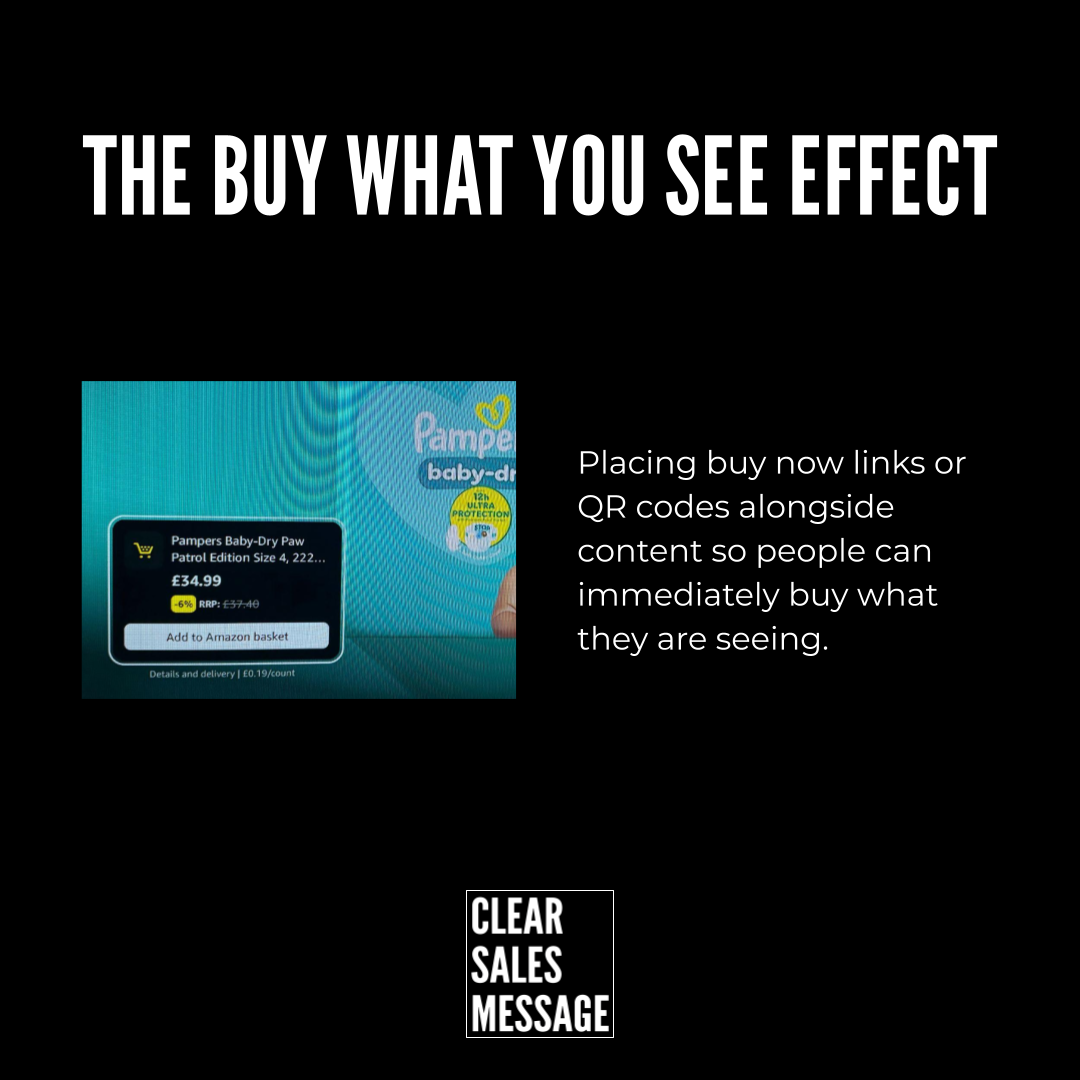
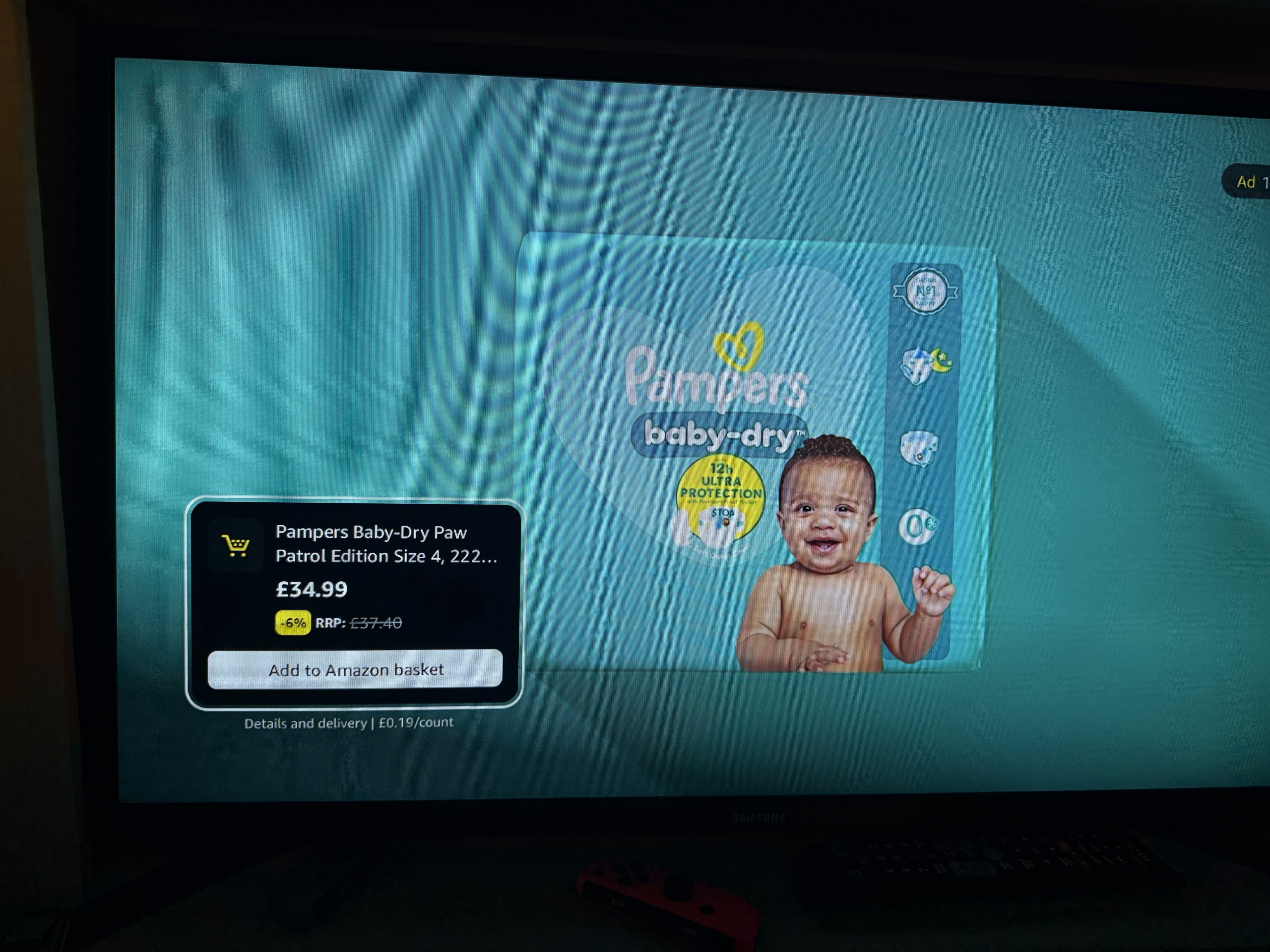
A Pampers advert plays on a smart TV. Right next to the product shot, a small card appears on screen showing the exact item, the price at £34.99, a 6% discount against the RRP, and a button that says “Add to Amazon basket.”
Nobody needs to pick up their phone, open an app, or remember the product name for later. Instead, the advert and the purchase sit in the same place, at the same moment, on the same screen.
That’s the effect working exactly as intended. So the viewer doesn’t have to bridge any gap between wanting the product and buying it, because there isn’t one to bridge.
See also