

Practical Sales Training™ > How People Work > The Established Effect
The Established Effect
A new business has to prove itself with every single sale. An old one gets a head start.
That’s the Established Effect. Time in business does some of the persuading before you’ve said a word.
What Is It
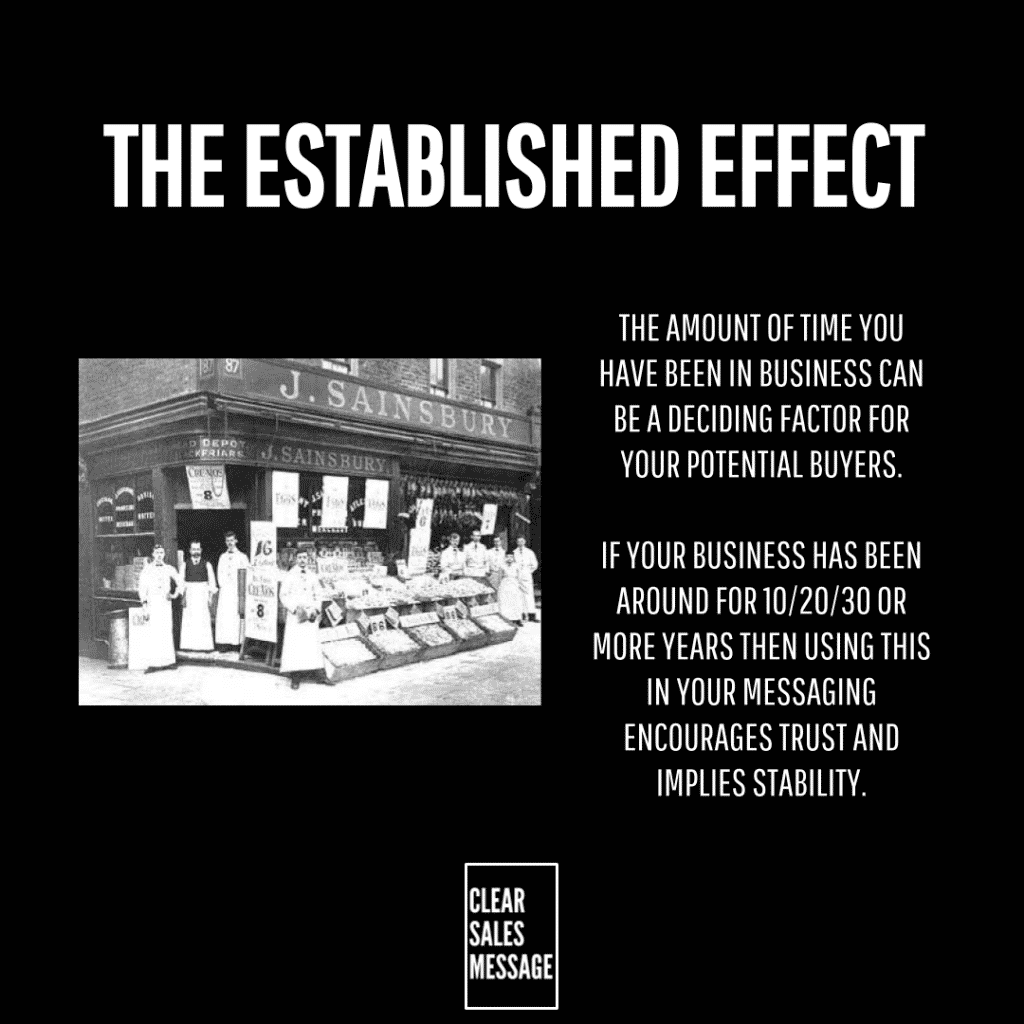
How long you’ve been in business can be a deciding factor for buyers. It’s not the only thing they consider. But it often tips the scale.
Why Does It Work
It works because longevity implies success. It also implies stability and reliability, since a business rarely survives 10 or 20 years by accident.
Buyers assume there’s a reason you’re still here. So they trust you a little more before you’ve made a single claim.
How Can You Use It
If your business has been running for 10, 20 or 30 years or more, say so. Put it directly into your messaging.
A simple mention of your history builds trust fast. It also implies stability without you having to argue for it directly.
When It Works Best
This works best when trust is the main barrier to a sale. If your buyer is nervous about reliability, your history answers that concern instantly.
It also works well against newer competitors. Longevity is one advantage a new business simply can’t copy overnight.
When It Becomes Dangerous
This backfires if your age becomes your only pitch. Buyers still care about relevance, so leaning purely on history can make you look outdated instead of trustworthy.
It also fails if your service hasn’t kept up. A long history paired with poor service just highlights the gap even more.
Common Mistakes
Hiding Your History
Many businesses have real longevity and never mention it. That’s a wasted trust signal sitting right there, unused.
Relying On Age Alone
Longevity supports your pitch. It shouldn’t replace it. Buyers still need a real reason to choose you today, not just years ago.
The Established Effect – An Example
John Lewis, the British department store, regularly reminds people of its founding year. Its tagline, “Never Knowingly Undersold since 1925,” leans directly on nearly a century of history.
That single detail reassures buyers of stability. It says the brand has stood the test of time, so it’s probably not going anywhere soon.
Ford and Coca-Cola do the same thing. “Since 1903” and “Est. 1886” appear in their marketing for exactly this reason. Buyers feel more confident choosing a brand that’s clearly outlasted several generations of competitors.
See Also
- The Nostalgia Effect
- The Coat of Arms Effect
- 50+ ways that people work & make decisions
- 100+ ways to differentiate