

Practical Sales Training™ > How To Connect With Your Buyer > The Gift Effect
The Gift Effect
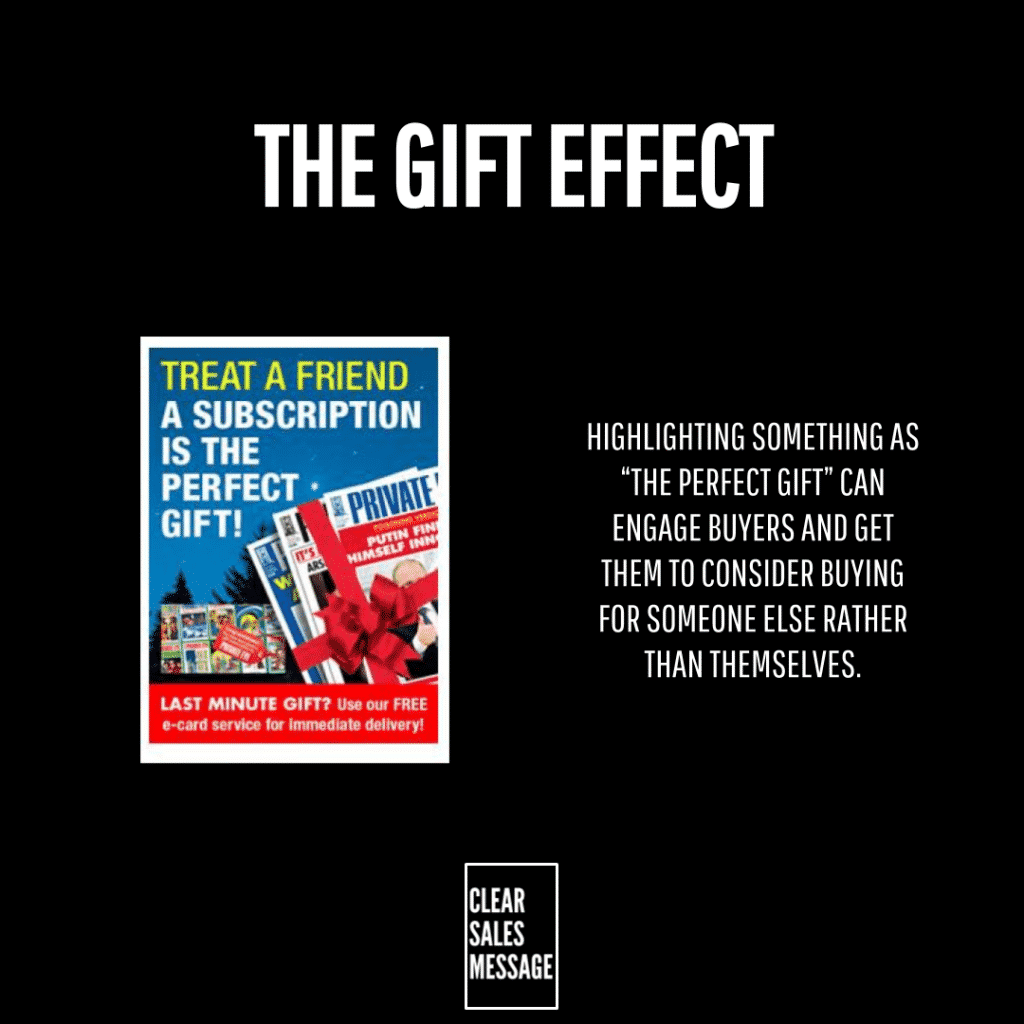
Someone browses your offer and decides it’s not for them. Normally that’s the end of it. But if you frame it as a gift, you’ve just opened a second door.
What Is It
The gift effect means suggesting your offer as the ideal gift for someone else. Not for the person looking at it. For someone in their life instead.
Why Does It Work
It works for two reasons. First, it gives your offer a second chance to sell. Even if the browser doesn’t want it themselves, they might still buy it for a friend.
Second, framing something as a gift changes how it’s seen. This is a form of reframing, and it simplifies the decision too. Buying for someone else often feels easier than justifying a purchase for yourself.
How Can You Use It
Look at what you sell and ask a few simple questions.
Ask Who It’s For
Who might genuinely want this as a gift? A partner, a parent, a stressed out friend? Get specific, since a vague gift idea rarely lands.
Ask Who Would Buy It For Them
Think about who does the buying. It might not be the end user at all. Some offers actually sell better as a gift than as a direct purchase.
When It Works Best
This works best for offers with an emotional angle, like relaxation, indulgence, or celebration. Gifts are rarely bought on pure logic, so an emotional hook helps.
It also works well around key dates. Birthdays, holidays, and anniversaries all give buyers a natural reason to think about gifts in the first place.
When It Becomes Dangerous
This backfires if the gift framing feels forced. Not every product suits being a gift, and pushing the angle too hard can feel odd or desperate.
It also risks confusing your main message. If your offer is genuinely for the buyer themselves, don’t dilute that just to chase a gift angle that doesn’t fit.
Common Mistakes
Forcing The Gift Angle
Not everything makes a good gift. So test the idea honestly before building messaging around it.
Being Too Vague About Who It’s For
“A great gift for everyone” rarely works. Instead, name a specific person and situation, since that’s what makes the idea feel real.
The Gift Effect – An Example
A Spa Sells Massages As A Gift For Someone Else
A spa could promote its massage vouchers as more than a self-care purchase. Instead, it could frame them as the perfect gift for a stressed out friend.
Even someone who doesn’t want a massage themselves might still like the idea of giving one. That reframe makes the offer more appealing, and it increases the chance of a sale too.
See also