

Practical Sales Training™ > How To Connect With Your Buyer > The Heritage Effect
The Heritage Effect
What Is It?
The Heritage Effect uses your history to your advantage. It’s about your past, but it’s really about what that past means for buyers today.
Every business has a history. The question is whether you’re using it, or just sitting on it.
Why Does It Work?
Buyers trust businesses with a long history more than newer ones. A long track record signals stability. So it becomes a natural selling point (see The Established Effect).
But the Heritage Effect goes further than just age. It also looks at what you did along the way. Did you shape your industry? Did you build something first, or refine it for years until you got it right?
You don’t need to be the first or the best. Even so, a real story about how you got here can pull buyers in. That story becomes part of your value, not just your background.
How Can You Use It?
Look Back Before You Look Forward
Start by asking what’s actually in your history. Did you create something new? Did you pioneer a way of working that others copied later? Even small moments can matter if they show real commitment over time.
Connect The Past To The Present
History only works as a selling point if it means something today. So don’t just list dates. Instead, show buyers how your past shapes the quality they get right now.
Make It Visible
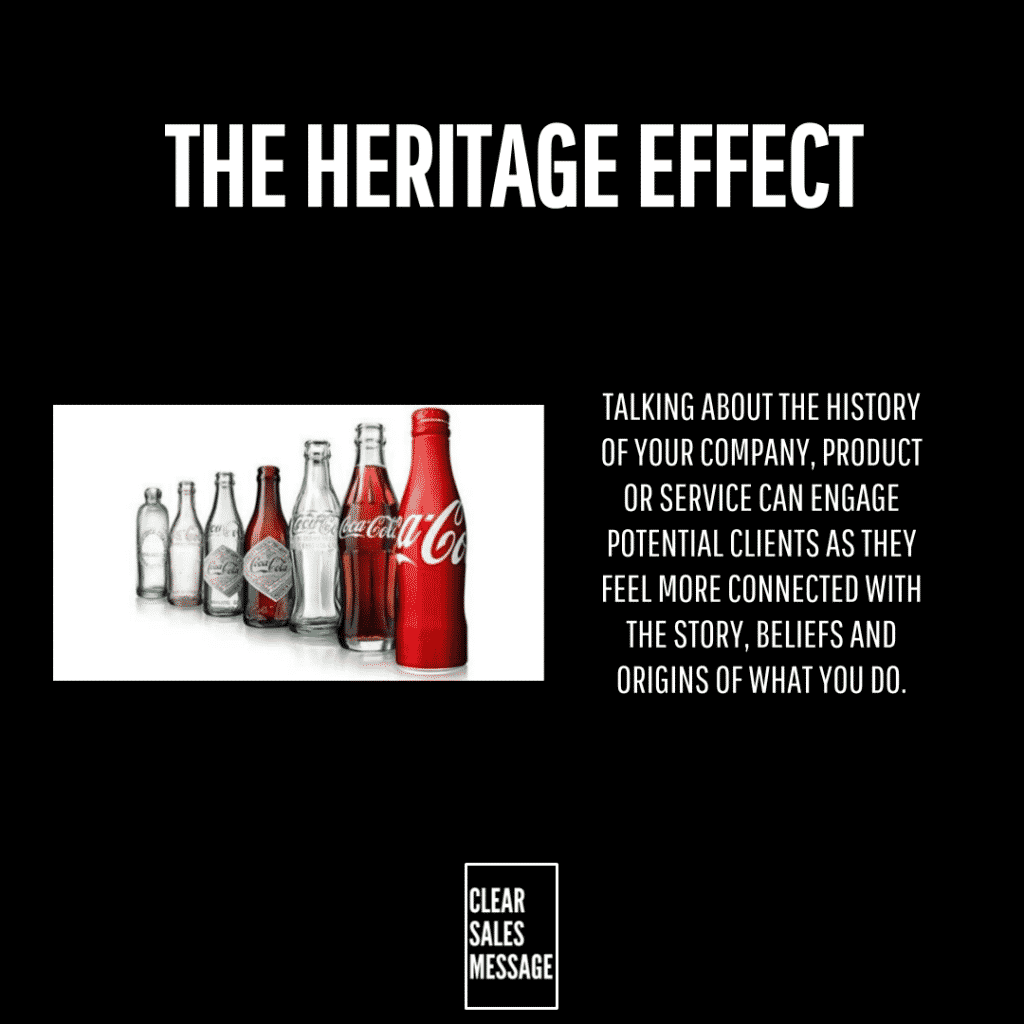
Put your history where buyers can actually see it. Use old photos, founder stories or simple lines about how long you’ve been doing this. Even one sentence can carry real weight.
When It Works Best
This works best when your history is genuinely long or genuinely interesting. Family businesses, craft trades and founder-led companies often have strong material to draw from.
It also works well in industries where trust matters more than novelty, such as food, finance or anything handmade. In these markets, buyers often want proof that you’ve stood the test of time.
When It Becomes Dangerous
The risk is leaning on history when your current offering doesn’t hold up. A great backstory can’t fix a weak product. In fact, it can make the gap more obvious.
Buyers will forgive a shorter history. But they won’t forgive being sold a story instead of a product that actually delivers.
Overused heritage claims can also feel stale. So keep the story fresh, and always tie it back to something buyers care about now.
Common Mistakes
Stating Facts Without Meaning
“Established in 1924” on its own says very little. Buyers need to know why that date matters to them.
Hiding The Story
A great heritage buried on an “About Us” page gets ignored. So bring it into your main messaging, not just the footer of your website.
Leaning On History Alone
History supports your offer. It doesn’t replace it. Buyers still need a good reason to choose you today.
The Heritage Effect – An Example
The Family Bakery
A family-run bakery uses this line in its messaging: “Baking the same sourdough recipe since 1924. Five generations, one mission: real bread, done right.”
They also share vintage photos of the original bakery. Alongside them, they tell the story of the founder delivering loaves by bicycle.
It feels like more than bread. It feels like a legacy the buyer gets to be part of. Because of that, the history becomes part of the product itself, not just a nice detail beside it.
Buyers feel they’re supporting something real, time-tested and cared for. So the story adds emotional value on top of the loaf they’re actually buying.
See also