Practical Sales Training™ > How To Keep Your Clients Happy > The Milestone Effect
The Milestone Effect
Picture a client about to sign off a £30,000 project. Now picture them paying it all on day one, then hoping it turns out well. That’s a lot of trust.
Next, picture the same project split into four stages. The client sees progress, signs off each step and pays as they go. Suddenly the risk feels much smaller.
That’s The Milestone Effect. Big commitments feel safer when you break them into smaller, visible wins.
What Is The Milestone Effect?
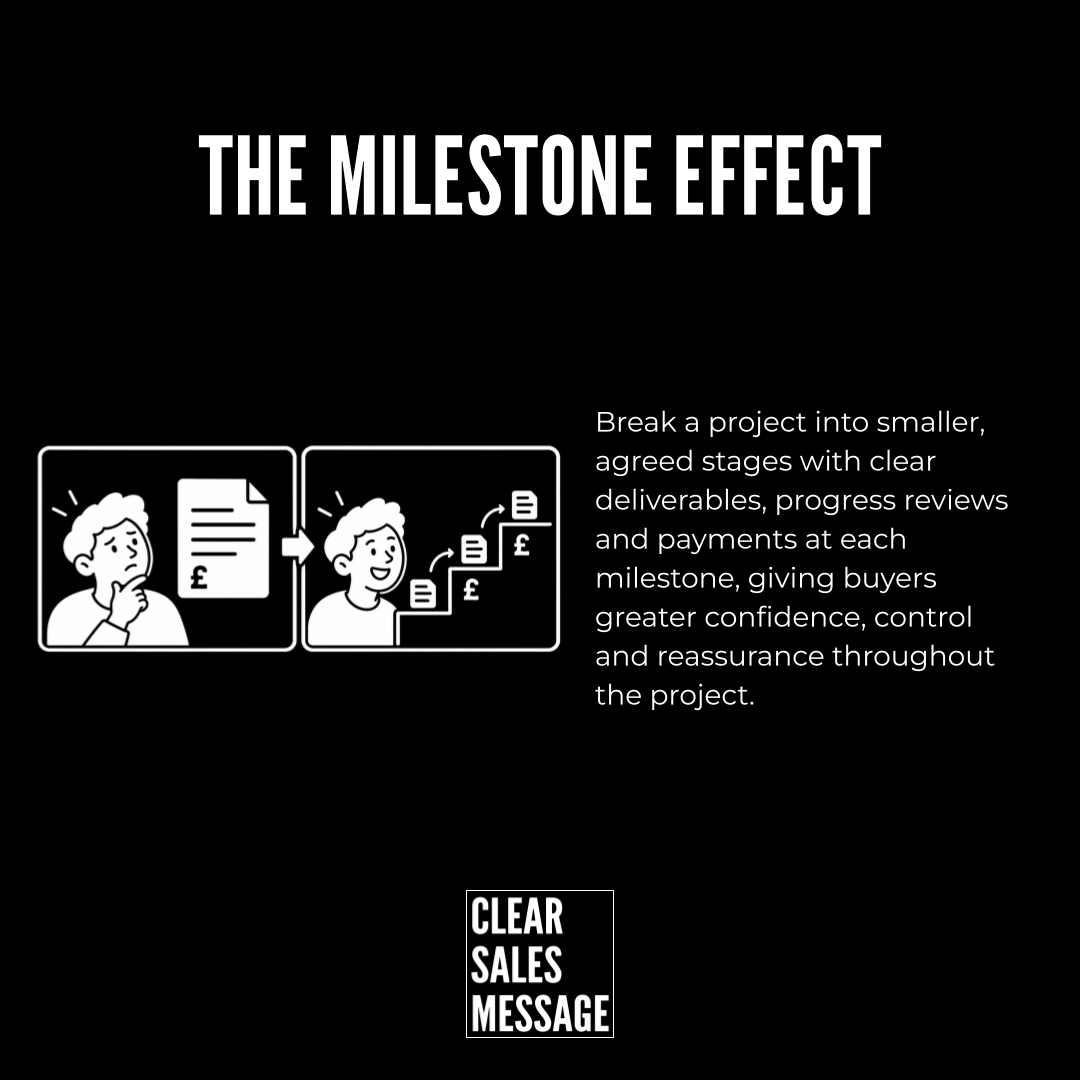
The Milestone Effect means breaking a project into smaller, agreed stages. Each stage has a clear deliverable, a review point and often a payment.
So the buyer never has to trust you with everything at once. Instead, they see proof at each step before they move on to the next.
It’s common in B2B work. Agencies, consultants, builders and software firms all use it. In fact, any project that runs for weeks or months can benefit.
Why Does The Milestone Effect Work?
It works because it shrinks the risk. Buyers fear paying for something that never arrives. But when they only pay for what they’ve already seen, that fear fades.
It also gives buyers control. They can review, give feedback and steer the work at each stage. As a result, they feel like partners rather than spectators.
Then there’s momentum. Each finished milestone is a small win. And small wins make people feel good about the decision they made.
Finally, it helps your champion. They can report clear progress to their boss. So they look good too.
How Can You Use The Milestone Effect?
Here’s how to put it to work.
Split The Work Into Clear Stages
Break the project into three to five chunks. Each one should end with something the buyer can see or use.
Name Each Deliverable
Be specific about what “done” looks like. For example, “Homepage design approved” beats “Design phase.” Then nobody argues about whether you’ve finished a stage.
Link Payments To Milestones
Ask for payment as each stage completes. The buyer feels safer. And you get paid steadily instead of waiting until the end.
Build In Review Points
Book a short check-in at each milestone. Show the work and ask for feedback. So you fix small problems early, before they grow.
Show The Plan In Your Proposal
Lay out the milestones before the buyer signs. A clear map makes a big project feel manageable. As a result, the yes comes easier.
When Does The Milestone Effect Work Best?
It works best on big or long projects. The bigger the price, the more buyers want proof along the way.
It also helps with new clients. They haven’t worked with you before, so they need reasons to trust you.
And it suits nervous buyers. Anyone a supplier has let down before will welcome a step-by-step plan.
When Does The Milestone Effect Become Dangerous?
It gets dangerous when you set too many milestones. Ten tiny stages with ten sign-offs slow everything down. So keep the list short.
It also backfires when milestones are vague. If the buyer and you disagree on what “done” means, payments stall. Then the relationship sours.
Watch out for front-loaded risk too. Say the first stage is huge and the rest are small. Then the buyer still carries most of the risk. Instead, spread the work and payments fairly.
What Are The Common Mistakes With The Milestone Effect?
Most mistakes come from fuzzy planning. Here are the ones I see most.
Vague Deliverables
“Phase two complete” means nothing to a buyer. So describe each outcome in plain words.
Skipping The Review
Moving on without a check-in wastes the point of a milestone. Instead, pause and show the work.
Too Many Stages
Endless sign-offs frustrate busy buyers. So stick to a handful of meaningful steps.
Not Celebrating Progress
A finished milestone is good news. So tell the buyer clearly what you’ve achieved and what comes next.
The Milestone Effect – An Example
Upwork
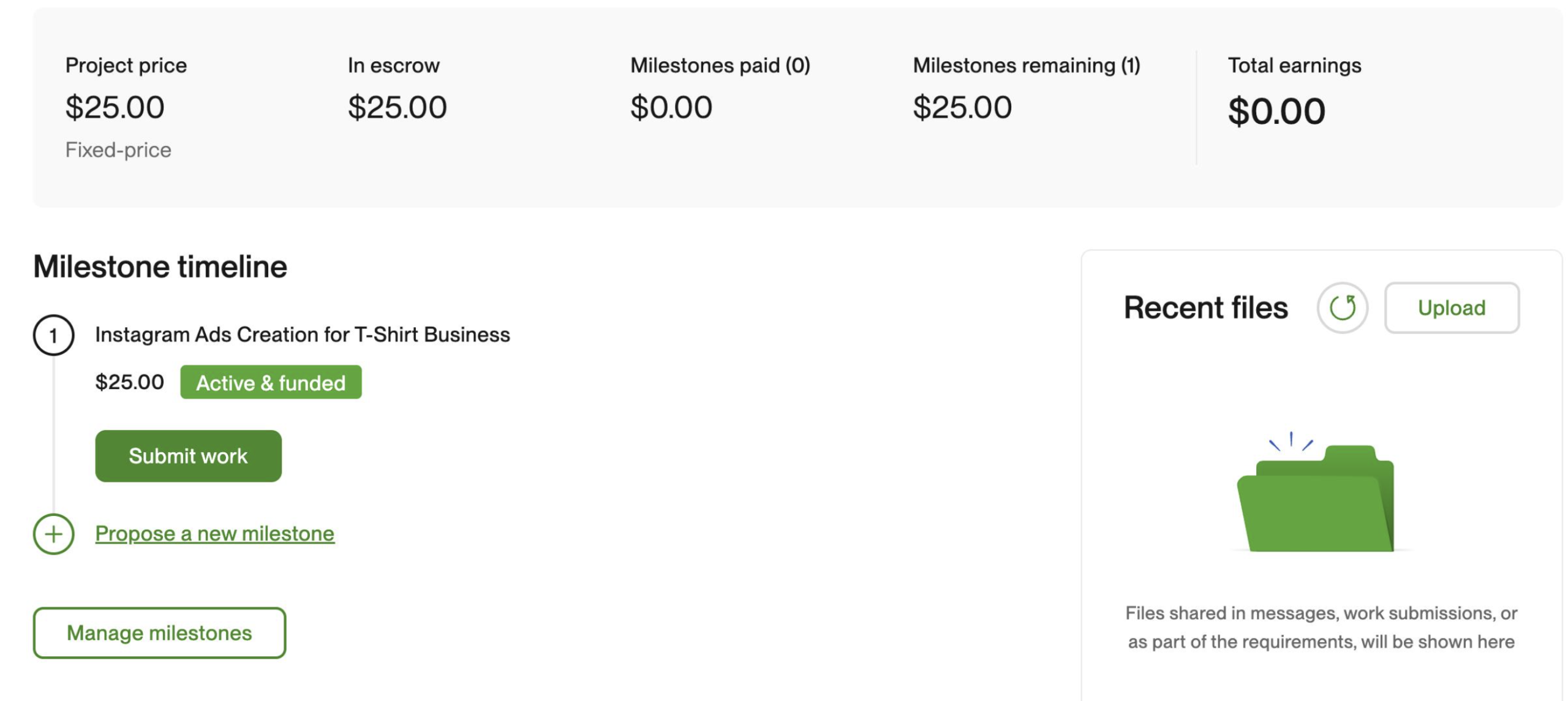
A strong real-world example is Upwork, which offers milestone-based payments for fixed-price freelance projects.
Instead of paying for an entire project at once, a client can agree on individual stages. Each stage has its own deliverables and payment.
For example, a website project could look like this:
- Website design approved
- Website developed
- Testing and launch completed
The client reviews each completed milestone before releasing its payment. So they never pay for work they haven’t seen. And the freelancer knows payment will follow each stage they finish. Both sides feel safer, which is exactly why the model works.
See Also