
Practical Sales Training™ > How To Lose The Sale > The Over Convincing Effect

The Over Convincing Effect
A sale can die after the buyer already said yes. So the moment they’re ready, every extra word is a risk.
So the Over Convincing Effect happens when you keep selling. The sale is already won.
What Is It
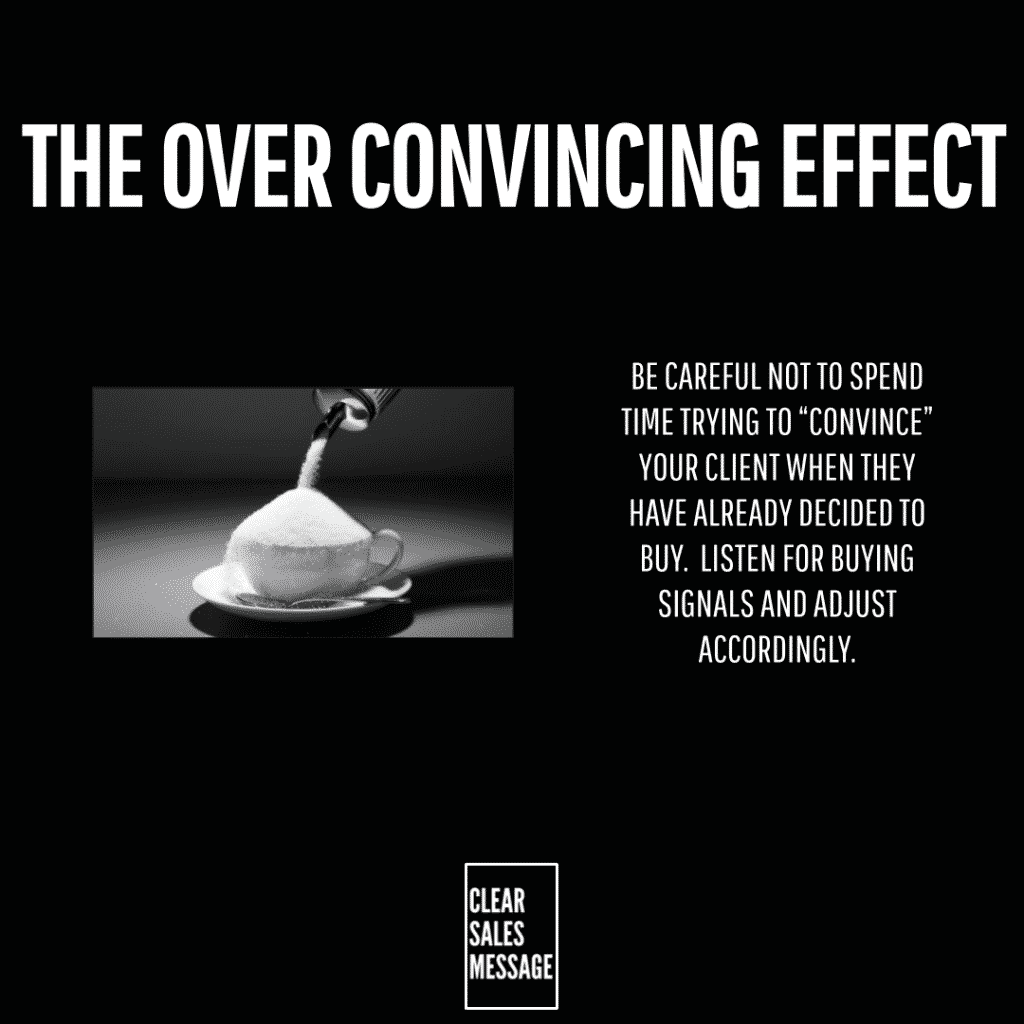
The Over Convincing Effect means selling on after the decision is made. Your buyer has already said yes. So you keep pushing anyway, and risk undoing it.
Why Does It Work
If a buyer senses you’re trying too hard, they start to doubt you. So they wonder if something’s wrong with what you’re selling.
Confidence sells. Desperation doesn’t. And the moment you sound desperate, the buyer questions the whole offer.
How Can You Use It
Watch For The Shift From Questions To Action
So notice how your buyer behaves. When someone’s ready to buy, they stop asking questions and start taking action.
Check In, Then Stop
Ask if they have any more questions. If they do, they’ll speak up. So silence usually means they’re ready to move forward.
So let them lead from there. Don’t fill the silence with more selling.
When It Works Best
So this matters most right at the point of decision. The second a buyer says yes, your job changes from selling to confirming.
Also, it’s especially important with cautious buyers. They’re even more likely to second guess a decision if you keep adding reasons.
When It Becomes Dangerous
Over convincing becomes dangerous fast. So it introduces doubt into a decision that’s already made. Also, a ready buyer can talk themselves out of something they wanted.
It also damages your credibility. Confidence sounds calm and short, never a longer pitch.
Common Mistakes
Adding Extra Reasons After The Yes
Piling on more features or proof after a buyer agrees just stalls them. So stop selling once they’ve said yes.
Mistaking Silence For Doubt
A quiet buyer isn’t always an unsure buyer. So don’t fill silence with more pitching. Instead, let them process the decision they’ve already made.
The Over Convincing Effect – An Example
A buyer says: “Great, this sounds good, let’s go ahead.”
Instead of closing, the seller keeps going. Here’s what they add:
“Just to add, our software also has integrations, our customer service is award winning, and we’re used by over 1,000 companies worldwide…”
So the buyer starts to hesitate.
So the buyer was ready. But the seller’s continued selling introduces doubt, signals insecurity, and adds friction. So the moment of momentum gets lost.
A better response would be: “Perfect, I’ll get the paperwork started. Just let me know if any questions pop up.”
That’s calm, confident, and buyer led.
See also