
Practical Sales Training™ > How To Convert > The Promise Effect

The Promise Effect
What Is It
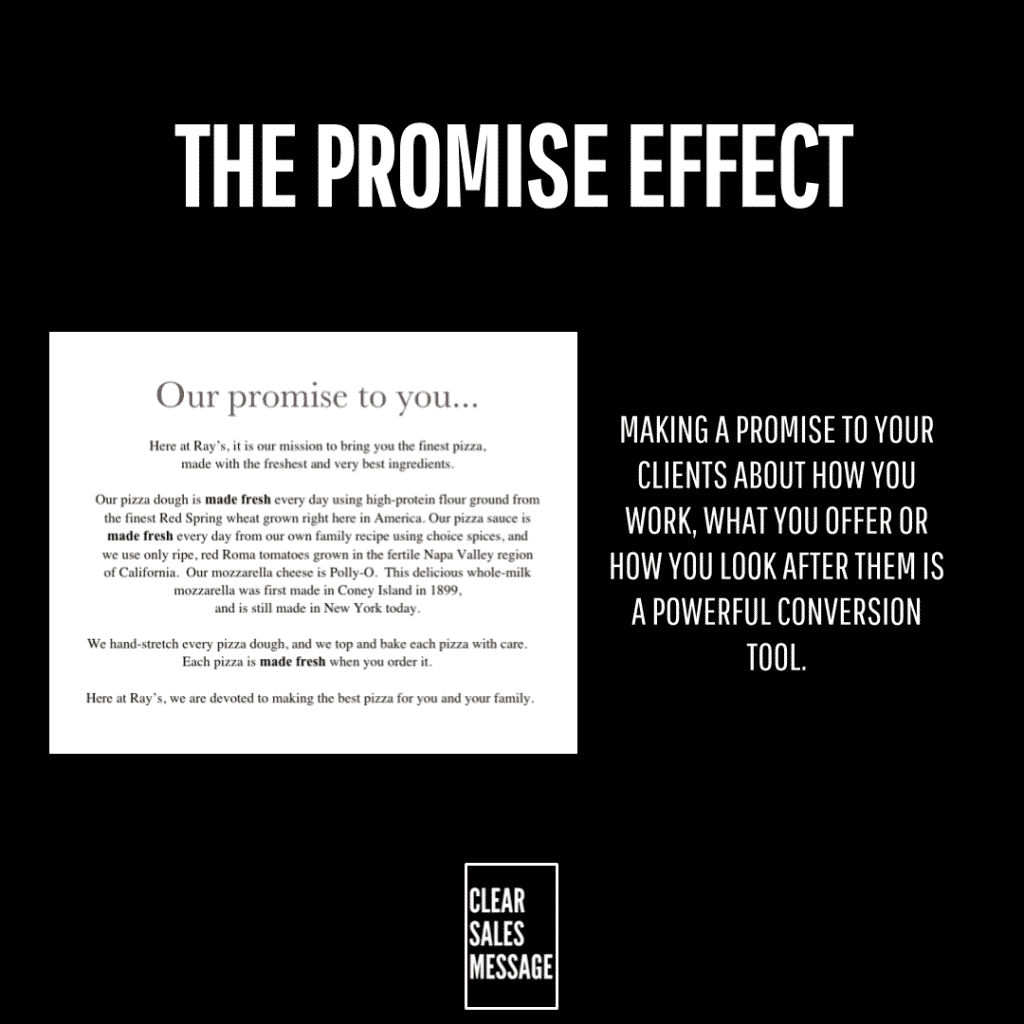
The Promise Effect is about making, and keeping, a promise to your buyer about the thing that matters most to them. Not a vague reassurance, an actual commitment with a shape to it.
It works because most buyers aren’t weighing every feature you offer. They’re really only worried about one or two things going wrong. So if you promise to solve that specific worry, you’ve removed the exact thing holding them back.
This is different from a generic guarantee slapped on at the bottom of a page. A real promise names the fear directly, and answers it directly too.
Why Does It Work
For most buyers, there are only one or two things they truly need or want from you. Everything else is just detail around the edges.
It’s the fear of not getting those one or two things, or the uncertainty around whether you’ll deliver, that stops people buying. So by promising to deliver on exactly that, you bridge the gap between the unknowns a buyer is trying to solve and their decision to purchase.
There’s a psychological shift happening too. A promise moves the risk from the buyer’s shoulders onto yours. As a result, the decision suddenly feels a lot safer to make.
It also signals something about you as a business. Only a confident business makes a specific, checkable promise. So the promise itself becomes proof, even before you’ve delivered anything.
How Can You Use It
Find the one fear worth promising against
Find the most compelling thing you can promise your buyer, and make that promise. Ask yourself what your buyers fear or aren’t sure about. If you can make a promise addressing that exact worry, you engage and convert more clients, because you’re demonstrating empathy and showing you’re on their team.
Most businesses promise something generic instead, like “quality service” or “great results.” Neither names a fear, so neither removes one.
Make it specific enough to fail publicly
A promise only works if it’s checkable. “We’ll come back for free if it’s not spotless” can be judged in seconds. “We care about quality” can’t be judged at all.
So write your promise the way you’d write a bet you’re happy to lose in public. That’s the level of specificity buyers actually trust.
Put it where the fear actually shows up
Don’t bury the promise in your terms and conditions. Put it exactly where the buyer is hesitating, on the pricing page, in the follow up email, in the sales conversation itself.
Timing matters as much as wording. The same promise lands far harder right at the moment of doubt than it does buried in a footer nobody reads.
When It Works Best
This works best when there’s a genuine, nameable fear behind the hesitation, wasted money, wasted time, or being let down. The clearer the fear, the sharper the promise can be.
It also works best in businesses where trust is naturally low to start with, tradespeople, services, anything intangible. The less a buyer can inspect before paying, the more a promise does for them.
When It Becomes Dangerous
It backfires the moment you can’t actually keep it. One broken promise does more damage than never making one, because now the buyer feels misled rather than just disappointed.
It also becomes dangerous if the promise is technically true but feels like a trick, small print, hidden conditions, or a get out clause buried in the wording. Buyers spot that instantly, and it costs you more trust than silence would have.
Overusing promises weakens them too. If every single thing you sell comes with its own guarantee, none of them feel special anymore, and buyers start reading past all of them.
Common Mistakes
Promising something nobody was worried about
A promise only lands if it answers a real fear. Guaranteeing something buyers never doubted in the first place wastes the whole mechanism.
Writing the promise too vaguely to trust
“We’ll make it right” sounds nice but promises nothing measurable. Vague promises get skimmed past because buyers can’t picture what happens if you fail.
Adding conditions that undo the promise
A guarantee wrapped in exceptions and small print reads as fake reassurance. If the conditions are complicated enough that a buyer needs to ask questions, the promise has already failed its job.
The Promise Effect – An Example
A Home Cleaning Guarantee
A home cleaning company understands that potential clients worry about wasting money on poor service, or having to clean again once the cleaners leave. So instead of promising vague quality, they make one specific promise:
“If your home isn’t spotless, we’ll come back and clean it again for free. No questions asked.”
This kind of unambiguous, confidence boosting promise targets the buyer’s core concern directly. As a result, it positions the business as accountable, reliable, and genuinely client focused, without a single line of generic marketing language.
5 Types Of Guarantee
- Money Back Guarantee
- The More Than Money Back Guarantee
- Work with you until you’re happy
- No win no fee / pay on results