
Practical Sales Training™ > How To Lose The Sale > The Spam Effect

The Spam Effect
What Is It
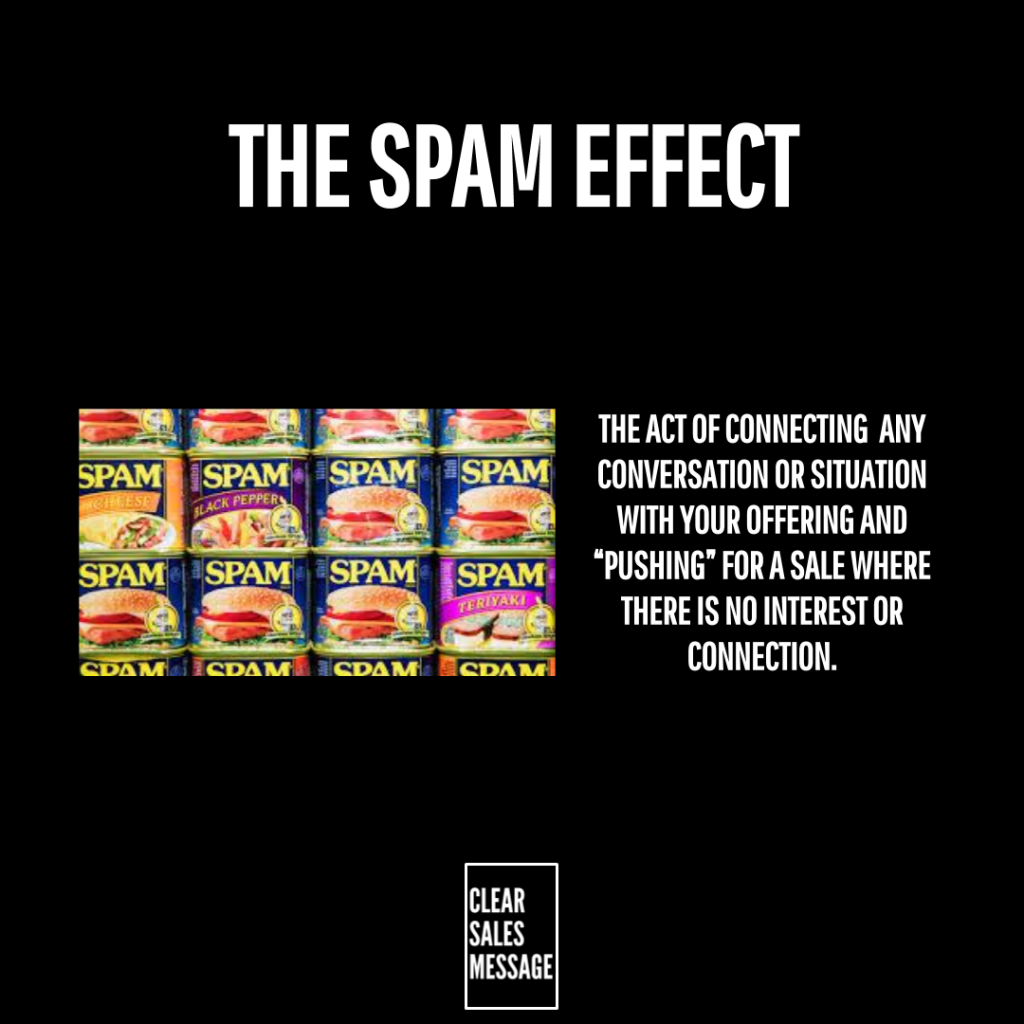
The Spam Effect is the art of pushing your offering onto unsuspecting people where there’s little or no connection. Not a pitch to someone interested, a pitch to a stranger.
It rarely feels like spam to the person sending it. It usually feels like efficiency, reaching lots of people fast.
To the person receiving it, it feels like exactly what it is, being sold to by someone who’s never met them.
Why Does It Work
It works to push clients away, because no one likes to be pushed. As buyers, we want to establish a connection and have our needs met.
By definition, spamming focuses not on the buyer’s need, but the seller’s need to sell. It focuses on something the buyer doesn’t care about yet, and that can destroy connection and any possibility of a sale.
There’s a trust cost too, one that outlasts the single message. A cold, generic pitch tells a buyer exactly how you’ll treat them if they ever do become a customer.
How Can You Use It
Skip the relationship and go straight for the pitch
If you want to alienate your clients, make them feel uncomfortable, or get them to unsubscribe from your mailing list, spam them with unsolicited offers. Turn every conversation into a sales pitch. It’s remarkable how effective it is.
Ignore any context about who you’re messaging
Send the same generic message regardless of the person’s actual situation. Relevance takes effort, and effort is exactly what spam skips.
Ask for something before offering anything
Requesting a call or a purchase before you’ve offered a single moment of genuine value flips the relationship backwards from the start.
When It Works Best
Honestly, it doesn’t work in your favour anywhere. There’s no version of an unsolicited, generic pitch that leaves a stranger feeling positive about you.
The closest thing to an exception is an extremely narrow, well researched outreach that barely resembles spam at all, since it’s built on genuine relevance rather than volume.
When It Becomes Dangerous
It’s dangerous from the very first message, since the damage happens the moment a stranger feels pitched at rather than spoken to.
It gets worse the more often it happens, since a pattern of cold, generic outreach builds a reputation that follows you across every platform you use.
It also damages more than the one lost lead. People talk about being spammed far more than they talk about being helped, and that story spreads.
Common Mistakes
Pitching within seconds of first contact
A sales message sent moments after connecting skips every step of actually building trust. Slow down, even slightly.
Sending the exact same message to everyone
A completely generic pitch signals you never looked at who you were messaging. A single specific detail changes how it lands entirely.
Leading with your agenda instead of theirs
Opening with what you want to sell, rather than what they might actually need, reads as self interested from the very first line.
The Spam Effect – An Example
A LinkedIn Cold DM
Scenario: A LinkedIn user accepts a connection request from someone who seems vaguely relevant to their industry.
What happens next: Within 60 seconds, the new contact sends this DM:
“Hey! We help businesses just like yours get 30+ leads per week. Want to book a call so I can show you how? Here’s my calendar.”
Why this backfires: There’s no context or relationship behind it, and the message is completely generic. It’s focused on their agenda, not your needs, and it screams desperation rather than professionalism.
A better alternative that avoids The Spam Effect:
“Thanks for connecting. I saw you’re focused on X, curious what you’re working on this quarter?”
This builds connection, creates space for discovery, and starts a real conversation.
Bottom line: Spamming isn’t just ineffective, it can actually harm your brand. If your first message feels like a cold sales pitch, you’re not opening a door, you’re slamming one shut.
See also: