
Practical Sales Training™ > How People Work > The Treat Effect

The Treat Effect
What Is It
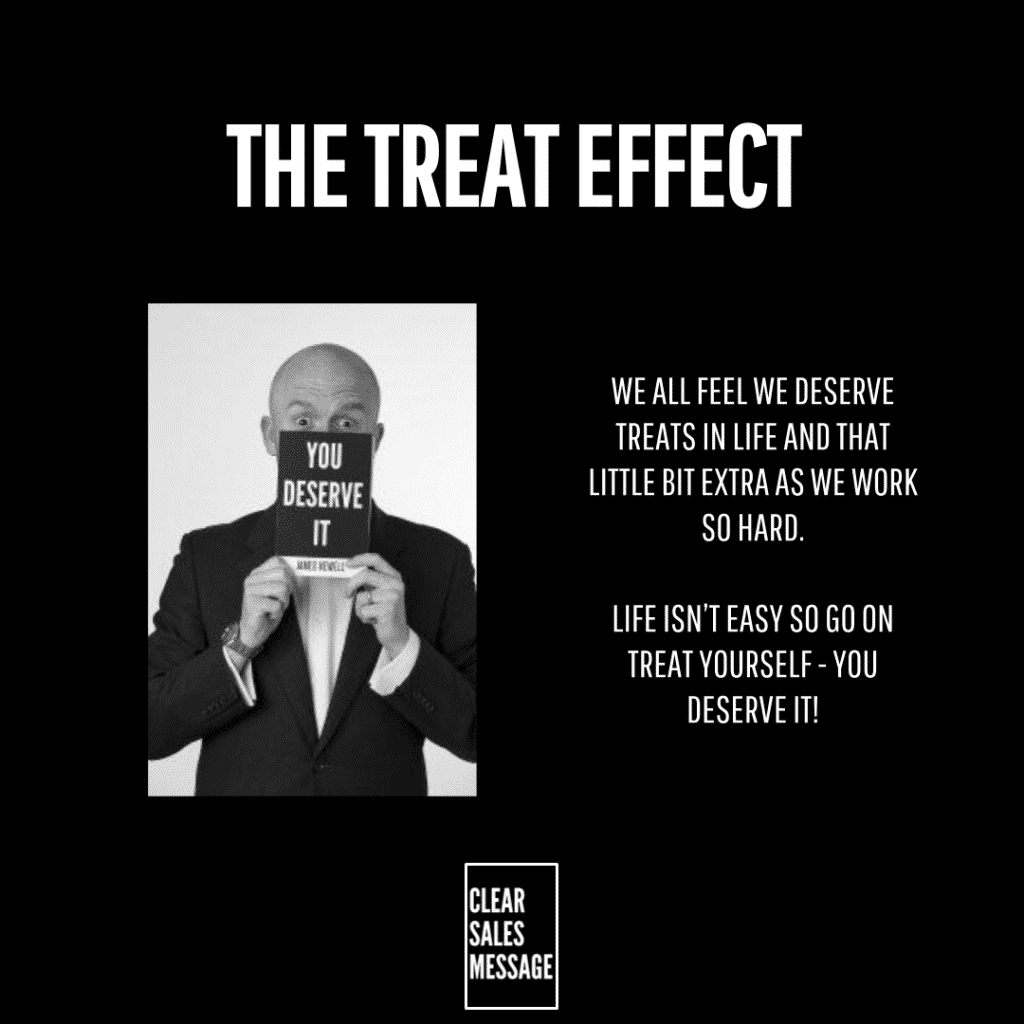
The Treat Effect recognises that, as human beings, we often feel entitled to and deserving of many things we don’t have. By appealing to this desire to spoil or indulge ourselves, we can display empathy and increase our chances of making the sale.
It’s not a discount or a deal. It’s permission, the kind a buyer has often been quietly waiting for.
Once someone feels they deserve something, the price becomes far easier to justify.
Why Does It Work
Life is tough. We work long hours, get up early, go to bed late, try to eat well, exercise, save money, spend time with loved ones, have time alone, decorate, learn, grow, travel. You get the picture.
In our world of excess and overwhelm, we can lose ourselves as people, and feel like we’re doing everything for everyone else and nothing for ourselves.
The Treat Effect recognises this imbalance, and encourages potential clients to act on their urge to put themselves first, for a change.
How Can You Use It
Show that you genuinely understand their pressure
By recognising the pressures of your potential client, and the fact that they often don’t come first, you can make it clear that you understand their situation.
Contrast their overwhelm with the treat you offer
Painting a picture of their stressful life, where everyone else seems to come first, and contrasting that with indulging in your product or service because they “deserve it,” confirms that perhaps it’s time to spend some time and attention closer to home.
Frame it as overdue, not indulgent
“Long overdue” carries far less guilt than “a treat.” The reframe matters, since it turns spending from something to feel guilty about into something that’s simply time.
When It Works Best
This works best with buyers genuinely stretched thin, people balancing work, family, and everyone else’s needs ahead of their own.
It also works best for products and services that offer a genuine moment of rest, comfort, or care, rather than another obligation dressed up as self care.
When It Becomes Dangerous
It backfires if it feels manipulative rather than genuinely understanding. Buyers can tell the difference between real empathy and a script designed to trigger guilt.
It also becomes risky if it’s used on something that isn’t actually restful or beneficial. Selling something stressful or unnecessary as “self care” undermines the whole message.
Overusing this angle across every single offer flattens it too, since constant appeals to guilt and deserving eventually stop landing at all.
Common Mistakes
Sounding like a script instead of genuine understanding
“You deserve it” repeated with no real specifics feels hollow. Paint the actual, recognisable picture of their overwhelm first.
Applying it to something that isn’t genuinely restful
Framing a stressful or complicated purchase as “self care” rings false. Save this approach for offerings that genuinely deliver rest or comfort.
Overusing guilt as the main lever
Leaning too hard on “you never put yourself first” in every message starts to feel manipulative rather than understanding.
The Treat Effect – An Example
A Boutique Spa Or Massage Therapist
A spa runs a campaign with the message:
“You take care of everyone else. Let us take care of you. You deserve 60 minutes of peace, quiet, and proper attention.”
“This isn’t a luxury. It’s long overdue.”
Why this works: It taps into the internal narrative many people carry: “I’ve been working hard, I’m tired, and no one’s looking after me.” By positioning the product, in this case a massage or spa experience, as a treat they deserve, the buyer feels emotionally validated and given permission to indulge.
See also
- The Impulse Effect
- 50+ ways that people work & make decisions
- 100+ ways to get your buyer to take action