
Practical Sales Training™ > How to connect with your buyer > Lead Magnet

Lead Magnet
Most buyers are not ready to purchase the first time they encounter your business. They need to see value first. A lead magnet gives them that value upfront, at no cost, before asking for anything in return.
The result is a warm contact who already knows what you can do. That is a much better starting point than a cold list of names who have never heard of you.
Lead magnets work across almost every type of business and every type of buyer. The format changes, but the principle stays the same. Give something genuinely useful, and the right people will raise their hand to receive it.
What Is a Lead Magnet?
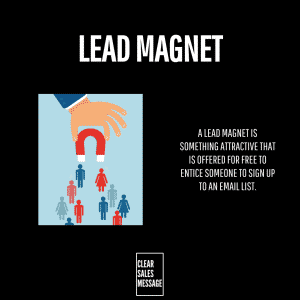
A lead magnet is a free resource offered to potential buyers in exchange for their contact details, usually an email address. The resource could be a guide, a checklist, a video, a tool, a challenge, or almost anything else that delivers real value to the person receiving it.
The exchange is simple. The buyer gets something useful. You get permission to stay in touch. From that point, you can follow up with helpful content, build trust over time, and present your paid offer when the buyer is ready.
Lead magnets work because they use the principles of both information gaps and the freemium model. The free resource hints at what you know and what you can do, creating curiosity and desire for more. So the lead magnet is not just a list-building tool. It is the start of the sales process.
Why Does a Lead Magnet Work?
It works because it lowers the barrier to entry to almost zero. Asking a stranger to buy from you is a big ask. Offering them something useful for free is a very small one. Most people will accept a free resource that solves a problem they already have, and in doing so they give you the chance to show what you can do.
A lead magnet also works because it attracts the right people. When the resource is specific and relevant, only buyers who genuinely care about that topic will download it. So the list you build is pre-qualified. These are people who have already shown an interest in the problem your business solves.
Also, giving something valuable before asking for anything builds trust fast. Buyers who receive a genuinely useful free resource feel that you are on their side. That goodwill carries forward into every email you send them, every offer you make, and every conversation you have. Because first impressions in sales are rarely made in a sales call. They are made long before that.
How Can You Use a Lead Magnet In Sales?
The starting point is to identify the most pressing problem your ideal buyer faces right now. Then create something that helps them make progress with that problem for free. The more specific the topic, the more targeted the audience, and the stronger the magnet.
Choose the Right Format
There are many formats a lead magnet can take. The best one depends on your audience and what they find most useful. Here are the main types to consider:
- Report
- Tutorial
- Mini Course
- Access to a community
- Quiz / assessment / scorecard
- Worksheet / workbook
- Webinar
- eBook or guide
- A useful tool / calculator / app
- Checklist
- Cheatsheet or one-pager
- A 7/14/21 day challenge
- A free trial
- A free sample
- An in-person talk or presentation
- A free strategy call
- Calendar of useful dates / reminders
Make It Genuinely Useful
A lead magnet only works when it delivers real value. Generic or surface-level content will not build trust, it will erode it. So treat the free resource like something worth paying for. Give away your best thinking on a specific topic. Because a buyer who gets genuine value from your free content will naturally want to know what your paid work looks like.
Match the Magnet to the Buyer
The title and topic of your lead magnet should speak directly to the person you want to attract. A broad title like “Marketing Tips” appeals to no one in particular. But “10 Social Media Posts That Always Get Engagement for Service Businesses” pulls in exactly the right person. Specificity is what makes a lead magnet magnetic. So resist the urge to make it appeal to everyone, because that usually means it appeals to no one.
Follow Up With Purpose
The lead magnet gets the email address. What happens next determines whether the relationship goes anywhere. So have a follow-up sequence ready before you launch the magnet. Send useful content, build on the topic they already showed interest in, and introduce your paid offer when the timing is right. Because a lead magnet with no follow-up is just a free giveaway. The value is in what comes after.
When a Lead Magnet Works Best
It works best when the resource solves a specific, felt problem. Buyers download things they need right now, not things they might find useful someday. So the closer the topic is to something your buyer is actively trying to fix, the higher the conversion rate will be.
It also works best when the delivery is smooth and immediate. When someone signs up and then waits two days for the resource to arrive, the excitement fades. Automate the delivery so the buyer receives the resource within seconds of signing up. That instant gratification reinforces the decision to give you their email and sets the tone for the relationship.
Also, a lead magnet works best when it creates a natural bridge to what you sell. The topic should connect directly to your paid offer. So when the buyer finishes the free resource and wants more, your product or service is the obvious next step. That connection is what turns a list subscriber into a paying client.
When a Lead Magnet Becomes Dangerous
The main risk is a weak resource that disappoints. When a buyer downloads something expecting real help and receives something thin or generic, they lose trust before the relationship has even started. So never put out a lead magnet you would be embarrassed to charge for. Quality matters more than quantity.
There is also a risk of attracting the wrong audience. When the magnet topic is too broad, you fill your list with people who will never buy. A large but unqualified list costs money to manage and produces poor results. A smaller, well-targeted list built around a specific problem will always outperform it.
However, the biggest danger is building a list and then never communicating with it. Subscribers who hear from you once and then wait months for the next email will forget who you are. Regular, useful contact keeps the relationship warm. Because a lead magnet is just the introduction. The relationship is what you build after it.
Common Lead Magnet Mistakes
Making It Too Broad
One common mistake is creating a lead magnet that tries to appeal to everyone. Broad topics attract a mixed audience and deliver weak results. So get specific. Name the person you want to reach, name the problem you are solving, and make the title do that work clearly. Because the narrower the focus, the stronger the pull for exactly the right buyer.
No Follow-Up Plan
Another mistake is launching a lead magnet without a clear plan for what happens next. Collecting email addresses is only valuable if you use them well. So map out your follow-up sequence before you go live. Decide how often you will email, what you will say, and when you will introduce your paid offer. Without that plan, the lead magnet builds a list that never converts.
Delivering Something Weak
A third mistake is treating the lead magnet as a low-effort task because it is free. But the free resource is often the first real experience a buyer has with your work. So make it genuinely good. Give away insights that solve a real problem. Show your thinking and your expertise. Because a lead magnet that impresses will do more for your sales pipeline than any ad campaign ever could.
Lead Magnet – An Example
A marketing consultant wants to attract small business owners who need help with social media. To build her email list, she creates a free PDF guide called “10 Social Media Posts That Always Get Engagement.”
Business owners download the guide because it promises quick, practical tips they can use straight away. In exchange, they give their email address. The consultant now has permission to follow up with useful content and, when the time is right, her paid services.
A fitness coach takes the same approach with a 7-Day Home Workout Challenge delivered by email. Each day’s email is free, useful, and shows exactly how the coach thinks and trains. By day seven, subscribers already trust the coach’s method. So the step to a paid programme feels natural rather than forced. That is a lead magnet doing its job properly.
See Also
- The Quick Win Effect
- Useful Tool Effect
- 150+ ways to connect with your buyer
- 140+ ways to be easier to buy from